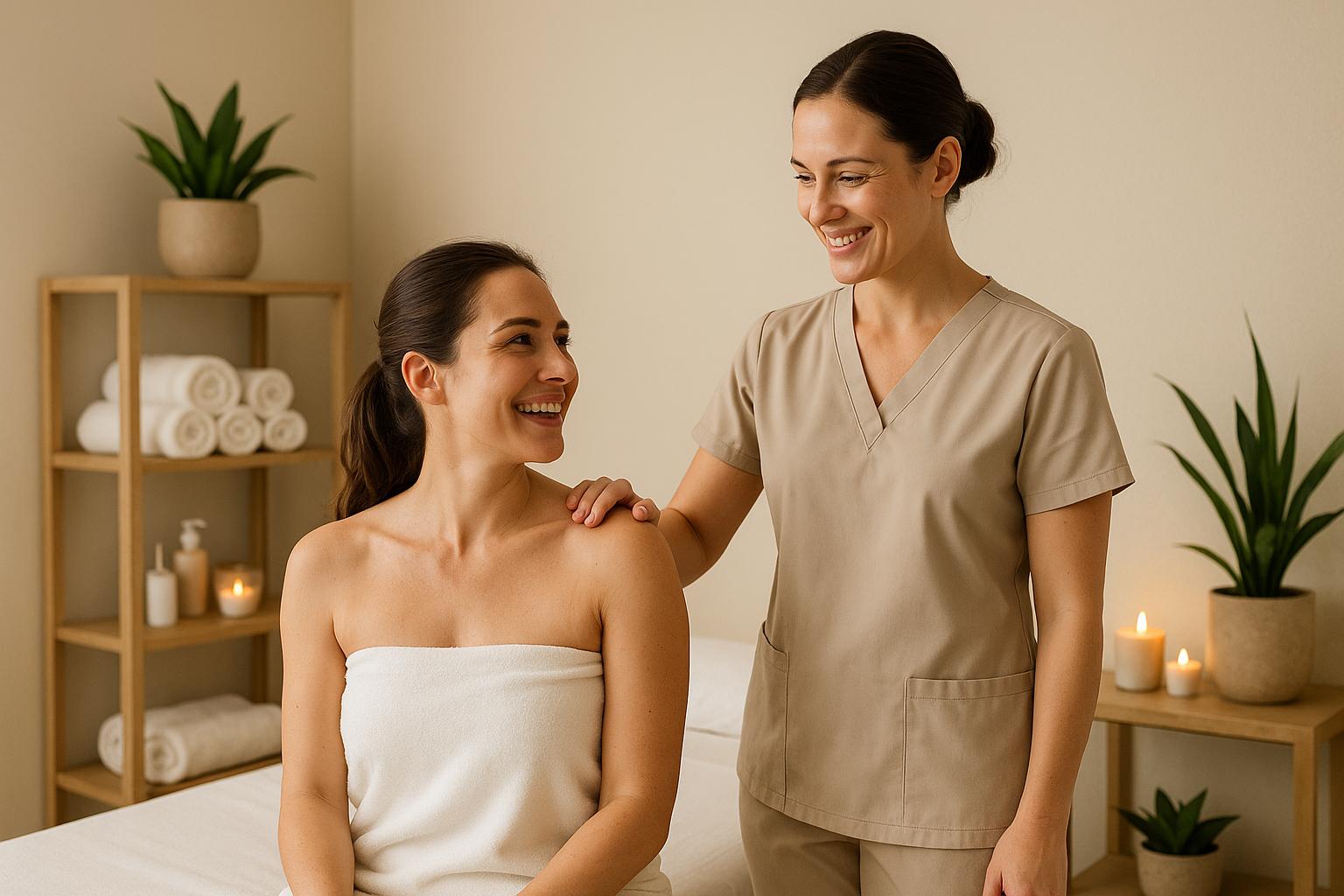
Good communication is key to getting the most out of your massage therapy sessions. Whether you're addressing pain, preparing for an event, or simply unwinding, clear dialogue with your therapist ensures the treatment is tailored to your needs. Here's what you need to know:
- Before the session: Share your medical history, medication use, allergies, past injuries, and lifestyle habits. This helps your therapist customise the session safely and effectively.
- During the session: Provide feedback on pressure, comfort, and other preferences. Speak up if adjustments are needed, such as changes to temperature or technique.
- After the session: Discuss how you feel, note any soreness, and provide feedback for future treatments. This helps refine your therapy plan over time.
For those in the UK, platforms like Find a Massage Therapist can help you connect with qualified professionals who prioritise client-focused care. Clear communication at every stage ensures you maximise the benefits of your massage while building a trusting relationship with your therapist.
Massage Mondays - Client Communication - Sports Massage and Remedial Soft Tissue Therapy
Before Your Massage: What Information to Share
Getting ready for a massage isn’t just about showing up; it’s about ensuring the session is tailored to your needs. The conversation you have with your therapist beforehand is key to making the experience both effective and safe. By sharing the right details, you help your therapist personalise the treatment and avoid any potential issues. Let’s dive into what you should discuss before your session.
Medical History, Preferences, and Problem Areas
Your therapist needs a clear understanding of your health and lifestyle to provide a massage that’s not only relaxing but also safe. Start by sharing details about your medical history. If you have conditions like diabetes, heart issues, or chronic pain, this helps the therapist adjust their techniques and pressure levels accordingly.
If you’re taking any medications, let them know. Things like blood thinners, muscle relaxants, or even certain supplements can influence how your body reacts to massage. For example, some medications may make you more sensitive to pressure or mask pain, which could lead to discomfort later.
Don’t forget to mention any allergies or sensitivities. Whether it’s a reaction to specific oils, fragrances, or even latex, this information ensures the session is free from unwanted surprises.
If you’ve had surgeries or injuries, these areas often require special attention or a gentler approach. Similarly, if you’re recovering from an illness or injury, or even dealing with heightened stress, sharing this can help your therapist adapt their techniques to suit your current condition.
Your psychological state matters too. Stress and anxiety can affect how your body holds tension, so letting your therapist know can help create a more calming environment.
Think about your past massage experiences as well. Did deep tissue leave you feeling sore, or was a lighter touch more your style? Sharing what’s worked (or hasn’t) helps your therapist understand your preferences and tolerance levels.
Finally, talk about your daily activities and lifestyle. Are you sitting at a desk all day? Do you train regularly at the gym? These details can help your therapist pinpoint tension areas and adjust their approach to meet your specific needs.
Questions to Ask Your Massage Therapist
Once you’ve shared your background, it’s time to clarify the details of your session. Asking the right questions not only sets expectations but also ensures you’re comfortable and confident about what’s to come. Here are a few important ones to consider:
- Qualifications and expertise: Confirm your therapist’s training, especially if you have specific concerns like chronic pain or sports injuries.
- Techniques: Ask about the methods they plan to use and how these will address your needs.
- Session details: Find out how long the massage will last and if there’s time to chat before and after the hands-on work.
- Draping and attire: Clarify what to wear, how draping will work, and how sensitive areas will be handled.
- Aftercare advice: Ask what to expect post-massage, including any activities to avoid and tips like staying hydrated.
- Policies and follow-ups: Confirm cancellation and rescheduling policies, and inquire about follow-up support or recommended session frequency if you plan to book regularly.
During Your Massage: How to Give Feedback
Once your massage begins, the focus shifts to a quieter, more mindful interaction. Sharing feedback during the session can make all the difference between a good massage and one that truly meets your needs. Your therapist isn’t a mind reader, so being open about your comfort ensures your body gets the care it deserves.
Speaking Up About Pressure and Comfort
The pressure during a massage should feel therapeutic, not overwhelming. As massage therapist Sally Lake puts it:
"Treatment should NEVER be something you just have to 'get through'!"
Aim for that perfect middle ground - pressure that’s not too heavy but not too light either. If you find yourself tensing up, holding your breath, or experiencing sharp pain, these are clear signs the pressure is too much. Similarly, if you’re worried about excessive soreness or bruising later, don’t hesitate to ask for a gentler touch.
When giving feedback, keep your voice calm and low to maintain the relaxing atmosphere. For example, you could say, "Could you ease up on the pressure a little?" or "That’s just right - please continue with that amount of pressure."
It’s completely normal for your comfort levels to change during the session. What feels great on your back might be too intense on your neck, and that’s okay. Speak up as needed, even if it’s multiple times. Your therapist understands that adjustments are part of the process.
That said, balance is key. While it’s important to communicate your needs, try to avoid constant conversation. Too much chatter can make it harder for both you and your therapist to stay focused and relaxed.
Pressure isn’t the only thing that might need adjustment during your massage.
Handling Common Concerns
Beyond pressure, factors like room temperature or music volume can also affect your comfort. Mobile massage therapist Paul from Paul Massage explains:
"While silence is golden during your massage to promote relaxation, it is perfectly acceptable to speak up if something feels too intense or not quite right. Adjustments can easily be made regarding pressure, technique, or even the music or room temperature."
If you’re feeling too cold or too warm, let your therapist know. Room temperature plays a role in how your muscles respond to the massage, so being comfortable is essential. The same goes for music - whether it’s too loud, too quiet, or just not your style, your therapist can adjust it or turn it off altogether.
Sometimes, discomfort might pop up unexpectedly. Maybe your therapist is working on your legs and finds tension you didn’t know was there, or a familiar technique feels off that day. If this happens, speak up right away so they can adjust their approach.
If you ever feel dizzy or uncomfortable in a particular position, don’t hesitate to ask for a break.
Remember, professional massage therapists are there to ensure you have a positive experience. They’re trained to handle feedback professionally, so there’s no need to feel awkward about voicing your needs. Your input helps them tailor the session to you, ensuring you leave feeling relaxed and rejuvenated.
Ultimately, trust your instincts. If something doesn’t feel right - whether it’s the pressure, a technique, or even the environment - say something. A simple comment during the session can completely transform your experience.
sbb-itb-abe02fa
After Your Massage: Follow-Up Communication
Building on the feedback you provide during your session, post-session communication is just as important. It helps refine your future treatments and ensures any lingering concerns are addressed.
Talking About How You Feel After Treatment
Your body's reaction to a massage doesn't stop once you leave the treatment room. Taking the time to discuss how you feel afterwards gives your therapist a clearer understanding of how the session worked for you.
Think about your overall state - do you feel calmer, less tense, or relieved in certain areas? As Siam Thai Therapy advises:
"After the session, take a moment to discuss how you're feeling with your therapist. If you felt relief in certain areas or if some discomfort persists, this feedback is invaluable for planning future sessions."
If you're experiencing any soreness, let your therapist know. While some tenderness, especially after deep tissue work, is normal and should fade, sharing this information helps them differentiate between typical after-effects and anything that might require attention.
Don’t shy away from asking questions about how your body is responding. If you’re unsure whether certain sensations are expected - particularly after more intense techniques - your therapist can clarify what’s normal and when you might need to follow up.
Keep an eye on how your body reacts over the next 24–48 hours. Common post-massage effects might include light-headedness, increased urination, or mild flu-like symptoms. If these persist or if you notice anything unusual, like extended soreness or skin irritation, contact your therapist. Many clinics make it easy to get in touch, whether through a quick phone call or an email, so you can share your concerns or even arrange a follow-up chat.
This level of post-session awareness and communication plays a key role in shaping future treatments.
Giving Feedback for Next Time
Your input after the session is crucial for improving future appointments. It allows your therapist to adjust their approach to better suit your needs.
Think about how your pain or stress levels changed after the session. Did the massage meet your expectations? If not, be specific about why. Perhaps the pressure wasn’t quite right, or a certain area needed more focus. This kind of feedback helps your therapist fine-tune their techniques to maximise the benefits for you.
Highlight what worked well too. If a particular technique or pressure felt especially effective, let them know. On the flip side, if something didn’t feel as helpful, discuss possible alternatives. As Knead Masters Academy puts it:
"Your feedback is invaluable to me, and I want to ensure that each experience with me contributes to your overall well-being."
It can also help to jot down some notes about how you felt in the days following your massage. Did the relief last? When did tension start creeping back? These observations can guide your therapist in planning the focus and timing of your next session.
If any concerns pop up, address them sooner rather than later. Don’t wait until your next appointment to mention something that’s been bothering you. Many clinics encourage follow-up conversations and even provide dedicated email addresses for wellness discussions, making it easy to stay connected and keep your treatment tailored to your needs.
This open line of communication turns your massage sessions into a personalised wellness journey, helping you get the most out of every treatment.
Finding a Massage Therapist in the UK
Choosing the right massage therapist is just as important as clear communication when it comes to ensuring a successful and personalised massage experience. The key is to find someone who not only holds strong qualifications but also understands your specific needs. This combination of expertise and understanding lays the foundation for a safe and tailored treatment.
When selecting a therapist, focus on their qualifications and specialisations rather than simply their location or fees. Look for therapists with recognised certifications, such as the ITEC Level 3 Diploma or BTEC Level 5 Diploma, and those who actively pursue further education. Advanced training in areas like Myofascial Release or Cupping Therapy demonstrates their commitment to staying current in their practice.
Membership in respected organisations like ITEC or SMTO is another good indicator of professionalism. These memberships often require therapists to meet strict standards and maintain proper insurance. Pay attention to how therapists present their qualifications and the services they offer. Avoid practitioners who make exaggerated claims - ethical professionals will clearly communicate what massage can and cannot achieve.
Choosing a qualified therapist isn't just about expertise - it also reduces risks. For example, data from the Federation of State Massage Therapy Boards in 2023 revealed that 30% of disciplinary actions against therapists were due to breaches of ethical or professional standards. This highlights the importance of selecting someone who adheres to rigorous professional criteria.
Why Use Find a Massage Therapist

Find a Massage Therapist is a helpful platform for connecting with qualified therapists across the UK. It features professionals from a range of specialities, making it easier to find someone suited to your specific needs.
The platform allows therapists to showcase their credentials and specialisations through detailed profiles, helping you make informed decisions. It also prioritises professional standards, encouraging therapists to provide clear information about their qualifications and the scope of their practice. This transparency ensures you can identify professionals who focus on client-centred care.
Additionally, the platform includes a built-in contact system, making it simple to reach out directly to therapists. You can ask questions about their experience with your particular concerns and learn more about their approach to treatment. This streamlined process not only saves time but also helps you build a strong therapeutic relationship, which is essential for achieving the best massage outcomes.
Conclusion: Main Points for Better Massage Communication
Good communication can turn an ordinary massage into a truly tailored and therapeutic experience. By sharing detailed information about your health history, preferences, and any specific concerns, you help set the foundation for a session that meets your needs. Be sure to discuss all relevant health details during your initial consultation.
As the massage progresses, don’t hesitate to offer real-time feedback. Whether the pressure feels too strong, the room temperature needs adjusting, or you experience any discomfort, letting your therapist know allows them to make immediate changes, ensuring your session stays comfortable and effective.
After your massage, sharing how you felt – including any delayed reactions or changes – is just as important. This feedback helps your therapist fine-tune future treatments and develop a personalised plan that evolves with your needs. Building this open dialogue not only enhances each session but also strengthens the long-term therapeutic relationship. Selecting a skilled therapist who prioritises open communication is key to this process.
If you're looking for a therapist who values client-focused care, Find a Massage Therapist is a great resource. It connects you with qualified professionals across the UK, offering detailed profiles and an easy-to-use contact form so you can ask about their qualifications and treatment methods before booking.
FAQs
How can I make sure my massage therapist is qualified and experienced to address my specific health needs?
Before your massage session, having an open conversation with your therapist is key to ensuring they can address your specific needs. Share details about your health history, any ongoing conditions, and what you hope to achieve from the massage.
Feel free to ask about their qualifications, certifications, and experience working with clients who have similar concerns. Most therapists are more than happy to discuss their background and expertise to put your mind at ease. If you're searching for a reliable professional in your area, platforms like Find a Massage Therapist can connect you with qualified practitioners nearby.
What should I do if I feel uncomfortable or experience pain during a massage?
If something doesn’t feel right during your massage - whether it’s discomfort, pain, or even the room being too warm or cold - don’t hesitate to speak up. Let your therapist know immediately so they can adjust the pressure, tweak their technique, or change the setting to make you more comfortable.
Being open and communicative helps ensure your session is as relaxing and beneficial as possible.
How can I clearly communicate my preferences and feedback to get the most out of my massage sessions?
To make the most of your massage experience, it's important to keep the lines of communication open with your therapist - both before and during the session. Let them know your preferences ahead of time, like how much pressure you’d like or which areas you’d like them to focus on. If something doesn’t feel quite right during the massage, don’t be shy about speaking up - whether it’s asking for more or less pressure or mentioning any discomfort.
Once the session wraps up, take a moment to share your thoughts. Highlight what you enjoyed and mention any areas that could use extra attention next time. This feedback helps your therapist adjust future sessions to better suit your needs. A little open dialogue goes a long way in ensuring your massage is as relaxing and effective as it can be.