Spending hours at a desk often leads to poor posture, causing neck pain, tight shoulders, and lower back discomfort. Massage therapy can help by relaxing tense muscles, improving blood flow, and addressing muscle imbalances caused by slouching or "tech neck." Here's a quick breakdown of the most effective massage types for desk workers:
- Deep Tissue Massage: Targets deep muscle layers to relieve chronic tension and stiffness.
- Myofascial Release: Loosens connective tissue for better flexibility and alignment.
- Trigger Point Therapy: Focuses on muscle knots that cause referred pain.
- Swedish Massage: Offers gentle relaxation for stress-related tension.
- Sports Massage: Combines pressure and stretching to ease tightness and improve mobility.
Each technique addresses specific posture issues, so choosing the right one depends on your symptoms. Regular sessions, combined with better desk habits and stretching, can help you feel and move better.
Fix Rounded Shoulders & Forward Head Posture - Massage Techniques for Desk Posture Relief
How Massage Helps Improve Posture
Massage therapy can play a key role in addressing the muscle imbalances caused by prolonged desk work. For those dealing with postural stress, it targets the specific issues that lead to rounded shoulders and forward head posture. Sitting at a desk for hours often results in overactive chest, hip flexors, neck, and shoulder muscles, while opposing muscles like the upper back and glutes become underactive. This imbalance pulls the body out of alignment, leading to the common posture problems seen in office workers.
Muscle Relaxation and Improved Blood Flow
Massage techniques focus on relieving tension in overworked muscles by releasing knots and tightness. Relaxed muscles allow for better movement and help restore proper alignment. Additionally, improved blood flow from massage brings oxygen to the tissues and removes waste, which supports repair and helps maintain alignment.
Myofascial Release and Trigger Point Therapy
Myofascial release works on the fascia, the connective tissue surrounding muscles. Poor posture can cause this fascia to become tight and restricted, limiting movement and creating stiffness. By releasing these restrictions, flexibility improves. Trigger point therapy takes a more focused approach, applying pressure to specific knots in the muscle - areas that radiate pain. This technique helps relax overactive muscles, restoring balance and aiding alignment. Together, these methods provide a foundation for better posture and increased body awareness during daily activities.
Increased Body Awareness
An often-overlooked benefit of massage is its ability to enhance body awareness, or proprioception. By improving your awareness of how your body feels and moves, massage can help you identify areas of tension and poor posture. This makes it easier to notice when you’re slouching at your desk and consciously correct bad habits throughout the day.
Best Massage Types for Desk Workers with Poor Posture
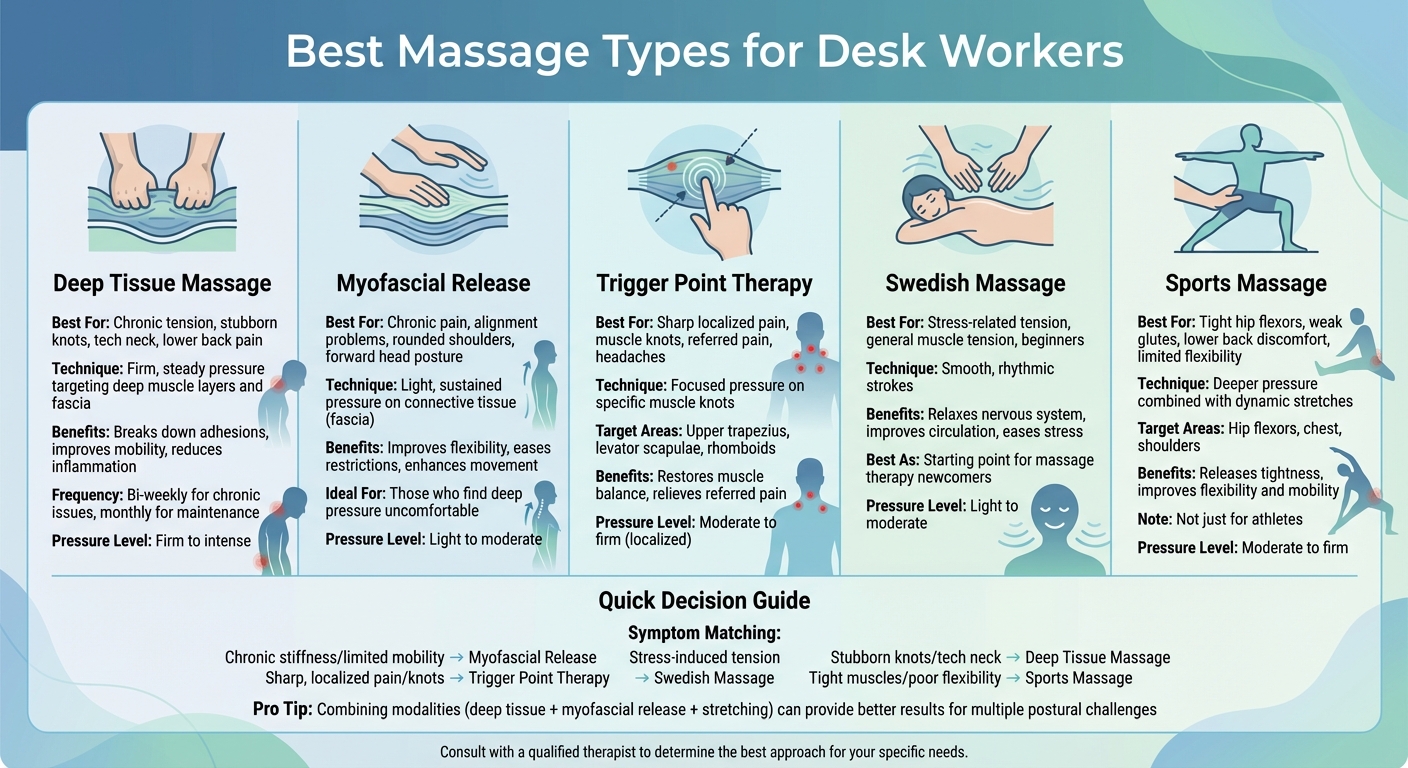
5 Best Massage Types for Desk Workers: Comparison Guide
Different massage techniques tackle posture-related issues in unique ways. Some focus on easing deep muscle tension, while others work on loosening connective tissue or reducing stress. Each approach is designed to address specific desk-related strain and help improve posture by targeting various muscle layers and fascia.
Deep Tissue Massage
Deep tissue massage uses firm, steady pressure to reach the deeper layers of muscles and fascia, breaking down stubborn adhesions and knots. It's particularly effective for chronic tension in areas like the neck, shoulders, and back. This technique not only helps release stiffness but also improves mobility and reduces inflammation in overworked muscles. Bi-weekly sessions can work wonders for chronic discomfort, with monthly maintenance sessions recommended once tightness subsides.
"When it comes to tackling knots and tension, deep tissue massage is a game-changer."
- Jamie Richardson, Phoenix Eco Spa Treatments and Beauty
Myofascial Release
This gentle technique involves applying light, sustained pressure to ease restrictions in the fascia, which is the connective tissue surrounding muscles. Myofascial release is particularly helpful for improving movement and addressing alignment problems such as rounded shoulders or forward head posture. It’s an ideal option for those who experience chronic pain or find deeper pressure uncomfortable.
"For those with chronic pain or postural issues, myofascial release is a gentle yet effective technique."
- Jamie Richardson, Phoenix Eco Spa Treatments and Beauty
Trigger Point Therapy
Trigger point therapy focuses on applying pressure to specific muscle knots that often refer pain to other areas of the body. This method is especially useful for desk workers who develop trigger points in muscles like the upper trapezius, levator scapulae, and rhomboids. These points are often linked to neck pain, shoulder tension, and even headaches. By addressing these specific areas, this therapy helps restore balance between overactive and underactive muscles.
Swedish Massage
Swedish massage takes a more relaxing approach, using smooth, rhythmic strokes to ease general muscle tension and improve circulation. While it doesn’t target deep-seated issues as directly as other techniques, it’s incredibly effective for alleviating stress-related posture problems. Stress often causes unconscious tension in the neck and shoulders, and Swedish massage helps relax the nervous system, promoting better alignment throughout the day. It’s a great starting point for anyone new to massage therapy.
Sports Massage
Despite its name, sports massage isn’t just for athletes. This technique combines deeper pressure with dynamic stretches to release tight muscles and improve flexibility. It’s particularly beneficial for desk workers dealing with tight hip flexors, weak glutes, or lower-back discomfort from sitting for long periods. Therapists often include stretches targeting the chest, hip flexors, and shoulders to address posture-related strain and enhance overall mobility.
sbb-itb-abe02fa
Choosing the Right Massage Type for Your Posture
Figuring out the best massage for your needs starts with identifying your symptoms. If you're dealing with chronic stiffness or limited mobility, myofascial release can work wonders. On the other hand, sharp, localised pain or those persistent knots respond well to trigger point therapy. If stress has your muscles tied up in tension, you can count on a Swedish massage to ease and relax them.
"Start by evaluating your pain - its type, location, and severity. Are you dealing with stress-induced tension, chronic discomfort, or stiffness? Understanding your needs will help you choose the most effective type of massage."
By matching your symptoms to the right massage technique, you can zero in on the type of relief your body needs.
Matching Symptoms to Massage Types
When it comes to stubborn knots, tech neck, or chronic lower back pain, deep tissue massage is your go-to. Its firm pressure targets deep layers of muscle, providing lasting relief. For milder tension, the gentle strokes of Swedish massage offer soothing comfort. Meanwhile, trigger point therapy is perfect for addressing referred pain by pinpointing and easing the source of discomfort.
Combining Modalities for Better Results
Sometimes, combining techniques can tackle multiple postural challenges more effectively. A mix of deep tissue work, myofascial release, and assisted stretching can address a range of issues. Studies even suggest that combining treatments can significantly improve forward head posture, with results lasting for at least a month.
Talking to a Therapist About Postural Goals
Before your session, take the time to communicate your specific concerns. Let your therapist know the exact areas of pain, how long you've been experiencing discomfort, and what tends to aggravate it. Be upfront about your comfort preferences, such as pressure levels or areas you'd rather avoid. Whether you're aiming to relax, recover from an injury, or address specific postural issues like rounded shoulders or forward head posture, a skilled therapist can customise the treatment to suit you.
"Feel free to ask questions before you book a massage and to communicate feedback to your therapist during a massage."
For the best results, combine massage therapy with regular exercise, better postural habits, and stress management. Once you've figured out what you need, you can use a UK directory to find a therapist who specialises in posture correction.
Using a Directory to Find Posture-Focused Therapists in the UK
Once you've pinpointed the right massage technique for your needs, the next step is finding a specialist who can help tackle your postural concerns.
Why Use a UK Massage Directory?
Finding a therapist who truly understands postural challenges doesn't have to feel overwhelming. A UK-based massage directory simplifies the process by letting you filter therapists based on location, massage type, and expertise in postural correction. Whether you're looking for deep tissue massage, myofascial release, or trigger point therapy, these directories make it easy to identify local experts.
They also provide straightforward descriptions of various massage techniques, so you can make informed choices about your treatment. Plus, you can read reviews from previous clients, compare services, and book appointments with confidence.
How Find a Massage Therapist Works
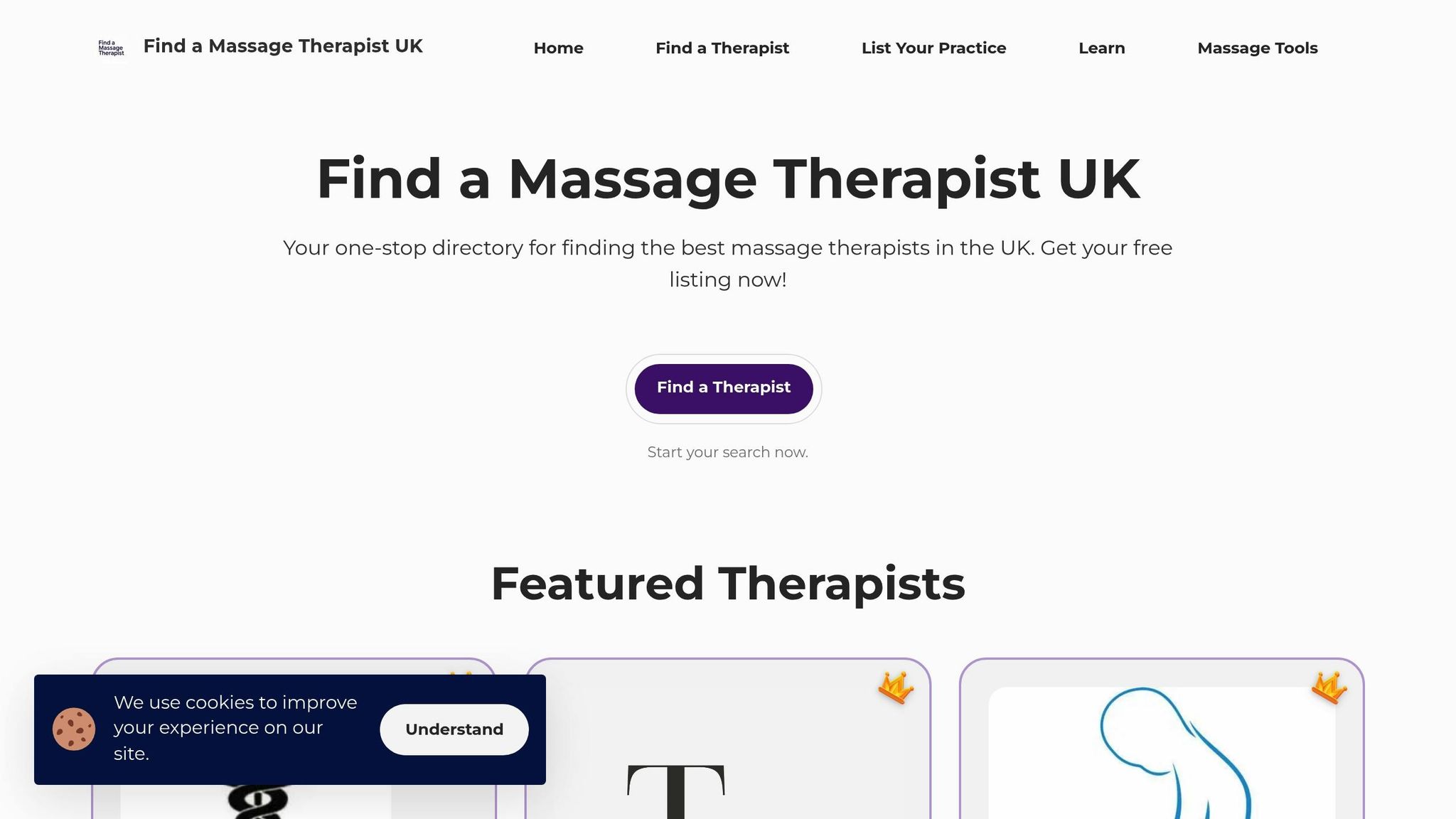
Find a Massage Therapist is a platform designed to connect desk workers and others with skilled local therapists who specialise in postural correction. You can search for practitioners in cities like Manchester or Brighton and filter results by massage methods that target posture-related issues.
Every therapist listed is thoroughly verified, so you can trust their qualifications and experience. By connecting you with professionals who offer tailored sessions to address muscle imbalances, tension, and spinal alignment, Find a Massage Therapist takes you from discomfort to booking with peace of mind.
Conclusion
Massage therapy is a powerful antidote to the tension, pain, and misalignment that come from sitting at a desk for hours on end. Whether you opt for deep tissue massage to target stubborn knots, myofascial release to improve tissue mobility, or Swedish massage for a calming experience, regular sessions can make a noticeable difference. In fact, research shows that office workers who received two 15-minute massages per week over a four-week period experienced a significant reduction in pain, particularly in the upper spine and arms.
However, the benefits of massage are amplified when paired with ergonomic improvements. A well-adjusted desk setup, proper chair height, and regular movement breaks - every 30 to 60 minutes - can prevent issues from recurring. Stretching tight muscles and building core strength further enhances the positive effects of massage therapy. This well-rounded approach doesn’t just address existing discomfort but also helps stop minor aches from turning into long-term problems.
"Consistency is key when it comes to massage therapy. Regular sessions can help maintain muscle health, flexibility, and overall postural alignment." - Boulder Sports Clinic
Massage therapy is just one part of the equation for better posture and reduced pain. With the right combination of treatments, expert advice, and daily attention to posture, you can achieve relief and maintain lasting alignment.
FAQs
How often should desk workers book a massage to help with posture issues?
For those spending long hours at a desk, scheduling a massage once a month can be a great way to ease tension and work on improving posture. However, if you’re facing persistent pain, stiffness, or elevated stress levels, you might find that more frequent sessions - every two weeks, for instance - offer greater relief.
Massages not only help to release tight muscles but also boost circulation and gradually encourage better posture. To get the most out of it, consider consulting a qualified massage therapist who can create a plan tailored to your individual needs and daily routine.
What’s the difference between deep tissue massage and myofascial release?
Deep tissue massage involves applying firm, concentrated pressure to reach the deeper layers of muscle. This technique can help ease tension, reduce adhesions (commonly known as knots), and boost circulation. It’s particularly useful for managing chronic pain or addressing tightness that often stems from poor posture.
Myofascial release, meanwhile, takes a gentler approach. It uses sustained pressure to stretch and loosen the fascia - the connective tissue that surrounds your muscles and organs. This method is especially helpful for improving mobility and alleviating long-term discomfort, making it a great choice for those dealing with movement restrictions or persistent aches.
Both techniques can work wonders for desk workers struggling with posture-related problems. The right choice depends on your specific needs and goals. If you’re unsure, a skilled massage therapist can help you decide which approach suits you best.
Can combining different types of massage help improve posture for desk workers?
Combining various massage techniques can work wonders in improving posture. By focusing on different muscle groups and layers, these methods help ease tension, loosen muscle knots, and enhance flexibility. The result? Better alignment and relief from posture-related aches, such as back or neck pain.
For those who spend long hours at a desk, a mix of deep tissue massage to address deeper muscle tension and Swedish massage for relaxation can offer a well-rounded solution. A skilled therapist can customise the treatment to fit your unique needs, supporting long-term posture improvements and boosting overall comfort.