Finding the right massage therapist in the UK requires careful checks since massage therapists aren’t legally required to hold a licence. Here's what you need to know:
- Qualifications: Look for a Level 3 Diploma (e.g., ITEC, VTCT) for general massage or Level 5 for advanced or specialised treatments.
- Accredited Training: Ensure training includes at least 500 hours with 100+ hands-on practice hours. Avoid online-only qualifications.
- Professional Memberships: Reputable bodies include the Federation of Holistic Therapists (FHT), General Council for Massage Therapies (GCMT), or Complementary and Natural Healthcare Council (CNHC).
- Specialisation: Match the therapist’s expertise to your needs (e.g., sports massage, prenatal techniques, lymphatic drainage).
- Experience: Ask about their background, years of practice, and experience with your condition.
- Client Feedback: Read reviews on platforms like Google or professional directories to gauge service quality.
- Clinic Standards: Confirm hygiene practices, fresh linens, and a professional consultation process.
- Insurance: Check for public liability and professional indemnity insurance for safety and peace of mind.
Use directories like Find a Massage Therapist to search for pre-verified professionals by location and specialism. Prices range from £45 to £70 per hour, with London rates averaging £60.
Choose a therapist who aligns with your requirements, ensures safety, and maintains professionalism.
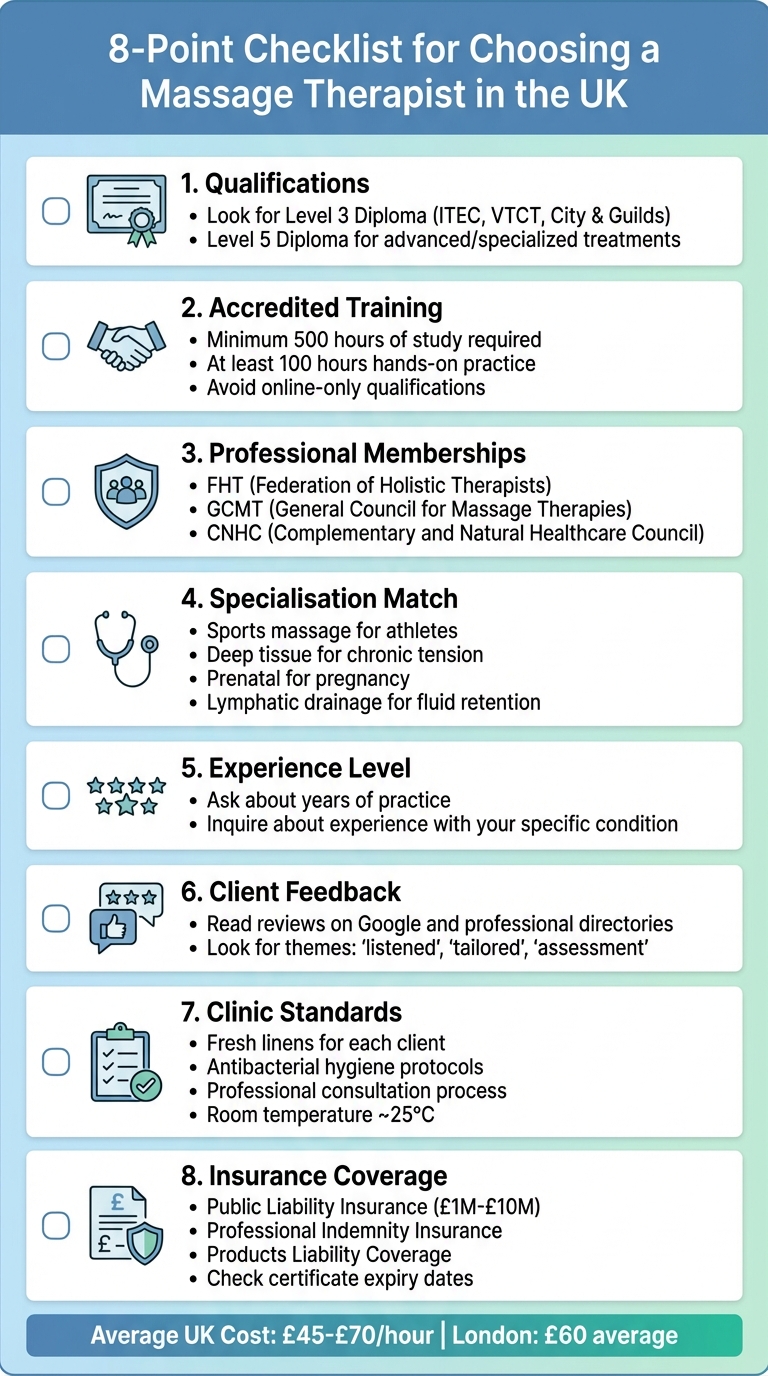
8-Point Checklist for Choosing a Qualified Massage Therapist in the UK
How to Pick a Good Massage Therapist | Head Massage
Check Qualifications and Professional Registration
Ensuring your massage therapist has the right qualifications and professional registration is essential for receiving safe and effective treatment. Unlike doctors or physiotherapists, massage therapists in the UK aren't legally required to hold specific qualifications. This means the responsibility falls on you to confirm that your chosen therapist has undergone proper training.
The most common qualification is a Level 3 Diploma in Massage or Sports Massage, awarded by recognised organisations like ITEC, VTCT, or City & Guilds. This level of training typically covers key areas such as anatomy, physiology, pathology, and practical massage techniques. If you're seeking more advanced or specialised treatments, consider therapists with a Level 5 Diploma, such as a BTEC Level 5 in Clinical Sports & Remedial Massage. It's also important to confirm that their training meets established industry standards.
Look for Accredited Training
For professional credibility, training should involve at least 500 hours of study, including a minimum of 100 hours of hands-on practice. These requirements align with the standards set by the General Council for Massage Therapies (GCMT), which serves as the profession's governing body in the UK.
Be cautious of online-only qualifications. As the Federation of Holistic Therapists (FHT) states:
"The FHT does not accept or insure fully online learning for hands-on therapies such as body massage".
Practical, in-person training with tutor-led assessments is non-negotiable for ensuring competency.
Verify Professional Body Membership
Once you've confirmed a therapist's qualifications and training, the next step is to check their professional membership. Reputable organisations include the Federation of Holistic Therapists (FHT), the Complementary and Natural Healthcare Council (CNHC), and the General Council for Massage Therapies (GCMT). Membership in these bodies indicates that the therapist adheres to professional codes of conduct, carries valid insurance, and participates in ongoing training.
The CNHC stands out as a voluntary regulator backed by government support, maintaining a PSA-accredited register. Therapists registered with the CNHC can display the "Quality Mark", and doctors are authorised to refer patients to practitioners listed on this register. To confirm a therapist's active membership, you can use the "Find a Practitioner" tools available on the CNHC, FHT, or GCMT websites.
Find Therapists Who Specialise in Your Condition
Therapists use a variety of techniques, and finding one whose expertise aligns with your needs can make all the difference. Here’s how to connect the right approach with your treatment goals.
Match the Specialism to Your Needs
If you’re dealing with chronic muscle tension, seek out therapists trained in deep tissue or trigger point therapy. These methods focus on deeper muscle layers, helping to break adhesions and release built-up tension. For general stress relief and improved circulation, Swedish massage - with its lighter pressure and flowing strokes - might be a better fit.
Athletes or those recovering from sports injuries can benefit from sports massage, which combines deep tissue techniques with stretching to aid recovery and minimise injury risks.
Certain conditions require even more targeted expertise. For example:
- If you suffer from TMJ or jaw pain, look for therapists who specialise in working on the jaw, neck, and surrounding muscles.
- For lymphoedema or fluid retention, therapists trained in lymphatic drainage use gentle, rhythmic strokes to promote fluid movement.
- If you’re pregnant, choose a therapist with prenatal massage training, ensuring they understand safe techniques and appropriate pressure.
Use Directories to Filter by Specialism
Specialist directories can make your search easier by allowing you to filter by location and treatment type. Platforms like Find a Massage Therapist let you search for professionals based on your condition and location, saving you time and effort. Similarly, professional organisations like the Shiatsu Society (UK) provide filters for specific health concerns, such as pregnancy, fertility, menopause, and palliative care.
These directories don’t just streamline the search - they also help build trust. Look for verification features, like "blue tick" badges or "Verified" statuses, which confirm that a therapist’s qualifications and insurance have been checked. Many platforms also include client reviews and direct contact options, giving you insight into whether a therapist has successfully treated others with similar conditions.
Review Experience and Client Feedback
Qualifications might show a therapist’s training, but it’s their experience and client feedback that reveal how well they apply that knowledge in practice.
Check Years of Practice and Relevant Experience
When consulting a therapist, don’t hesitate to ask about their experience, especially with your specific condition. For instance, if you’re managing diabetes, heart disease, pregnancy, or chronic musculoskeletal pain, ask how often they work with clients in similar situations. Therapists with years of hands-on experience often develop more refined techniques and a deeper understanding of unique challenges.
"It's okay to ask how long a therapist has been practicing and how often they treat [specific conditions]."
– UCLA CARES Centre
This kind of direct conversation can help you gauge their expertise and whether they’re the right fit for your needs.
Read Client Reviews and Testimonials
Client reviews are another valuable way to assess a therapist’s skills and approach. Platforms like Google, Yelp, or professional association websites often host feedback that can provide a glimpse into the experiences of others. Look for recurring words like "listened", "explained", "assessment", or "tailored" - these can indicate a therapist who focuses on individualised care.
Pay attention to common themes in reviews, such as clear communication, thoroughness, cleanliness, and responsiveness. To get a fuller picture, cross-check testimonials with independent reviews or ask for personal recommendations. This extra step can confirm whether the therapist has a proven track record of helping clients with conditions like yours.
sbb-itb-abe02fa
Check Clinic Standards and Consultation Approach
When choosing a clinic, it’s not just about the credentials - how they maintain their environment and handle consultations speaks volumes about their professionalism.
Check Hygiene and Safety Practices
A clean and well-maintained clinic isn’t just a bonus - it’s a must. Therapists should follow strict hygiene protocols, including washing their hands and arms up to the elbows with antibacterial soap before and after each treatment. Fresh towels and linens should be provided for every client, and massage couches, face cushions, and frequently touched surfaces should be thoroughly cleaned after each session.
"Safety and hygiene standards should always be as high as possible... not only for the satisfaction of the client but also to comply with legal requirements." – Enhance Me Training Academy
When you visit, take a moment to notice the details. Are disposable couch rolls and face covers being used? Is the room well-ventilated and kept at a comfortable temperature, ideally around 25°C? Therapists should also maintain a professional appearance - short, clean nails, secured hair, and minimal jewellery are all signs of attention to detail.
These practices not only ensure safety but also create a professional and relaxing atmosphere.
Ask About Initial Consultations
A good therapist will take the time to understand you before starting any treatment. Check if they conduct a thorough consultation that covers your medical history, treatment goals, and any potential risks. Many professionals now use digital intake forms, sent ahead of your appointment, to streamline the process. This allows them to review your details beforehand and focus the in-person consultation on tailoring the treatment to your needs.
During the consultation, they should clearly explain the treatment process, its limits, and any possible risks, ensuring you’re fully informed before giving your consent.
This personalised approach ensures the treatment plan aligns perfectly with your specific requirements.
Verify Insurance and Professional Standards
When choosing a therapist, it's essential to ensure they prioritise both your safety and quality care. Two key indicators of this are their insurance coverage and commitment to ongoing professional development.
Confirm Public Liability Insurance
Start by checking if your therapist has active public liability insurance (PLI). This type of coverage protects against accidents, like slipping on spilled oil, or damage to your personal belongings during a session. Most PLI policies offer coverage ranging from £1 million to £5 million, with some extending up to £10 million for more comprehensive plans.
Additionally, inquire about professional indemnity insurance (PII). This covers claims if the treatment itself causes harm, such as nerve damage or muscle strain. Also, check if they have products liability coverage, which protects against adverse reactions to items used during the session, like oils, lotions, or tools.
"A 'To Whom It May Concern' certificate of insurance is a document that provides proof of insurance coverage to a third party... It merely serves as evidence of coverage." – Marsh Commercial
Ask for a certificate of insurance and confirm that it’s up to date. Pay close attention to the expiry date and ensure that the policy specifically covers the type of massage or treatment you are receiving. Some policies exclude higher-risk treatments, such as pregnancy massage, so it’s worth clarifying these details.
Look for Ongoing Professional Development
Insurance is just one piece of the puzzle. A therapist’s dedication to keeping their skills sharp is equally important. Find out if they engage in continuing professional development (CPD), which ensures they stay up to date with the latest techniques and safety standards. For example, physiotherapists registered with the Health and Care Professions Council (HCPC) must complete a minimum of 30 hours of CPD every two years. Similarly, organisations like the Federation of Holistic Therapists (FHT) require their members to maintain regular training.
Membership in a recognised professional body is another positive sign. These organisations often enforce a strict code of ethics and conduct, which helps ensure professional boundaries and your safety. To verify their credentials, you can use tools like the HCPC "Check the Register" or the FHT Therapist Register. If you can’t find details about their recent training online, don’t hesitate to ask them directly about any workshops, courses, or certifications they’ve completed lately. A reputable therapist will be happy to share this information.
Use a Directory to Speed Up Your Search
Once you've assessed qualifications and clinic standards, simplify your search with a dedicated directory. When you're dealing with pain, finding the right therapist can feel daunting. A directory like Find a Massage Therapist connects you with qualified local therapists, allowing you to filter by location, specialism, and treatment type - all in just a few clicks.
Search by Location and Specialism
Enter your postcode or town/city to quickly locate therapists in your area. From there, refine your search based on your specific needs - whether you're looking for help with sports injuries, chronic pain, pregnancy massage, or lymphatic drainage. For example, you might opt for Trigger Point therapy to address stubborn muscle knots or Sports Massage to aid in recovery from an injury. Some directories even let you filter for therapists offering mobile services or weekend appointments, making it easier to fit therapy into your schedule.
Massage therapy in the UK typically costs around £50 per hour, though prices may range from £45 to £70 depending on the therapist and location. In London, the average is closer to £60, with premium treatments reaching as high as £75. Knowing these costs upfront helps you compare options that suit your budget.
Access Pre-Verified Therapist Profiles
With credentials and client reviews already vetted, these directories help you make an informed decision. Therapist profiles often include key details like qualifications (e.g., a Level 3 Diploma in Massage), years of experience, treatment approaches, and verified client feedback. Many platforms also highlight therapists listed on "Accredited Registers" or with "Verified Listings", ensuring they meet professional and ethical standards. This saves you the hassle of checking credentials on your own.
"By choosing a massage therapist who is an FHT member, you can be confident that they are professionally trained, qualified and insured." – Federation of Holistic Therapists
Directories like Find a Massage Therapist let you compare profiles side-by-side, check availability, and contact therapists directly via phone or email. This way, you can connect with the therapist who best meets your needs - all without leaving the site.
Conclusion
To sum up, selecting the right massage therapist requires careful consideration and thorough checks. Start by ensuring they hold accredited qualifications and are part of recognised professional bodies. It's also essential to match their expertise with your specific needs, whether it's for relaxation or addressing a particular issue like pain relief. Look into client reviews for insights into their service quality and confirm they have valid insurance for your peace of mind. A therapist who takes the time to listen to your concerns and clearly explains their approach is more likely to provide a treatment plan tailored to your personal goals.
FAQs
What qualifications should I look for in a massage therapist in the UK?
In the UK, a skilled massage therapist typically holds recognised qualifications like the ITEC Level 3 Diploma in Massage or Sports Massage, or equivalent certifications from respected organisations such as City & Guilds or VTCT. While formal qualifications aren't legally required, they are often essential for gaining professional accreditation and securing insurance.
It's also a good idea to choose therapists who are members of well-established professional bodies, such as the Federation of Holistic Therapists (FHT). Membership in these organisations often signals that the therapist has undergone proper training and follows a strict code of ethics, offering you greater confidence in their professionalism and skills.
How can I check if a massage therapist is professionally registered?
To verify a massage therapist's professional registration, search their name on trusted UK directories like the HCPC, CNHC, FHT, or SMA. Look for their status marked as 'Registered' and review their profile for any restrictions or warnings. This step ensures they adhere to industry standards and maintain a professional code of conduct.
What factors should I consider when selecting a massage therapist for a specific condition?
When selecting a massage therapist, the first step is to review their qualifications and determine if they have experience addressing your particular needs or condition. Check for any specialised training they’ve undertaken and ensure they’re part of recognised professional organisations - this often signifies they follow industry standards.
It’s worth asking about the techniques they use, how they customise treatment plans, and their approach to addressing personal concerns. A skilled therapist will listen carefully to your needs and clearly explain how their methods can benefit you.