Aromatherapy massages combine the soothing effects of touch with the calming properties of aromatic oils. This dual approach targets both your body and mind, helping to reduce stress, anxiety, and tension. Essential oils are absorbed through your skin and inhaled, influencing emotional and neurological pathways, such as the limbic system, to promote relaxation. Studies show that this method can lower blood pressure, improve sleep, and even reduce cortisol levels.
Key Takeaways:
- Aromatherapy works through inhalation and skin absorption, impacting mood and physical stress.
- Oils like lavender, bergamot, and frankincense are popular for their relaxing and balancing effects.
- Always dilute essential oils with a carrier oil before applying them to the skin.
- Aromatherapy complements but does not replace medical treatments for chronic conditions.
For deeper benefits, consider seeing a professional massage therapist who can tailor treatments to your needs and ensure safe practices.
How Aromatherapy Works During Massage
The Mind–Body Connection
When you inhale essential oils during a massage, the aromatic molecules travel through your nasal cavity to the olfactory bulb. This process helps explain why certain scents can influence your mood or even bring back powerful memories.
"Smells also reach the limbic part of the brain, where our instincts, memories, and emotions of pleasure and pain are stored." - Lorrie Hargis, Registered Aromatherapist
The limbic system doesn’t act alone. The combination of essential oils and massage creates a synergistic effect. While touch works to relieve physical tension, the aromatic compounds engage emotional pathways, helping you reach deeper levels of relaxation. This dual action forms the foundation for the benefits often associated with aromatherapy massage.
Benefits of Aromatherapy in Massage
The results of this pairing are more than just anecdotal. For instance, a study involving 40 healthy participants revealed that using a lavender and bergamot oil blend during massage led to noticeable reductions in pulse rate, systolic blood pressure, and diastolic blood pressure. These physiological changes point to a clear reduction in stress.
Beyond lowering blood pressure, aromatherapy massage can enhance sleep, ease anxiety, and stabilise emotions. Sessions can range from full-body treatments to more focused approaches, depending on your needs. During the massage, essential oils are absorbed through your skin and lungs, providing ongoing therapeutic effects that last even after the session ends.
A Complement, Not a Cure
While the benefits are clear, it’s important to recognise the limits of aromatherapy. It works as a complementary therapy, supporting overall wellbeing but not replacing medical care for chronic illnesses or severe anxiety disorders.
"Aromatherapy does not replace conventional medical care - consult a GP or qualified professional for persistent issues." - Federation of Holistic Therapists
If you’re pregnant, breastfeeding, or managing conditions like asthma or epilepsy, it’s essential to talk to your healthcare provider before trying aromatherapy. The aim is to enhance your stress management strategies, not to act as a substitute for medical interventions.
Everything You Need to Know About Aromatherapy Massage
Choosing the Right Essential Oils for Stress Relief
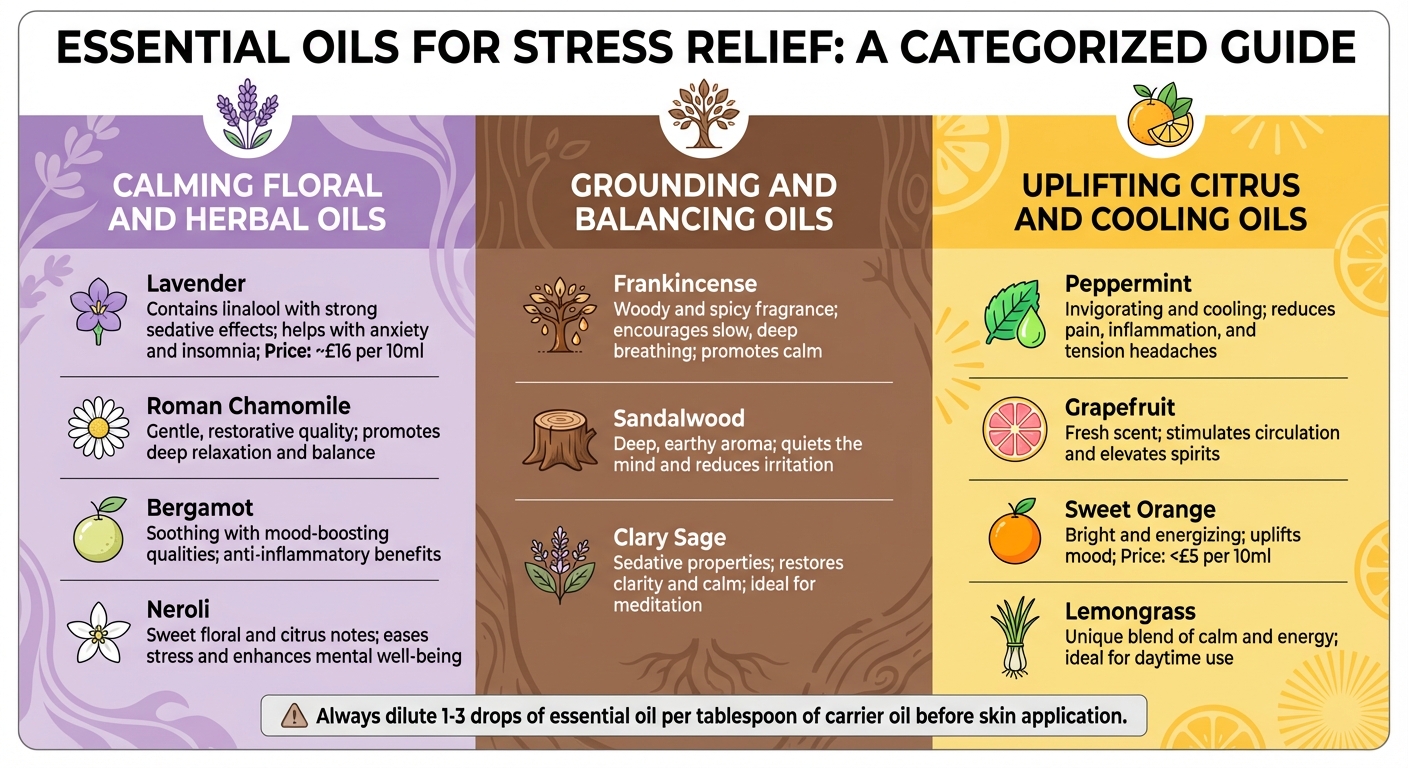
Essential Oils for Stress Relief: Properties and Benefits Guide
Essential oils aren't one-size-fits-all; they vary in their effects and appeal. It's essential to choose oils that match your stress type and personal preferences. After all, if you dislike a scent, it's unlikely to provide any sense of relaxation.
Rather than overwhelming yourself with too many options, stick to a few trusted oils that align with your needs. Prices can vary widely. For instance, a 10 ml bottle of lavender oil might cost around £16, whereas orange oil often costs less than £5. Below, you'll find oils categorised by their calming, balancing, and uplifting properties.
Calming Floral and Herbal Oils
Floral and herbal oils are ideal for relaxation and soothing the mind. Lavender, for example, is widely researched for its linalool content, which has strong sedative effects that help with anxiety and insomnia. Similarly, Roman chamomile offers a gentle, restorative quality that promotes deep relaxation and balance.
If you're looking for something a little different, bergamot combines a soothing effect with a mood-boosting quality. It even boasts anti-inflammatory benefits. Meanwhile, neroli, with its sweet blend of floral and citrus notes, is excellent for easing stress and enhancing mental well-being.
Grounding and Balancing Oils
When your mind feels cluttered or overwhelmed, woody oils can help you find balance. Frankincense, for instance, encourages slow, deep breathing, which naturally promotes calm.
"The woody and spicy fragrance of frankincense makes it one of the most calming because it actively slows down the breathing process." - Noveme
Sandalwood is another excellent choice, thanks to its deep, earthy aroma that quiets the mind and reduces irritation. For those feeling irritable or unfocused, clary sage offers sedative properties that can help restore clarity and calm. These oils are especially beneficial for meditation or moments when you need to centre yourself emotionally.
Uplifting Citrus and Cooling Oils
When stress leaves you feeling drained rather than tense, energising oils can provide the boost you need. Peppermint, for example, is both invigorating and cooling, making it a great choice for reducing pain, inflammation, and tension headaches. It pairs beautifully with eucalyptus or rosemary during deep tissue massages to relieve muscle aches and open up the lungs.
For a brighter, more energised mood, grapefruit and sweet orange are excellent options. Their fresh scents stimulate circulation and elevate your spirits. Lemongrass is another versatile choice, offering a unique blend of calm and energy, making it ideal for daytime use when you need to stay alert. These oils work wonders during moments when you need a pick-me-up without sacrificing focus.
sbb-itb-abe02fa
How to Add Aromatherapy to a Stress-Relief Massage
Once you've selected your essential oils, it's time to incorporate them into your massage routine. Whether you're working with a therapist or trying this at home, a few thoughtful steps can help you create a calming and restorative experience.
Preparing Your Space and Tools
Start by setting up a peaceful and private space. Choose a quiet room with a comfortable temperature, soft lighting, and perhaps some gentle background music to enhance relaxation. Place an ultrasonic diffuser at chest height, about 1–2 metres from where you'll be lying, and run it in timed intervals to prevent your sense of smell from becoming overwhelmed. To keep your oils in top condition, store them in amber glass bottles in a cool, dark place to avoid oxidation.
Once your environment is ready, you can focus on blending your oils safely for the massage.
Creating a Safe Blend
Safety is key when working with essential oils. Always dilute them with a carrier oil before applying to the skin. Popular carrier oils include coconut, jojoba, sweet almond, or other vegetable oils. For a full-body massage, a dilution ratio of 1% to 5% is typically recommended. To simplify, mix 1 to 3 drops of essential oil with each tablespoon of carrier oil for home use.
"For a full body massage, that would be somewhere between 1 to 5 percent of essential oil in carrier." – Hana Tisserand, COO and cofounder of TisserandInstitute.org
Before using your blend more widely, test it on a small patch of skin, like the inner arm. If you notice irritation such as redness or itching, stop using it immediately. Avoid contact with eyes and mucous membranes, keep oils out of reach of children, and consult a professional if you're pregnant, breastfeeding, or have conditions like epilepsy, asthma, or blood pressure issues.
Applying the Oils
Aromatherapy works through both inhalation and skin absorption. Begin by diffusing your chosen blend in the room before starting the massage. Then, apply a few drops to key tension points, like the temples, neck, and wrists, using gentle, circular motions. As the session comes to an end, apply a small amount of oil to the chest, letting the soothing scent linger as you finish. Afterwards, drink plenty of water to support your body as it processes any toxins released during the massage.
When to See a Professional Aromatherapy Massage Therapist
While self-guided aromatherapy can be a soothing addition to your routine, there are times when professional care is a better option. If stress begins to affect your overall wellbeing - causing persistent anxiety, irritability, low mood, muscle tension, regular headaches, or even digestive discomfort - it might be time to consider seeing an aromatherapy massage therapist. They can also help if stress is interfering with your sleep or aggravating conditions like menopause or fibromyalgia. A professional can recommend specific oils and techniques tailored to your needs.
Benefits of Professional Expertise
A qualified aromatherapy massage therapist offers more than just a massage - they provide a personalised approach to your wellbeing. During a consultation, they’ll take into account your medical history, emotional state, and wellness goals to create custom oil blends and choose massage techniques that best suit you. For instance, gentler, rhythmic strokes can help calm the nervous system. They’ll also identify any contraindications, such as pregnancy, epilepsy, or asthma, and check for potential interactions with medications like blood thinners, ensuring your treatment is both safe and effective.
There’s evidence to back up the benefits of professional aromatherapy massage. For example, a randomised controlled trial showed that nurses working in psychiatric hospitals experienced a noticeable reduction in job-related stress after having six weekly aromatherapy massage sessions. In the UK, you can expect to pay between £50 and £80 for a 60-minute session, while a 90-minute treatment typically costs between £70 and over £100.
Using the Find a Massage Therapist Directory

To find a trusted aromatherapy massage therapist near you, the Find a Massage Therapist directory is a great resource. Make sure your chosen therapist is a recognised member of professional organisations like the Federation of Holistic Therapists or the Complementary Medical Association. Membership in these bodies ensures they meet high training standards, carry insurance, and conduct thorough health consultations to personalise your treatment.
Conclusion
Aromatherapy adds an extra dimension to stress-relief massages by combining the power of scent with the soothing effects of touch. Together, they work to enhance physical relaxation while promoting a sense of emotional tranquillity - perfectly capturing the essence of this practice.
Choosing the right essential oils is key. Whether it’s lavender for relaxation, bergamot for uplifting your mood, or geranium for balance, ensure you dilute them properly with a carrier oil as mentioned earlier. Keep in mind that aromatherapy works best as a complement to traditional healthcare, not as a substitute, especially if stress feels unmanageable.
If self-care techniques aren’t enough or you want a more tailored approach, seeking professional help is a wise choice. A qualified aromatherapy massage therapist can create custom blends tailored to your medical history and personal wellness goals, ensuring both safety and maximum benefit. Research even shows that professional aromatherapy massages can significantly ease work-related stress.
If stress is interfering with your daily life, consider reaching out to a professional. You can use resources like the Find a Massage Therapist directory to locate certified practitioners who are affiliated with organisations such as the Federation of Holistic Therapists. Taking this step could make a meaningful difference in your journey to better well-being.
FAQs
How does aromatherapy enhance the stress-relieving benefits of a massage?
Aromatherapy amplifies the stress-relieving benefits of a massage by pairing the soothing power of touch with the calming qualities of essential oils. When these oils are mixed with a carrier oil and applied during a massage, their aromatic compounds are absorbed through the skin and inhaled. This process engages the brain regions that influence mood and stress, helping to lower cortisol levels, relax tense muscles, and foster a deep sense of tranquillity.
Some of the most popular essential oils for easing stress include lavender, bergamot, and frankincense, all celebrated for their ability to soothe anxiety and uplift mood. A skilled therapist can create a personalised blend tailored to your preferences, ensuring the aroma is both comforting and effective. The combined benefits of enhanced circulation from the massage and the calming properties of the essential oils make this a truly rejuvenating experience for many.
What are the best essential oils for relieving anxiety and improving sleep?
Lavender stands out as one of the top essential oils for easing anxiety and improving sleep quality. Its soothing aroma works wonders in calming both the mind and body, making it an ideal addition to stress-relief massages or bedtime rituals. Other great options to consider include Roman Chamomile, known for its mild sedative qualities, Bergamot, which helps lift your mood and reduce tension, and Frankincense, often used to promote deep breathing and a sense of meditation.
If you're after something more invigorating, Sweet Orange offers a cheerful boost while still helping to ease stress. Meanwhile, Cedarwood is valued for its grounding effects, which can support a healthy sleep routine. Mixing a few drops of these essential oils with a carrier oil for a massage can amplify their relaxing benefits, leaving you feeling peaceful and ready for a good night's rest.
Can I use aromatherapy during a massage if I have a medical condition?
Aromatherapy can often complement massage quite well, but if you have any medical conditions, taking the right precautions is essential. A skilled therapist will typically begin with a consultation to learn about your health background, medications, and any conditions like asthma, epilepsy, heart concerns, or skin sensitivities. This step helps them choose the right essential oils and adjust their strength to minimise the risk of irritation.
If you're uncertain about how your skin might react, a simple patch test on a small area can help identify any sensitivities. Certain conditions, such as pregnancy, severe respiratory problems, or epilepsy, may require avoiding specific oils or using them in very diluted forms. For extra reassurance, it’s a good idea to speak with your GP or pharmacist before exploring aromatherapy.
Working with a qualified practitioner ensures the experience is both safe and enjoyable. They’ll personalise the session to suit your individual needs, allowing you to relax and embrace the benefits of aromatherapy with confidence.