Postnatal massage can help new mothers recover physically and emotionally during the first weeks after childbirth. It reduces stress, eases muscle tension, and promotes better sleep by balancing hormones like cortisol and oxytocin. For those experiencing swelling or pain, massage can improve lymphatic drainage and relieve discomfort in areas like the neck, shoulders, and lower back.
- Stress Reduction: Lowers cortisol and boosts serotonin, dopamine, and oxytocin.
- Pain Relief: Addresses tension from labour and baby care.
- Better Sleep: Helps with relaxation and recovery.
- Timing: Start immediately after uncomplicated vaginal delivery or wait 6-8 weeks post-C-section.
- Safety: Avoid massage if you have infections, blood clots, or unhealed wounds.
Whether through professional sessions or self-massage, this practice supports new mothers in navigating the challenges of early motherhood.
How Postnatal Massage Reduces Stress and Anxiety
Hormonal Changes and Stress Reduction
Postnatal massage works wonders in helping your body regulate stress by influencing key hormones and neurotransmitters. When you experience therapeutic touch, your body releases more oxytocin - a hormone that not only helps you relax but also strengthens the bond with your baby. At the same time, it reduces cortisol, the stress hormone that tends to spike after childbirth.
Massage with moderate pressure activates pressure receptors under your skin, which stimulates the vagus nerve. This nerve plays a crucial role in calming your autonomic nervous system, reducing cortisol levels, and increasing serotonin and dopamine. Together, these changes promote a more stable and balanced mood.
"Oxytocin massage significantly reduces postpartum stress and anxiety by stimulating the release of oxytocin, which in turn decreases cortisol levels and promotes relaxation." - Nur Partiwi, Advances in Healthcare Research
Research backs this up. For example, a study involving teenage mothers experiencing depression found that those who received massage therapy had notable reductions in saliva cortisol levels compared to those who underwent relaxation therapy alone. Lower levels of stress hormones like norepinephrine and adrenaline help shift your body from a "fight or flight" mode into a state of true relaxation.
But it’s not just about hormones - massage also eases physical discomfort, which can further reduce stress.
Physical Relaxation and Pain Relief
The physical demands of labour, delivery, and caring for a newborn often leave your body tense and sore. Massage techniques like kneading and applying thumb pressure to areas such as the neck and shoulders can relieve this built-up tension, especially from holding and feeding your baby.
Interestingly, only moderate pressure triggers the vagus nerve response, which slows your heart rate and reduces cortisol production. Techniques like abdominal strokes and lymphatic drainage not only target physical discomfort but also contribute to a sense of overall relaxation.
"Massage therapy has been demonstrated to be effective during pregnancy. Women who received massage therapy reported decreased depression, anxiety, and leg and back pain." - Tiffany Field, Director, Touch Research Institute
Better Sleep and Emotional Wellbeing
By reducing pain and stress, massage clears the path for better sleep - something most new mothers desperately need. It enhances vagal activity, which slows down your body’s processes, like heart rate and blood pressure, making it easier to relax and fall asleep. This is especially important since up to 30% of mothers experience postpartum anxiety, with some studies reporting rates as high as 85.5%.
Improved sleep doesn’t just make you feel more rested; it also boosts your emotional resilience and lowers the risk of postpartum depression, which affects 10% to 15% of new mothers. Relieving physical pain, such as back and leg discomfort, combined with stress hormone regulation, lays the groundwork for restorative sleep. This, in turn, supports your recovery and overall mental wellbeing.
"Relaxation in the postpartum period decreases the activity of the sympathetic nervous system and can prevent postpartum depression, and it can also increase effective mother-infant attachment." - Fereshteh Jahdi, Nursing and Midwifery School, Iran University of Medical Sciences
sbb-itb-abe02fa
How Postpartum Massage Helps New Moms Heal & Relax
When and How to Start Postnatal Massage Safely
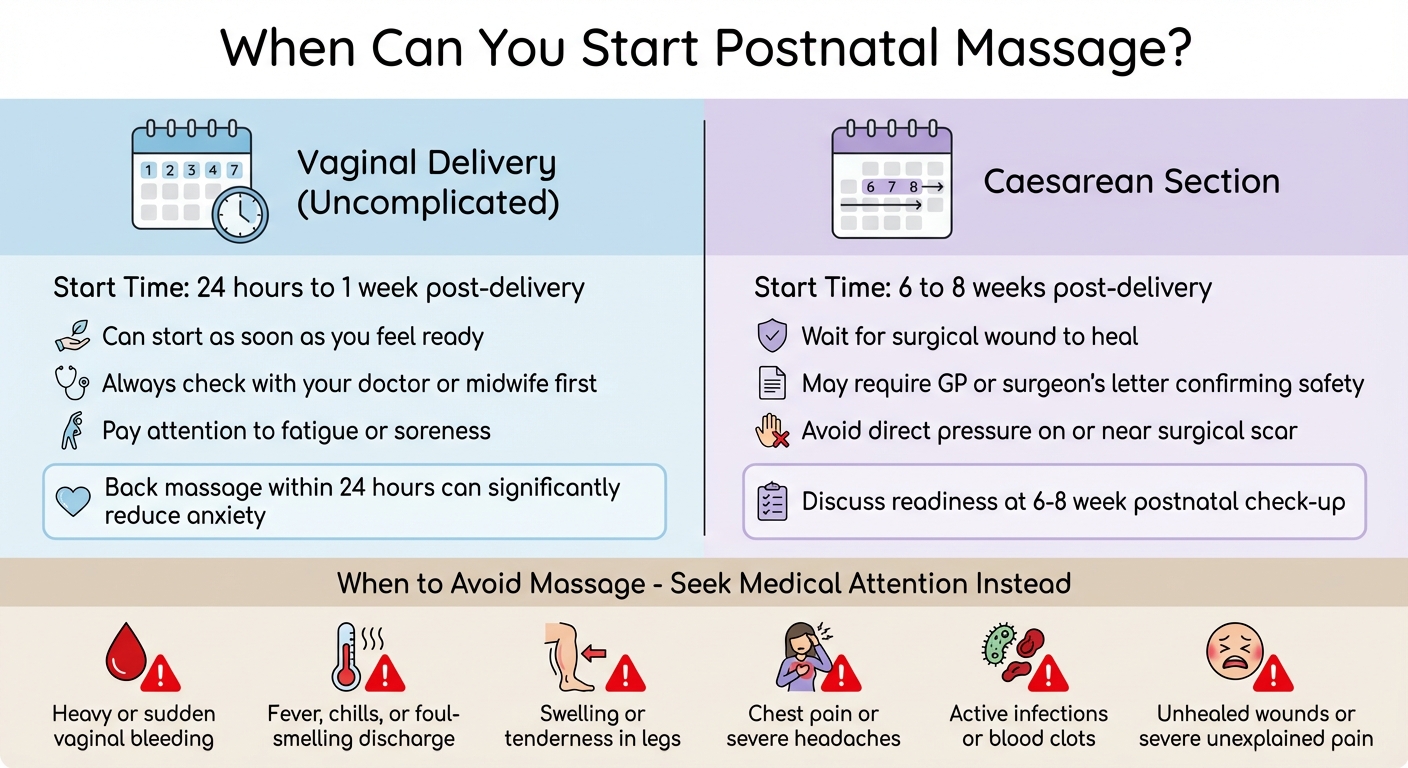
Postnatal Massage Timeline: When to Start After Vaginal vs C-Section Delivery
Timing Based on Delivery Type
If you've had an uncomplicated vaginal delivery, you can start gentle massages as soon as you feel ready, but always check with your doctor or midwife first. Research from 2016 suggests that even starting a back massage within 24 hours after delivery can significantly ease anxiety levels.
For those who have undergone a Caesarean section, most experts recommend waiting at least six weeks before considering a massage. Some clinics, like MASAJ in London, suggest waiting up to eight weeks and may require a GP or surgeon's letter confirming it’s safe to proceed. Your six- to eight-week postnatal check-up with your GP is the perfect time to discuss whether your body is ready for a massage.
| Delivery Type | Recommended Start Time | Cautions |
|---|---|---|
| Vaginal (Uncomplicated) | 24 hours to 1 week post-delivery | Pay attention to how your body feels, especially fatigue or soreness |
| C-Section | 6 to 8 weeks post-delivery | Avoid any direct pressure on or near the surgical scar |
| Complicated Delivery | Only after medical clearance | Be aware of specific risks, such as blood clots, and consult your doctor |
Always review potential contraindications before scheduling your massage session.
Contraindications and Safety Considerations
Before you book your first postnatal massage, it’s essential to be aware of warning signs that might require immediate medical attention rather than a massage. Seek urgent care if you notice any of the following: heavy or sudden vaginal bleeding, fever, chills, foul-smelling discharge, swelling or tenderness in the legs, chest pain, or severe headaches. These could indicate serious conditions like infections or blood clots.
For C-section recovery, ensure your surgical wound is healing properly - look out for any redness, swelling, or breakdown. Avoid massage entirely if you have a history of blood clots, an active infection, or severe unexplained pain. Additionally, make sure your massage therapist has specialised training in postnatal care, as they need to understand postpartum physiology and know how to apply pressure safely.
"If you have had a C-section, treatments should take place 8 weeks post-surgery. You might be asked for a letter from your GP or surgeon confirming it is okay for you to receive the treatment." - MASAJ
Self-Massage Techniques for Postnatal Stress Relief
Finding moments of calm amidst the demands of new motherhood can be challenging, but self-massage can offer a simple, effective way to ease stress between professional sessions. Dr Nathalie Richardson, Psychologist, explains that "Regular self-massage can be a powerful tool in managing daily stress. Even a few minutes of targeted self-massage can help reduce muscle tension, improve circulation, and promote a sense of calm and well-being". Here’s how you can address common areas of tension with easy techniques.
Neck and Shoulder Tension Release
Breastfeeding and carrying your baby can leave your neck and shoulders feeling stiff and sore. To ease this discomfort, gently knead your shoulder muscles with your fingertips, making small, circular motions. For the upper neck, place your thumbs just below the base of your skull and apply light, circular pressure. Rolling your shoulders forwards and backwards slowly can also help, as can tilting your head from side to side to release built-up tension. Don’t forget to massage your chest area - this can help open up your shoulders and may even relieve breast discomfort from feeding.
Scalp and Temple Relaxation
New motherhood often comes with tension headaches, driven by both physical strain and emotional stress. To soothe your scalp, use your fingertips to make gentle circular motions, starting at the base of your head and moving across your scalp. This not only reduces stress hormones like cortisol but also increases feel-good chemicals in your body. The sensory stimulation from scalp massage has a calming effect on both your mind and body.
Lower Back and Hip Relief
Your lower back and hips carry much of the physical load during pregnancy and the postpartum period. To ease hip tension, use firm strokes from your knee upwards to your hip. For your lower back, place your thumbs on either side of your spine at mid-back and stroke downwards toward your waist. If you’ve had a C-section, it’s essential to wait until your scar has fully healed - typically six weeks - before attempting any massage around your abdomen or lower back.
To make the experience even more soothing, dim the lights and keep the room warm, ideally around 27°C. When using oils, stick to odourless options like Vaseline or coconut oil, as olive oil can affect your skin barrier. These simple techniques can complement professional care and support your postnatal recovery journey.
Benefits of Professional Postnatal Massage
While self-massage can provide some relief, working with a skilled therapist offers expertise and personalised care that can better support your recovery. Professional postnatal massage is designed to address the specific physical and emotional challenges of the "fourth trimester", offering benefits that go beyond what you might achieve on your own. Let’s explore the advantages of these targeted techniques and customised care.
Specialised Techniques for Postnatal Recovery
Qualified therapists bring a wealth of techniques to help with postnatal healing. For instance, Swedish and therapeutic massage can ease muscle tightness while promoting relaxation by triggering the release of endorphins, serotonin, and dopamine - hormones that help combat stress. If you’re dealing with postpartum swelling, lymphatic drainage can gently stimulate the lymphatic system, reducing oedema and helping to remove metabolic waste. Considering that fluid volume increases by around 50% during pregnancy, this method can be especially helpful in the early weeks after giving birth.
For mothers recovering from a Caesarean section, techniques like myofascial release and scar therapy can improve tissue flexibility and reduce scar adhesions. Additionally, oxytocin massage is tailored to lower cortisol levels, ease anxiety, and enhance the milk ejection reflex, which is particularly beneficial for breastfeeding mothers. These specialised approaches address a wide range of recovery needs unique to the postnatal period.
Tailored and Expert Care
Every mother’s recovery is different, and professional therapists adapt their methods to suit individual requirements. For example, they may use side-lying positions with pregnancy pillows to accommodate breast tenderness or sensitivity following a C-section. For breastfeeding mothers, therapists often focus on the chest and shoulders to improve posture during feeding or offer gentle breast massage to relieve mastitis discomfort. In cases of surgical births, therapists generally wait at least two weeks for the wound to heal before using soft strokes to enhance circulation and minimise the risk of internal adhesions.
Interestingly, research from 2016 highlights that a back massage as early as one day after delivery can significantly reduce anxiety in new mothers. In the UK, professional postnatal massage sessions typically cost between £35 and £90, with more detailed assessments priced around £99.
How to Find a Qualified Therapist in the UK
To benefit from these specialised techniques, it’s essential to find a qualified therapist. Start by checking their credentials - look for practitioners with a QCF Level 3 qualification in Body Massage and certifications in Pregnancy & Postnatal Massage. The Federation of Holistic Therapists (FHT) maintains a directory of trained, insured professionals across the UK. You can also ask your GP, midwife, or health visitor for recommendations.
For a convenient option, visit Find a Massage Therapist, a UK-based directory that helps you locate therapists specialising in postnatal care. The platform allows you to filter by location, needs, and specialisms, making it easier to find the right fit. Before booking, ensure your chosen therapist uses pregnancy-safe, non-allergenic oils - especially important if you’re breastfeeding - and check their policy on bringing your newborn along, if needed.
Conclusion
Postnatal massage provides new mothers with much-needed relief during the early days of motherhood. It can help with everything from easing swelling and muscle tension to promoting better sleep and stabilising hormone levels. These techniques are particularly valuable in addressing the challenges of the "fourth trimester." Studies reveal that around 10% to 15% of new mothers experience postnatal depression, while up to 30% face anxiety during this time.
Whether through self-massage or professional care, the benefits are clear. Research highlights that even a single back massage, performed just one day after delivery, can significantly lower anxiety levels.
If you're considering professional support, seek out certified postnatal massage practitioners who are experienced in addressing the specific needs of recovery - whether you're breastfeeding, recovering from a C-section, or simply navigating the exhaustion that comes with caring for a newborn. Websites like Find a Massage Therapist can help you connect with local specialists. Professional care like this works hand in hand with the self-care techniques mentioned earlier.
FAQs
When can I start having postnatal massages after giving birth?
You can typically begin postnatal massage within the first 12 weeks after giving birth, sometimes even during the first few weeks of the initial 40-day recovery period. However, it’s always wise to consult your midwife or healthcare provider to ensure it aligns with your personal recovery needs.
Postnatal massage offers several benefits, from relieving physical tension to encouraging relaxation and supporting emotional balance during this significant phase. If you're thinking about scheduling a session, connecting with a skilled massage therapist in your area can make the experience both straightforward and calming.
How can postnatal massage support mental well-being?
Postnatal massage can play a key role in supporting mental well-being by easing stress and anxiety. It achieves this by reducing levels of cortisol - the hormone associated with stress - while encouraging the production of serotonin, dopamine, and oxytocin, all of which are linked to better mood and a sense of calm.
For new mothers, this type of massage can also provide relief from symptoms of postnatal depression. It offers a combination of physical comfort and emotional support during what can be a demanding period. Choosing a qualified and reliable therapist nearby is essential to ensure the experience is both safe and beneficial.
Are there any precautions I should take before having a postnatal massage?
Postnatal massage is generally considered safe when done by a qualified therapist, but there are a few precautions to keep in mind. If you've had a caesarean section, it's usually recommended to wait until your surgical wound has completely healed, which can take anywhere from 3 to 8 weeks. Always check with your doctor before scheduling a massage. For vaginal births, make sure to inform your therapist about any pain, bruising, infections, or pelvic floor concerns so they can adjust the treatment accordingly.
In the first few weeks after childbirth, your body goes through major hormonal and physical changes, so a gentle and careful approach is essential. Opting for a therapist who specialises in postnatal care ensures they understand these specific needs and can customise the massage to support your recovery in a safe and effective way.