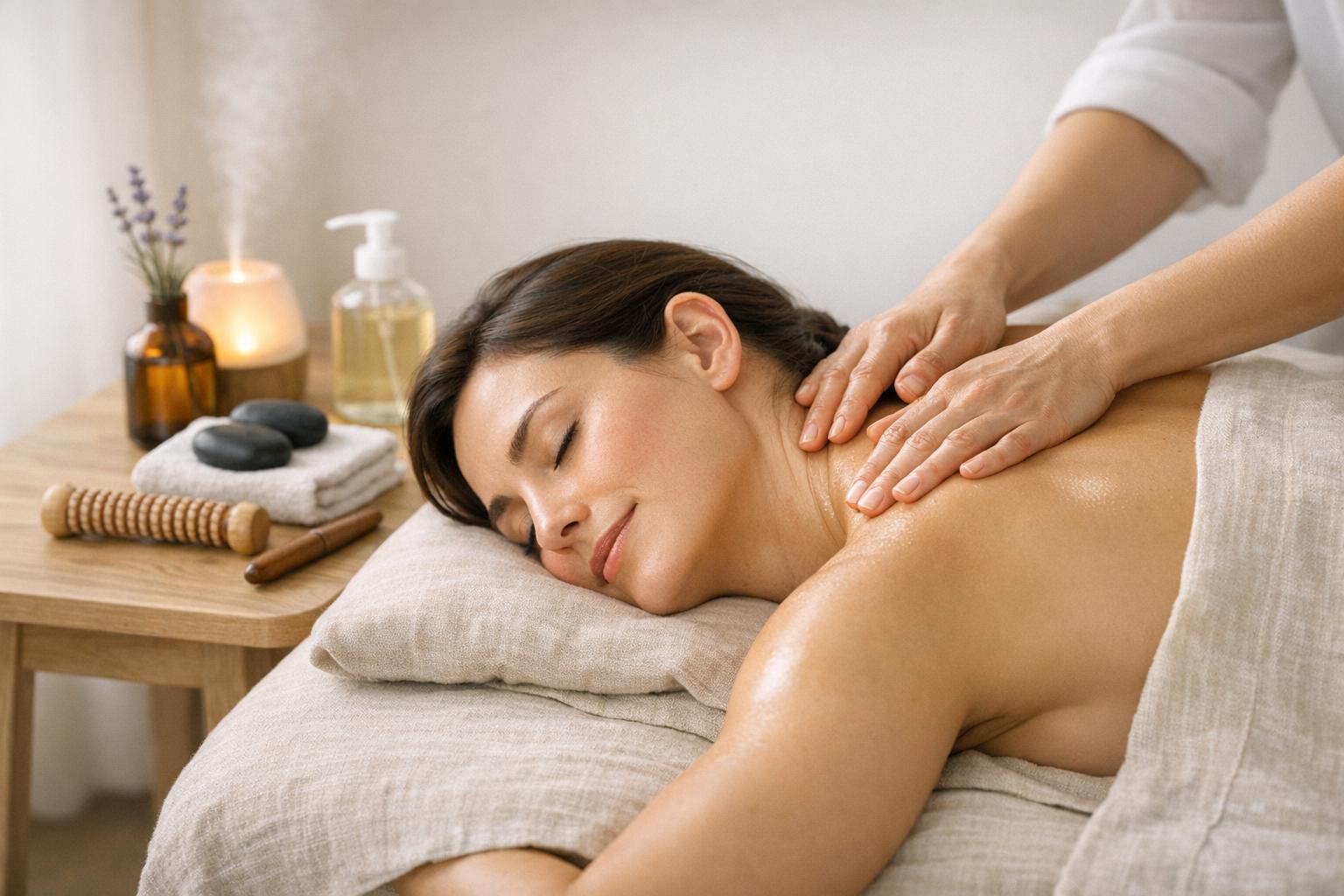
If anxiety is weighing you down, massage therapy can help. It not only relaxes your muscles but also signals your brain to calm down. Among the many techniques available, three stand out for managing anxiety effectively:
- Swedish Massage: Uses light to moderate pressure with smooth strokes to promote relaxation and reduce stress hormones. Ideal for beginners or general stress relief.
- Deep Tissue Massage: Targets deeper muscle layers with firm pressure, helping release chronic tension and physical stress linked to anxiety.
- Aromatherapy Massage: Combines gentle massage with essential oils like lavender or chamomile to soothe both the body and mind.
Each option works differently, so your choice depends on how anxiety affects you - physically, emotionally, or both. Regular sessions can make a noticeable difference in your stress levels.
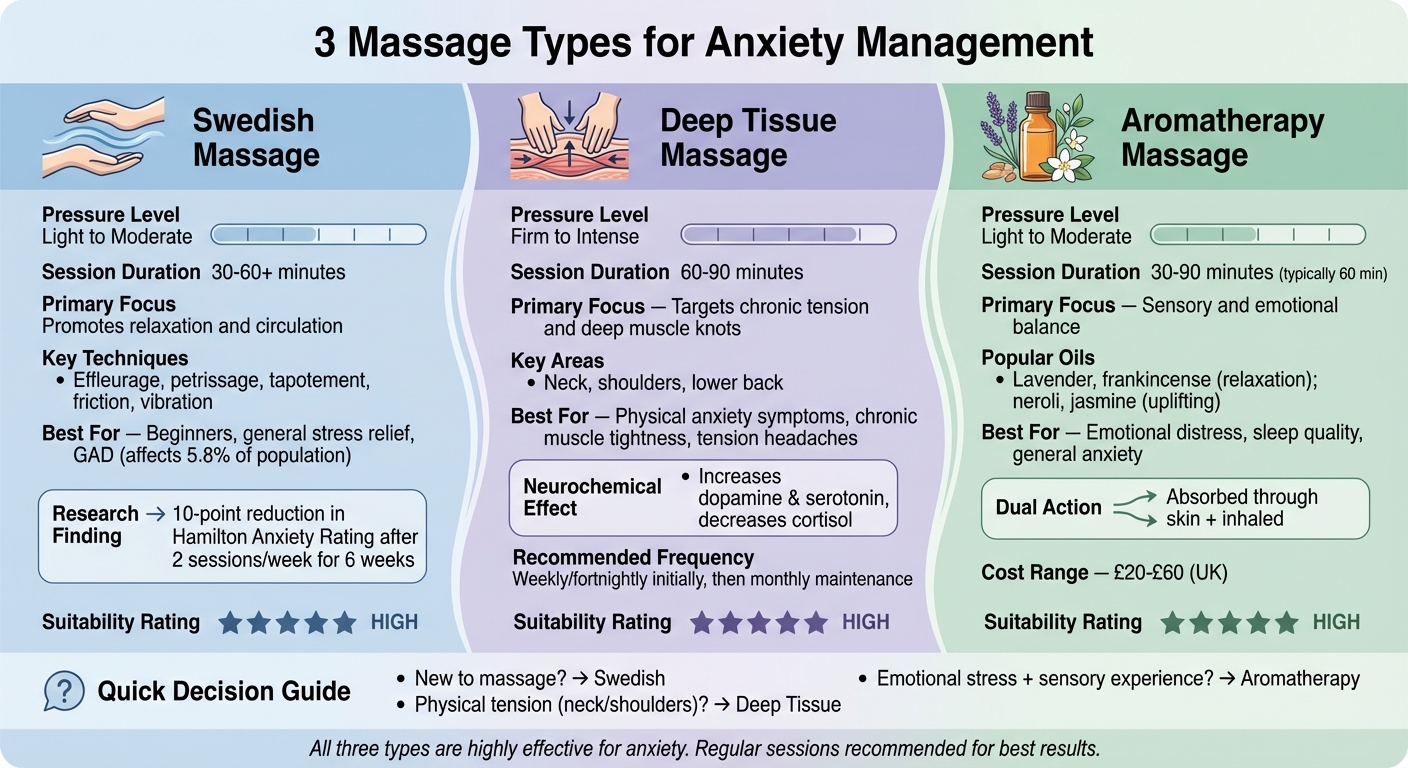
Comparison of 3 Massage Types for Anxiety Relief: Swedish, Deep Tissue, and Aromatherapy
Massage Therapy for Anxiety, Depression and Cancer Fatigue
1. Swedish Massage
Swedish massage is a great choice if you're new to massage therapy or looking for a way to manage general anxiety. It uses five main techniques - effleurage (long, smooth strokes), petrissage (kneading), tapotement (rhythmic tapping), friction, and vibration - to deliver a soothing experience.
Pressure Level
The pressure in a Swedish massage is usually light to firm, striking a balance that promotes relaxation without discomfort. If the pressure feels too intense at any point, let your therapist know - they can easily adjust it to make you more comfortable.
"The main goal of Swedish massage is to calm your body and mind while relieving muscle tension."
– Wendy Wisner, Health Journalist
Session Duration
Most sessions last between 60 and 90 minutes, although shorter 30-minute options may also be available. Studies suggest that two 60-minute sessions per week, over a six-week period, can significantly reduce anxiety levels. For example, participants in one study saw their Hamilton Anxiety Rating Scale scores drop by nearly 10 points.
The length of your session can be tailored to your needs, but regular sessions are key to maximising the benefits of Swedish massage for anxiety relief.
Primary Focus and Suitability
Swedish massage is all about relaxation and creating a sense of calm. Rather than focusing on specific problem areas, it uses flowing, gentle strokes to improve blood circulation, relieve surface muscle tension, and help you reconnect with your body. This can be particularly helpful for those who feel disconnected or overwhelmed due to anxiety.
This technique is effective for easing both general anxiety and emotional distress. It’s especially beneficial for individuals with generalised anxiety disorder (GAD), which affects around 5.8% of the population, as well as for managing stress caused by work or medical challenges. By addressing both physical and emotional tension, Swedish massage offers a comprehensive sense of relief.
"By lowering cortisol and increasing serotonin, you're boosting your body's ability to fight off pain, anxiety and feelings of sadness."
– Amy Marsolek, Massage Therapist, Mayo Clinic Health System
2. Deep Tissue Massage
Deep tissue massage involves applying firm pressure to reach deeper layers of muscle and connective tissue where stress often builds up. It’s particularly helpful for easing long-standing tension in areas like the neck, shoulders, and lower back.
Pressure Level
Unlike Swedish massage, deep tissue massage uses stronger pressure to release deeply held muscle tension. This firmer approach can trigger a relaxation response, helping to ease both body and mind. It’s important to communicate with your therapist if the pressure feels too intense. The goal is to create a balance that allows for effective tension release without discomfort.
Session Duration
Sessions typically range between 60 and 90 minutes. A one-hour session alone can help improve mood and promote relaxation. For those dealing with anxiety, starting with weekly or fortnightly sessions is often suggested. As symptoms improve, you might transition to monthly sessions for maintenance.
Primary Focus and Suitability
The primary aim of deep tissue massage is to address tension and promote neurochemical balance. By applying steady pressure to areas of built-up tension, this technique can help boost levels of dopamine and serotonin while reducing cortisol, the hormone linked to stress. This process activates the parasympathetic nervous system, guiding your body from a "fight or flight" state into a more relaxed "rest and digest" mode.
This massage style is particularly beneficial for individuals whose anxiety presents physically, such as chronic muscle tightness, tension headaches, or an overactive nervous system. It can also aid emotional regulation, making it a valuable option for those managing generalised anxiety disorder (GAD) and its physical and emotional effects.
"When stress settles deep in the muscles - especially the neck, shoulders, and lower back - deep tissue massage helps. Studies on deep pressure techniques show that they increase dopamine and serotonin levels, supporting calm and emotional regulation."
– Clinical Massage MK
sbb-itb-abe02fa
3. Aromatherapy Massage
Aromatherapy massage builds on the physical relaxation benefits of Swedish and Deep Tissue massages by adding an extra sensory element - essential oils.
This technique combines gentle massage strokes with essential oils derived from plants, which are blended with carrier oils or creams. These oils are absorbed through the skin, creating a soothing experience that can help ease anxiety and emotional stress. At the same time, the oils are inhaled during the session, offering a twofold effect that calms both mind and body.
Pressure Level
The massage itself involves soft, gentle strokes designed to relax and aid in the absorption of the oils. While therapists can adjust their technique to address individual preferences, the pressure is much lighter compared to deep tissue massage.
Session Duration
A typical full-body aromatherapy massage lasts about 60 minutes. However, sessions can vary between 30 and 90 minutes, depending on whether you prefer a brief focus on specific areas or a more comprehensive treatment. Costs generally range from £20 to £60, reflecting standard rates in the UK. This flexibility makes it suitable for both quick relaxation sessions and longer, more immersive experiences.
Primary Focus and Suitability
The primary aim of this massage is to encourage emotional balance and sensory calm through the therapeutic properties of essential oils. During a consultation, your therapist will select oils tailored to your emotional needs. For example, lavender and frankincense are often used for deep relaxation, while neroli and jasmine are chosen for their uplifting effects.
"Essential oils, which are highly aromatic, are readily absorbed into the body via the skin and lungs, and are believed to affect the body on all levels - physically, mentally and even emotionally/spiritually."
– Federation of Holistic Therapists
This style of massage is particularly helpful for reducing general anxiety, alleviating emotional distress, and improving sleep quality. It’s also widely used in hospitals and hospices to support both patients and their carers. A 2016 Cochrane review reported that aromatherapy massage left participants feeling relaxed and provided positive benefits. To maintain these calming effects at home, therapists often recommend using specific essential oils in your bath or through inhalation.
Comparison Table
After examining each massage technique in detail, here's a quick side-by-side comparison to highlight their main differences. Use this guide to find the massage that aligns best with your anxiety relief needs.
| Massage Type | Pressure Level | Session Duration | Primary Focus | Suitable for Anxiety |
|---|---|---|---|---|
| Swedish | Light to Moderate | 30–60+ minutes | Promotes relaxation and circulation | High; great for beginners or those seeking a gentle approach. |
| Deep Tissue | Firm to Intense | 30–60+ minutes | Targets chronic tension and knots | High; ideal if anxiety causes physical tension or deep muscle pain. |
| Aromatherapy | Light to Moderate | 30–60+ minutes | Focuses on sensory and emotional balance | High; incorporates essential oils like lavender or chamomile to amplify relaxation. |
Swedish massage provides a gentle way to release general tension, Deep Tissue works wonders for stubborn muscle tightness, and Aromatherapy adds the soothing power of essential oils to calm both the body and mind. Think about how your anxiety shows up - whether as physical discomfort, emotional stress, or both - and use this table to choose the massage that best suits your needs.
Conclusion
When dealing with mental, physical, or emotional stress, each massage technique offers a distinct way to help calm your nervous system. Swedish massage is a gentle option, perfect for easing general stress and ideal for beginners. Deep Tissue massage targets stubborn knots and chronic muscle tension, while Aromatherapy massage combines the calming effects of essential oils to enhance relaxation.
Studies show that regular massage sessions can help rebalance stress hormones, allowing your body to "relearn" how to relax effectively.
Choosing the right type of massage depends on how your body responds to anxiety. For tension concentrated in the shoulders and neck, Deep Tissue massage might be your best bet. If you're looking for a soothing, multi-sensory experience, Aromatherapy could be a great fit. And if you're new to massage therapy, Swedish massage offers a gentle and reliable introduction.
Once you've identified the right approach for your needs, finding a qualified therapist is straightforward. You can use platforms like Find a Massage Therapist to search by location and treatment type, making it easier to move from discomfort to relief.
For the best results, regular sessions are recommended. If you experience chronic pain or have musculoskeletal issues, it's always wise to consult your GP first.
This guide provides the tools you need to select the massage technique that aligns with your anxiety management goals.
FAQs
How often should I have a massage to help manage anxiety?
Regular massages can be a helpful way to manage anxiety. Some individuals benefit from weekly sessions, while others might find shorter sessions, two or three times a week, more effective. These shorter sessions typically last between 15 and 30 minutes.
The right frequency depends on your personal needs and how your body reacts to massage. Speaking with a qualified massage therapist can help you develop a schedule that aligns with your goals and fits seamlessly into your lifestyle.
Can an aromatherapy massage help improve sleep?
Aromatherapy massage is often praised for its soothing qualities, helping to ease the body and mind into a state of relaxation. By blending gentle massage techniques with essential oils, it may help alleviate stress and tension - two common culprits behind restless nights.
Although many individuals experience better sleep following an aromatherapy massage, the scientific research backing its effectiveness for sleep issues remains limited. Even so, it can serve as a comforting addition to your self-care routine, particularly if anxiety or stress tends to interfere with your ability to unwind at night.
What happens during a Swedish massage, and how can it help with anxiety?
Before your Swedish massage begins, your therapist will have a quick chat with you to learn about your health, stress levels, and any areas you'd like them to focus on. Once that's done, you'll be asked to undress to whatever level you feel comfortable with and lie down on a padded massage table. Towels will be used to keep you warm and ensure your privacy throughout the session.
The therapist will apply light oils or creams and use a combination of smooth, flowing strokes, gentle kneading, and light tapping techniques. These movements are designed to ease muscle tension, boost circulation, and help you unwind. You can let the therapist know how much pressure feels right for you, making the experience tailored to your needs. Most sessions last about 60 minutes, but there are shorter options available if you'd prefer to focus on specific areas like your back, neck, or shoulders.
Swedish massage is also a great way to help manage anxiety, as it encourages relaxation and eases physical tension. If you're ready to try it, check out Find a Massage Therapist, a trusted UK directory that connects you with local professionals who specialise in stress relief.