When you're stressed or in pain, choosing the right massage can make all the difference. Here's the key takeaway:
- For stress relief: Opt for Swedish, aromatherapy, or Shiatsu massage to relax your mind and body.
- For pain management: Deep tissue, trigger point, or sports massage are better for chronic pain, muscle knots, or stiffness.
How to decide?
- Identify your main concern: stress symptoms (like anxiety, tension, or insomnia) vs. physical pain (like soreness, restricted movement, or chronic aches).
- Match your symptoms to the right massage technique (e.g., Swedish for general relaxation, deep tissue for chronic pain).
- Communicate your needs and preferred pressure level to your therapist during the consultation.
For the best results, book a qualified therapist with proper training and professional registration. Regular sessions (every 3–4 weeks) and good aftercare, like staying hydrated, can maximise the benefits.
Massage Types for Stress Relief vs Pain Management: Symptoms and Techniques Guide
Stress and Pain? Massage These Two Muscles
Identify Your Primary Need: Stress or Pain
Before scheduling a massage, it’s crucial to figure out what you need most: relief from mental stress or help with physical pain. Pinpointing your main concern will guide you towards the most effective massage technique. Here's how to recognise the signs and find the right match for your symptoms.
Signs You Need Stress Relief
If stress is weighing you down, you might notice emotional and mental signs like irritability, anxiety, feeling overwhelmed, or racing thoughts that make it hard to relax. Sleep might also be a struggle - you could find it hard to fall asleep, wake frequently, or feel drained even after hours in bed.
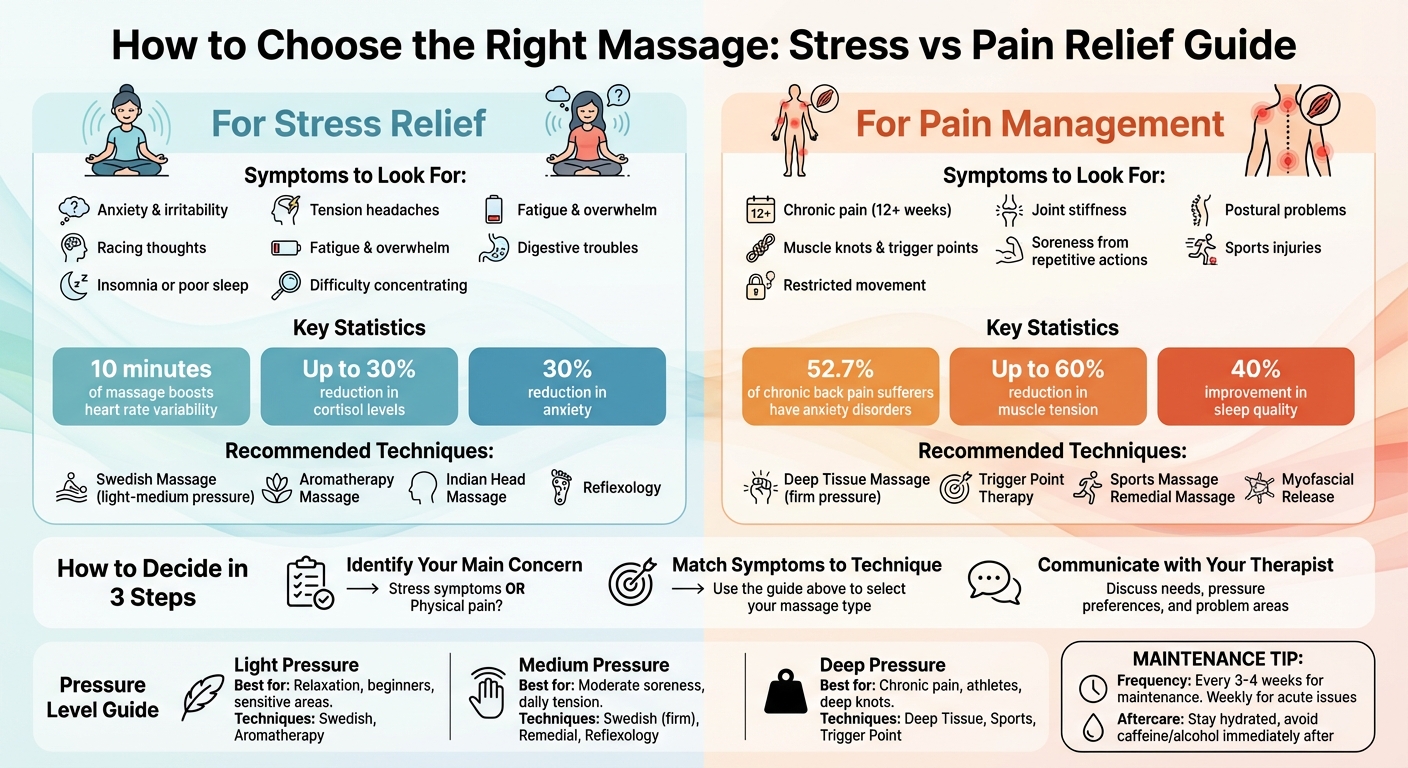
Stress doesn’t just affect your mind; it shows up in your body too. You might experience tension headaches, migraines, constant fatigue, digestive troubles like bloating, or even shallow breathing and panic attacks. Concentration might feel like a chore, decisions could seem harder than usual, and forgetfulness might creep in. Here’s some good news: studies reveal that just 10 minutes of massage can boost heart rate variability, a key sign of relaxation. Regular sessions can also lower cortisol levels by up to 30% and reduce anxiety by the same amount.
Signs You Need Pain Management
If pain is your primary issue, especially discomfort lasting more than 12 weeks, pain management should take priority. Signs include restricted movement, joint stiffness, or muscles that feel sore or tender during activity. You might even notice specific "knots" or trigger points - those tight, tender spots under the skin - or soreness from repetitive actions like sitting too long or standing for extended periods.
Postural problems can also cause aches and pains, often linked to how you carry yourself or physical strain from regular workouts. Interestingly, chronic pain often overlaps with mental stress; for instance, a study showed that 52.7% of people with chronic low back pain also experienced anxiety disorders. Massage therapy can help here too - it’s been found to ease muscle tension by up to 60% and improve sleep quality by 40% with ongoing sessions.
Below is a table to help you connect your symptoms to the most suitable massage techniques.
| Goal | Primary Symptoms | Recommended Techniques |
|---|---|---|
| Stress Relief | Anxiety, insomnia, general tension, fatigue, racing thoughts | Swedish, Aromatherapy, Shiatsu, Indian Head Massage |
| Pain Management | Chronic pain, muscle knots, injury recovery, restricted motion | Deep Tissue, Trigger Point, Remedial, Sports Massage |
| Balance/Flexibility | Stiffness, "blocked" energy, reduced range of motion | Thai Yoga Massage, Reflexology |
Use this guide to match your symptoms with the right massage technique and take the first step towards feeling better.
Common Massage Techniques for Stress and Pain
Once you've pinpointed whether stress or pain is your primary concern, it's time to dive into massage techniques that can offer relief. Each method works differently, so understanding their unique benefits will help you choose the most suitable option.
Swedish Massage for Relaxation
Swedish massage is a go-to option for relaxation. It uses light-to-medium pressure with long, flowing strokes that soothe the nervous system, ease muscle tension, and promote a sense of calm. If you're new to massage therapy, this gentle approach can be an excellent introduction.
This technique encourages the release of "feel-good" chemicals - endorphins, serotonin, dopamine, and oxytocin - while reducing cortisol, the hormone linked to stress. It also helps improve circulation, relieves tight muscles, and flushes out metabolic waste like lactic acid. In fact, around 70% of people turn to massage for relaxation and muscle pain relief.
To make the most of your session, stay hydrated before and after, and let your therapist know the level of pressure you're comfortable with.
Deep Tissue Massage for Chronic Pain
If you're dealing with chronic pain or long-standing tension, deep tissue massage might be the solution. Unlike Swedish massage, this technique focuses on deeper muscle layers and connective tissues, using slow, firm strokes to release tight knots and break down scar tissue.
"Deep tissue massage gets into your muscles and tendons to release that tightness."
– Victoria Bodner, Licensed Massage Therapist, Cleveland Clinic
This method boosts blood flow to targeted areas, helping to flush out toxins and trigger a release of dopamine while lowering cortisol levels. Often viewed as a therapeutic option, deep tissue massage is commonly used to address chronic back pain, sports injuries, and alignment issues. While the pressure is firm, it shouldn't hurt - if it does, let your therapist know immediately. It's also normal to feel a bit sore for a day or two afterward.
If you're curious about a more energy-centred approach, Shiatsu massage might be worth exploring.
Shiatsu Massage for Balance and Stress Relief
For those who prefer a technique that blends physical and energy work, Shiatsu massage could be a great fit. Originating from Japan and influenced by traditional Chinese medicine, Shiatsu focuses on balancing the body's energy, or "Qi", by targeting specific meridians and acupressure points. Using rhythmic pressure from fingers, thumbs, or palms, therapists aim to release energy blockages and relieve tension.
Shiatsu is particularly effective at reducing stress by activating the "rest-and-restore" nervous system and calming the "fight-or-flight" response. This can lead to reduced muscle tension, relief from headaches, and easing of chronic discomfort in areas like the neck, shoulders, and back. Research suggests it can also complement standard treatments for lower back pain and improve sleep quality through self-practice.
Shiatsu sessions are usually performed on a mat, with clients fully clothed in loose, comfortable attire. To ensure a smooth experience, wear thin, relaxed clothing and communicate if the pressure feels too intense. Sessions typically last between 60 and 90 minutes.
Match Your Symptoms to a Massage Technique
Finding the right massage technique can make all the difference when addressing specific symptoms. Instead of leaving it to chance, let your body’s signals guide you towards the most effective treatment.
General Tension or Anxiety
When stress takes a toll on both your body and mind, it’s important to choose a massage that eases overall tension. If you’re feeling restless, struggling to relax, or carrying tightness throughout your body, Swedish massage might be the perfect solution. Research from Emory University found that individuals with generalised anxiety disorder who received Swedish massages twice weekly for six weeks experienced a noticeable drop in anxiety levels.
For emotional stress paired with insomnia or low mood, Shiatsu or aromatherapy massage can help restore balance and lift your spirits. Another option is reflexology, which focuses on applying pressure to specific areas of your hands and feet. A 2018 review highlighted its ability to significantly reduce anxiety in patients undergoing cardiovascular procedures.
If your tension also involves lingering soreness or deeper muscle pain, you may benefit from exploring more targeted techniques.
Muscle Soreness or Chronic Pain
For those dealing with persistent aches or tightness, deep tissue massage works on the deeper layers of muscle, while sports massage is ideal for easing exercise-related soreness. If the issue lies in restricted connective tissues, myofascial release can help improve flexibility and comfort. Regular maintenance massages every three to four weeks are often sufficient, but if you’re experiencing chronic discomfort, weekly sessions might be more suitable.
If your pain is focused on specific areas, you’ll need a more precise approach.
Localised Pain or Trigger Points
When pain stems from a specific spot, trigger point therapy is highly effective. These “knots” are small muscle spasms that can send pain to other areas of the body. A 2018 review found that applying this technique to head and neck muscles could reduce the frequency and severity of tension headaches and migraines.
"A trigger point is a tiny muscle spasm or tight spot in the tissue... the massage therapist uses focused and direct pressure to target those spots. This increases blood flow to the areas, helping them release."
– Victoria Bodner, Licensed Massage Therapist, Cleveland Clinic
For pain caused by repetitive movements or athletic activities, sports massage can target the affected area while addressing surrounding muscles. If you need quick relief between sessions, try using a foam roller or a tennis ball to apply controlled pressure to tight spots.
sbb-itb-abe02fa
Choose the Right Pressure Level
Once you've decided on the best massage technique for your symptoms, the next step is adjusting the pressure to suit your needs. The intensity of pressure plays a big role in how effective your session will be. Finding the right level depends on your goals, pain tolerance, and what your body requires.
Understanding Pressure Levels
Light pressure is often used in techniques like Swedish and aromatherapy massage. It's perfect for beginners or for working on sensitive areas. This gentle approach helps improve circulation, lowers cortisol levels, and boosts feel-good hormones like serotonin and dopamine.
Medium pressure is the go-to choice for most people. It feels firm yet comfortable, making it ideal for easing muscle knots and tension while still allowing you to relax. This level strikes a balance, making it great for everyday stiffness or moderate discomfort.
Deep pressure targets the deepest layers of muscle and connective tissue. It’s particularly helpful for chronic tension, athletes, or those dealing with tightness from repetitive strain. Therapists often refer to the right intensity as the "Goldilocks spot" - a level of soreness or tenderness that feels productive and provides relief. However, steer clear of "bad pain" that makes you tense up or grimace, as this can overstimulate the tissue and leave you feeling sore for days.
"Treatment should NEVER be something you just have to 'get through'!"
– Sally Lake, Deep Tissue and Remedial Massage Therapist
| Pressure Level | Best For | Common Techniques |
|---|---|---|
| Light | Relaxation, stress relief, beginners, sensitive areas | Swedish, Aromatherapy, Lymphatic Drainage |
| Medium | Moderate soreness, daily tension, posture-related stress | Swedish (firm), Remedial, Reflexology |
| Deep | Chronic pain, athletes, deep knots, injury recovery | Deep Tissue, Sports, Trigger Point Therapy |
Choosing the right pressure level enhances the effectiveness of the technique you’ve selected. But even the perfect pressure won't work its magic unless you communicate your preferences clearly.
Communicating Your Preferences
To make the most of your session, be upfront about your needs. During the pre-treatment consultation, share your goals, pain tolerance, and any areas that need special attention. Whether you’re looking for a soothing experience with light pressure or aiming to tackle stubborn knots with a deeper touch, let your therapist know.
If it’s your first time, it’s best to start with lighter pressure. You can always ask for more intensity as your body adjusts during the session. For deeper work, try breathing deeply and steadily - it helps your muscles relax and makes the treatment more effective. Remember, a good massage doesn’t need to hurt to be effective.
Find a Qualified Massage Therapist Near You
Now that you’ve identified the technique and pressure level that works best for you, it’s time to find a therapist who’s skilled and experienced enough to meet your needs. Choosing the right professional is crucial to ensuring your session addresses your specific concerns. Use our recommended directory to connect with trusted therapists in your area.
Using Find a Massage Therapist
When you’re ready to take the next step, Find a Massage Therapist is a convenient tool designed to help you locate qualified professionals near you. This directory allows you to filter therapists by location and speciality, saving you the hassle of endless searching. With vetted listings, you can book with confidence, knowing you’re in capable hands.
What to Look for in a Therapist
Here are some key points to consider when selecting your massage therapist:
- Check their qualifications. A professional therapist should have at least a QCF Level 3 in Body Massage, which ensures they’ve undergone practical, hands-on training aligned with national standards. Their qualifications should meet National Occupational Standards (NOS), such as CNH1 (understanding client needs), CNH2 (creating treatment plans), and CNH7 (delivering massage therapy).
- Verify professional registration. Look for therapists listed on accredited registers like the FHT Therapist Register or the Complementary Medical Association (CMA). Membership on these registers confirms they’re properly trained, qualified, and insured. Don’t hesitate to ask for proof of their credentials.
- Specialist training is essential for specific needs. If you’re seeking massage for sports recovery, chronic pain, or prenatal care, ensure the therapist has additional training in these areas. General beauty therapy courses often include basic massage units, but these may not meet the criteria required for clinical or complementary healthcare registers.
- Pay attention to their consultation process. A professional therapist will always conduct a thorough consultation before starting treatment. This includes reviewing your medical history, lifestyle, and any contraindications. This step ensures the session is tailored to your specific needs. They should also explain their draping techniques, which involve using towels to maintain your comfort and modesty during the session.
Conclusion
Start by identifying what your body needs most. If you're dealing with stress or tension, Swedish massage or Aromatherapy massage can help you unwind and lower stress hormone levels. On the other hand, if you're tackling chronic pain, muscle knots, or limited movement, Deep Tissue massage or Trigger Point therapy may be more effective, as these techniques target deeper layers of muscle and fascia.
Choosing the right technique is just the beginning. Communication plays a huge role in getting the most out of your session. Once you've pinpointed whether you need stress relief or pain management, make sure to share your pressure preferences and any specific problem areas with your therapist. Keep in mind that Deep Tissue massage might feel slightly uncomfortable as it works through knots, whereas Swedish massage should feel gentle and calming. If anything feels too intense, don't hesitate to speak up.
Equally important is finding the right professional. In the UK, where massage therapy isn't currently regulated, it's crucial to ensure your therapist has proper qualifications and belongs to a recognised professional organisation. Tools like Find a Massage Therapist can help you locate qualified practitioners near you. A well-trained therapist ensures the treatment is both effective and safe.
Finally, don't overlook aftercare. For ongoing benefits, consider scheduling sessions every 3–4 weeks, or weekly if you're addressing acute issues. After your massage, stay hydrated to help ease muscle soreness, and try to avoid caffeine or alcohol immediately afterwards. With the right combination of technique, communication, and aftercare, you can take meaningful steps towards lasting relief and relaxation.
FAQs
How do I decide between a Swedish or deep-tissue massage for stress or pain relief?
Choosing the right massage depends on what you're hoping to achieve and your personal preferences. If your goal is to unwind and let go of stress, a Swedish massage might be the perfect fit. This technique uses gentle, flowing strokes with light-to-moderate pressure, helping to relax your nervous system and boost circulation. On the other hand, if you're dealing with persistent muscle tension or chronic pain, a deep-tissue massage could be more effective. It involves firmer pressure to work on knots and deeper muscle layers, which can feel intense but often delivers lasting relief.
Think about the areas you want to focus on. Swedish massage is ideal for general tension in spots like the neck, shoulders, or back, while deep-tissue massage is better suited for tackling chronic discomfort or sports-related injuries. Be sure to communicate with your therapist about your preferred pressure level and any specific areas you’d like them to address. If you’re not sure which massage style is right for you, consider booking shorter sessions of both to see which one feels more effective.
To find a qualified massage therapist in the UK, check out Find a Massage Therapist. This resource lets you search for professionals who specialise in Swedish or deep-tissue techniques, making it easier to find someone near you who matches your needs.
What should I tell my massage therapist before the session?
Before your massage, it’s important to share a few key details with your therapist. This helps make sure the session suits your needs and is carried out safely. Start by mentioning any medical conditions, medications you’re taking, allergies, or if you’re pregnant, as these can affect the techniques your therapist might use. Be specific about any areas where you feel pain, tension, or discomfort, and let them know if there are spots you’d rather they avoid.
You should also talk about your pressure preferences - whether you enjoy a gentler touch or prefer deeper work. Sharing past massage experiences, including what worked well and what didn’t, can be helpful too. Don’t hesitate to ask about their qualifications or the treatment plan they suggest. This ensures their approach aligns with your goals, whether you’re looking to ease stress or address specific aches. Clear communication sets the stage for a relaxing and effective session designed just for you.
How often should I have a massage for stress or pain relief?
The frequency of massages varies depending on your goals - whether you're seeking stress relief, pain management, or support for recovery. It's always best to work with your therapist to tailor a plan that fits your specific needs.
If you're dealing with pain or recovering from an injury, starting with sessions every one to two weeks can help your body respond and heal effectively. As your condition improves, you might find that monthly appointments are enough to maintain progress. For stress relief, weekly or fortnightly massages are often a good starting point. Once you feel a more lasting sense of relaxation, you can reduce the frequency to monthly visits.
Take the time to discuss your objectives with your therapist so they can help design a schedule that aligns with your lifestyle and goals.