Swedish massage is a popular therapy focused on relaxation, reducing stress, and easing muscle tension. It uses gentle techniques like long strokes, kneading, tapping, and vibrations to improve circulation, relieve pain, and promote overall well-being. Here's what you need to know:
- Stress relief: Lowers cortisol by up to 30% while boosting feel-good hormones like serotonin and dopamine.
- Better circulation: Enhances blood flow and lymphatic drainage, helping detoxify the body and reduce swelling.
- Pain reduction: Eases muscle tension, alleviates chronic pain, and supports recovery from injuries.
- Improved flexibility: Loosens tight muscles and joints, aiding mobility and range of motion.
- Mood and sleep benefits: Promotes relaxation, stabilises mood, and improves sleep patterns.
- Supports immunity: Boosts white blood cell count and lowers blood pressure for better overall health.
- Relief from headaches and PMS: Reduces tension headaches and menstrual discomfort through targeted techniques.
Swedish massage is suitable for managing stress, improving physical comfort, and enhancing mental well-being. Regular sessions tailored to your needs can deliver lasting results. Always choose a qualified therapist for safe and effective treatment.
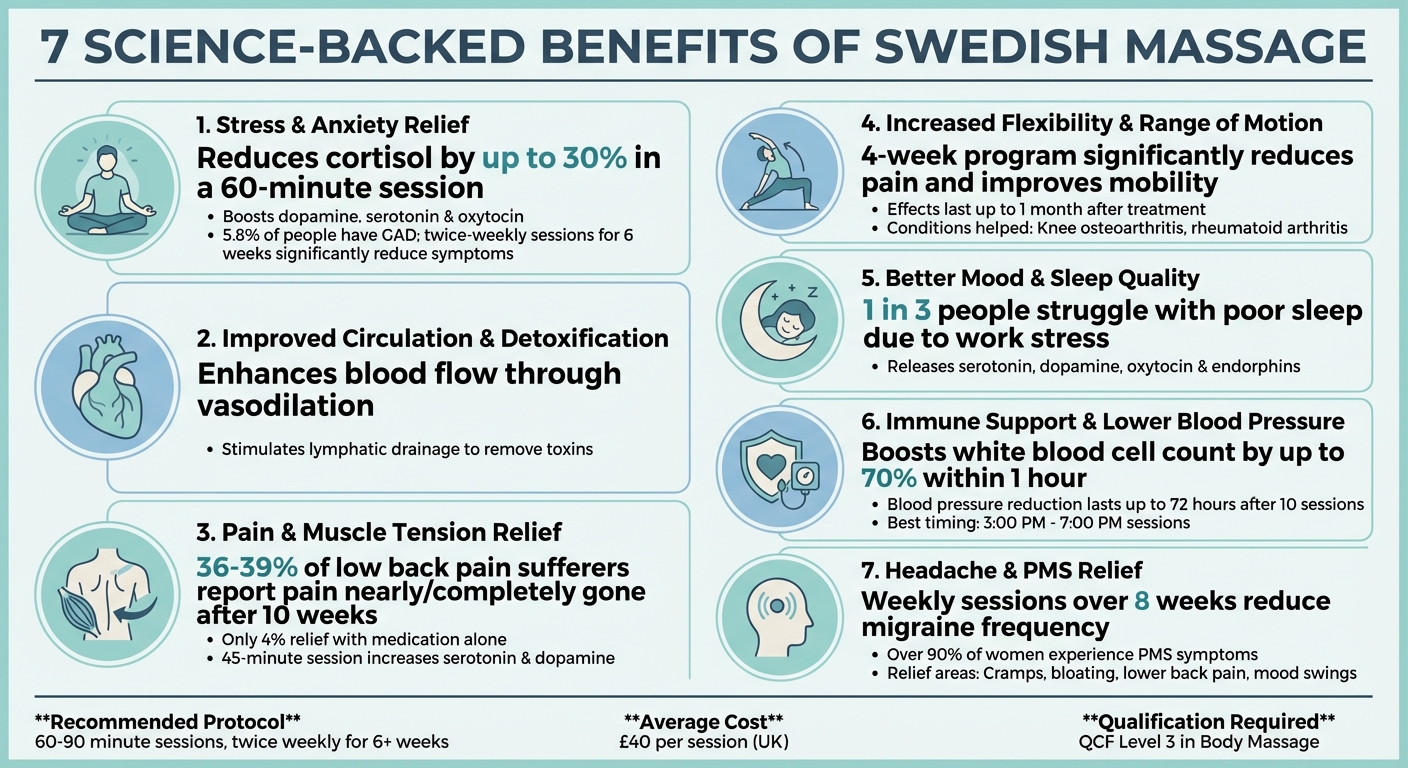
7 Science-Backed Benefits of Swedish Massage: Key Statistics and Health Outcomes
Health Benefits of Swedish Massage
1. Reduces Stress and Anxiety
When you're under stress, your body ramps up production of cortisol - a hormone that keeps you alert but can wreak havoc when levels stay high. Swedish massage has been shown to lower cortisol levels by as much as 30% during a single 60-minute session. At the same time, it boosts feel-good hormones like dopamine, serotonin, and oxytocin, helping you transition from a state of stress to one of calm.
These hormonal changes aren’t random - they're directly linked to the massage techniques used. The smooth, gliding strokes of effleurage and the gentle kneading of petrissage work together to encourage relaxation. This shift in your nervous system leads to physical changes, such as reduced blood pressure, a slower heart rate, and more steady breathing.
This calming effect can be particularly helpful for those dealing with anxiety disorders. For instance, around 5.8% of people live with Generalised Anxiety Disorder (GAD). Research by Mark Hyman Rapaport revealed that receiving Swedish massages twice a week over six weeks significantly reduced symptoms of GAD, depression, and overall distress.
"The main goal of Swedish massage is to calm the body and mind, and lightly release muscle tension." – Wendy Wisner, Journalist and IBCLC, Health.com
To experience these benefits, aim for 60–90-minute sessions twice a week for at least six weeks. Booking appointments later in the day may also help improve your sleep.
2. Improves Circulation and Detoxification
In addition to its stress-relieving effects, Swedish massage plays a key role in boosting circulation and supporting detoxification. By enhancing blood flow and stimulating lymphatic drainage, this massage technique delivers a host of health benefits. The gentle, gliding effleurage strokes used during a session activate nerve receptors in the skin, causing blood vessels to widen - a process known as vasodilation. This allows for improved blood flow, ensuring oxygen and nutrients are delivered more effectively to tissues and cells. This initial increase in circulation paves the way for the massage's other techniques to work their magic.
"Swedish massage can release muscle tension enabling blood to naturally cleanse, relieve and repair damaged tissues." – Omni Academy
The kneading and rolling motions of petrissage, another signature technique, generate friction that warms the soft tissues. This not only promotes further vasodilation but also aids in efficiently directing blood back to the heart.
Swedish massage doesn’t just benefit the circulatory system - it also gives the lymphatic system a much-needed boost. Unlike blood, lymph fluid doesn’t have a central pump like the heart to keep it moving. Instead, it relies on external pressure. The massage provides this pressure, encouraging lymphatic drainage and guiding fluid to lymph nodes, where toxins and waste products are filtered out. This process can be particularly effective in reducing swelling and inflammation.
To maximise the detoxifying effects of your massage, it’s a good idea to drink plenty of water afterwards. This helps your kidneys flush out the toxins that have been mobilised during the session. For those dealing with chronic issues like hypertension or persistent muscle fatigue, regular Swedish massage sessions may offer ongoing relief and support.
3. Relieves Muscle Tension and Pain
Swedish massage is well-known for its ability to ease muscle tension and alleviate pain. Therapists use a combination of techniques, including long, flowing strokes to warm up the muscles, kneading motions to release deeper knots, and focused methods to address stubborn tightness. These approaches not only help relax the muscles but also set the stage for better recovery.
Beyond simply releasing tension, Swedish massage promotes the removal of metabolic by-products like lactic acid from the muscles. It also enhances blood circulation, delivering oxygen-rich blood that aids recovery and reduces soreness. A study involving 400 adults with moderate to severe low back pain revealed that 36–39% of those who received massages reported their pain was nearly or completely gone after 10 weeks. By contrast, only 4% of participants who relied solely on medication and muscle relaxants experienced similar relief. Additionally, research suggests that a 45-minute session can increase levels of serotonin and dopamine - neurotransmitters that play a role in mood regulation and pain reduction.
For those dealing with chronic pain, such as persistent neck or shoulder discomfort, scheduling more frequent or longer sessions may provide greater relief [4, 17]. Swedish massage has shown benefits for managing conditions like fibromyalgia, rheumatoid arthritis, and chronic back pain. However, it's essential to consult with a healthcare professional before starting massage therapy for any chronic condition.
Always communicate your preferences with your therapist - Swedish massage should be soothing, not painful. If the pressure feels too much, don't hesitate to speak up. Lastly, ensure your therapist is licensed or accredited to guarantee a safe and effective treatment.
4. Increases Flexibility and Range of Motion
Swedish massage helps ease tight muscles and stiff joints, making it easier to move and stretch. Techniques like kneading (petrissage) work on deep muscle tension, friction stimulates connective tissues, and long, flowing strokes (effleurage) prepare muscles for further relaxation. Together, these methods not only calm the muscles but also gently mobilise joints, promoting smoother, more fluid movement. This initial relief lays the groundwork for better connective tissue function.
"By gently working the ligaments and muscles, this massage can help to improve your range of movement, keeping you supple and agile." – Secret Spa
Beyond muscle relaxation, Swedish massage focuses on connective tissues, such as ligaments and tendons. It can assist in reorganising collagen fibres after an injury, which can help prevent them from setting in ways that restrict movement. Many therapists also include passive joint movements and light stretches during sessions to further enhance flexibility and improve the range of motion.
Studies show that a four-week programme of Swedish massage can significantly reduce pain and improve mobility in conditions like knee osteoarthritis and rheumatoid arthritis. One study even noted notable pain relief immediately after treatment, with effects lasting up to a month later.
For the best results, let your therapist know about any areas of tightness or discomfort during your consultation. You can also ask if assisted stretches could be included in your session. If you’re regularly active, consistent massage sessions can help maintain joint mobility and stop chronic tension from building up. Don’t forget to stay hydrated after your massage to support your body’s recovery and maximise flexibility improvements.
sbb-itb-abe02fa
5. Improves Mood and Sleep Quality
Swedish massage stimulates the release of hormones like serotonin, dopamine, oxytocin, and endorphins - often referred to as the "feel-good" chemicals. These hormones work together to stabilise your emotional state and counteract stress hormones, creating a calming effect that can significantly improve your mental well-being. This hormonal balance not only uplifts your mood but also plays a key role in enhancing sleep quality.
Serotonin, in particular, is known for its dual benefit: it helps you feel more positive and supports better sleep by promoting relaxation. Given that around one in three people struggle with poor sleep due to work-related stress, this can be a game-changer. Swedish massage techniques like effleurage and petrissage gently soothe the body, encouraging deep relaxation that naturally improves sleep patterns.
To maximise the benefits, think about scheduling your massage in the evening - many salons stay open until 9 or 10 pm - so you can seamlessly transition from the calming session to a restful night’s sleep. If you're dealing with stress, anxiety, or other emotional challenges, share this with your therapist during the consultation. They can customise the treatment to address your specific concerns. Regular sessions can help maintain these benefits, ensuring better mood and sleep over time.
6. Supports Immune Function and Lowers Blood Pressure
Swedish massage isn’t just about relaxation - it plays a role in supporting your immune system and naturally managing blood pressure. Stress hormones like cortisol and arginine-vasopressin (AVP) can weaken your immune defences. By encouraging a shift from the "fight or flight" state to a "rest and repair" mode, Swedish massage helps reduce these hormones, allowing your body to better handle challenges.
Research highlights that massage therapy can increase white blood cell counts by as much as 70% within an hour of treatment. Professor Fulvio D'Acquisto from the University of Roehampton explains it best:
"Massage can boost white blood cell count by up to 70% in the hour following treatment, improving the functioning of the immune system."
This is further supported by a randomised trial led by Dr Mark Hyman Rapaport at Cedars-Sinai Medical Center in October 2010. The study involved 53 healthy adults who received a 45-minute Swedish massage. Results showed a significant drop in arginine-vasopressin levels, an increase in circulating lymphocytes (including natural killer cells, T-helper cells, and cytotoxic T-cells), and a reduction in pro-inflammatory cytokines. These changes not only strengthen the immune system but also enhance vascular health.
Swedish massage is also effective in lowering blood pressure. Beyond its hormonal impact, it improves cardiovascular health by promoting vasodilation, or the widening of blood vessels. A study focusing on pre-hypertensive women revealed that after 10 massage sessions, participants experienced a notable reduction in blood pressure lasting up to 72 hours. Techniques such as effleurage and petrissage are particularly effective in encouraging this vasodilation, leading to improved circulation and lower blood pressure.
For the best results, consider booking your massage sessions between 3:00 pm and 7:00 pm, as studies indicate this aligns with your body's natural rhythms. To achieve lasting effects, aim for two sessions per week over a six-week period.
7. Eases Headaches and PMS Symptoms
Swedish massage can work wonders for tension headaches and PMS discomfort by relieving muscle tightness in the neck, shoulders, and head. Its smooth, flowing strokes enhance blood flow and oxygen delivery to these areas, directly addressing pain at its source.
When it comes to migraines, Swedish massage’s muscle-relaxing techniques are particularly effective. A 2016 study with 64 participants found that those who received weekly Swedish massage sessions over eight weeks experienced a noticeable drop in migraine frequency. Many therapists focus on what’s often called the "stress triangle" - the neck, shoulders, and upper back - where tension tends to build up.
Beyond headaches, Swedish massage is also a go-to for easing PMS symptoms. By relaxing the abdominal and lower back muscles, it tackles both the physical pain and emotional strain associated with PMS. With over 90% of women experiencing PMS symptoms in the weeks leading up to their period, the benefits are far-reaching. The massage helps reduce cramps, bloating, lower back pain, and mood swings while encouraging the release of endorphins, serotonin, and dopamine. These natural chemicals stabilise mood and promote better sleep.
"Research shows that massage therapy can be a beneficial treatment for PMS. It helps reduce symptoms by enhancing blood flow, easing muscle tension, and promoting the release of endorphins, the body's natural painkillers." – LaVida Massage
Therapists often use gentle circular motions on the abdomen to relieve bloating and cramps, paired with steady pressure on the lower back to ease lumbar tension. This holistic approach provides both physical relief and emotional balance.
8. Finding a Qualified Swedish Massage Therapist
To truly experience the benefits of a Swedish massage, it's essential to choose a therapist who meets professional standards. In the UK, therapists are required to hold at least a QCF Level 3 qualification in Body Massage. This qualification ensures they’ve undergone hands-on training, including practical and observed sessions, all aligned with the Skills for Health National Occupational Standards (CNH1, CNH2, CNH7).
When looking for a therapist, start by verifying their credentials. Check if they’re listed on accredited registers like the FHT Complementary Healthcare Therapist Register. Membership in such organisations guarantees that the therapist is insured and meets industry standards. As the Federation of Holistic Therapists explains:
"By choosing a massage therapist who is an FHT member, you can be confident that they are professionally trained, qualified and insured".
For a straightforward way to find trusted professionals, use directories such as Find a Massage Therapist. This platform connects you with qualified therapists across the UK, allowing you to search by location and specialism. Every therapist listed has completed comprehensive training in both the theory and practice of Swedish massage.
Before your first session, a qualified therapist will conduct a consultation. This involves discussing your health history, lifestyle, and any specific concerns to ensure the massage is tailored to your needs and safe for you.
Swedish massage sessions typically range from £40 for a 60- to 90-minute full-body treatment. However, it’s important to note that some basic beauty therapy courses include body massage units that fall short of the National Occupational Standards required for professional healthcare registers. Always confirm the therapist’s qualifications, insurance, and registration status before booking your appointment.
Conclusion
Swedish massage provides both physical and mental relief, helping the body and mind work together towards healing. This is achieved through the release of feel-good chemicals like dopamine, serotonin, and oxytocin, alongside a reduction in stress hormones .
The benefits don’t stop there. Improved circulation, eased muscle tension, and greater flexibility are just the beginning. Add to that better sleep and reduced anxiety, and it’s easy to see why so many people turn to this therapy. As Tracey Crowley puts it:
"The significant benefits of Swedish massage make it clear that a regular massage regimen is more than a luxury, but indeed an important ingredient in the cultivation of physical and emotional well-being"
FAQs
How often should I have a Swedish massage to get the best results?
The frequency of Swedish massage sessions varies based on your personal needs, lifestyle, and objectives. For those seeking general relaxation or stress relief, scheduling a session every 2–4 weeks is usually a good approach. However, if you're dealing with specific concerns like muscle tension or recovering from an injury, more regular appointments might be advised.
A conversation with a qualified massage therapist can help you determine the best schedule for your situation, ensuring it aligns with your goals and circumstances.
Can a Swedish massage help with long-term pain relief?
Yes, Swedish massage is often a helpful method for managing chronic pain, including lingering back or neck aches. By encouraging relaxation, boosting blood flow, and relieving muscle tension, it can offer relief for those dealing with persistent discomfort.
Although the effects can differ from person to person, many individuals report feeling less pain and an improved sense of well-being after a session. If you're struggling with ongoing pain, reaching out to a qualified massage therapist might be a worthwhile step towards finding relief.
What should I look for when choosing a Swedish massage therapist?
When choosing a Swedish massage therapist in the UK, it’s crucial to confirm they have the right qualifications and professional training. Ideally, they should have completed an accredited programme, such as a Level 3 Diploma in massage therapy. These courses combine hands-on practice with classroom learning to ensure a solid foundation. Membership in recognised organisations like the Federation of Holistic Therapists (FHT) or the Complementary & Natural Healthcare Council (CNHC) is another strong sign of their professionalism and adherence to ethical standards.
A reputable therapist will always carry out a detailed health consultation before your session. This step ensures the treatment is tailored to your needs and safe for you. Equally important, check that they have valid public liability insurance, which reflects their commitment to client safety and professional responsibility.
To make your search easier, try the Find a Massage Therapist directory. This tool lets you filter by location, skills, and credentials, so you can quickly connect with qualified therapists you can trust.