Aromatherapy massage blends gentle touch with essential oils to help reduce pain and promote relaxation. It works in two ways: inhalation, where scents influence stress levels, and skin absorption, which provides localised relief. Popular oils like lavender, peppermint, and eucalyptus are used for muscle tension, inflammation, and joint pain. A session typically costs £50–£80 for an hour in the UK. Safety is key - always dilute oils, avoid certain scents during pregnancy, and consult a professional therapist for the best results.
Key points:
- How it works: Combines scent and touch for pain relief.
- Popular oils: Lavender (relaxation), peppermint (cooling relief), eucalyptus (joint pain).
- Costs: £50–£80/hour in the UK.
- Safety tips: Dilute oils, avoid certain oils for pregnancy/allergies, and consult a trained therapist.
Aromatherapy massage offers a natural way to ease discomfort while calming the mind. Always ensure proper preparation and consult a certified therapist for personalised treatments.
Aromatherapy - Back of Leg Massage Tutorial
To get the most out of your session, remember to communicate your needs with your therapist throughout the treatment.
sbb-itb-abe02fa
Essential Oils for Pain Management
Essential oils can provide targeted relief for various types of pain. However, they must always be diluted in a carrier oil like sweet almond, jojoba, or grapeseed. For full-body massages, a 1–2% dilution is recommended, while a 3% dilution works better for focused relief.
"Aromatherapy proponents suggest that essential oils may affect a number of biological factors, including heart rate, stress levels, blood pressure, breathing, and immune function." - Ruhr University Study
Professional aromatherapy blends often use a note system to balance the oils’ aromas and therapeutic effects. A typical ratio includes 30% top notes, 50% middle notes, and 20% base notes. Letting the blend rest for 24–48 hours before use allows the oils to meld, creating a more cohesive and effective mixture. Below, we explore how specific essential oils contribute to pain relief.
Lavender Oil for Muscle Tension and Relaxation
Lavender oil is well-known for its ability to reduce inflammation and soothe irritated tissues, making it particularly helpful for arthritis, fibromyalgia, and general muscle soreness. It’s commonly used to relieve lower back pain, neck pain, and menstrual cramps, acting as both a sedative and a pain reliever.
A 2021 study highlighted the effectiveness of lavender aromatherapy in reducing perceived pain levels after spinal procedures. Similarly, patients recovering from caesarean sections reported a 90% satisfaction rate with lavender aromatherapy compared to just 50% in a placebo group. Another study found that children recovering from tonsillectomies needed 40% less paracetamol when lavender aromatherapy was used.
During a massage, lavender oil is applied with gentle strokes to encourage relaxation. Its moderate evaporation rate ensures the scent lingers, providing continuous therapeutic benefits throughout the session.
Peppermint Oil for Cooling Relief and Inflammation
Peppermint oil is prized for its cooling effects, thanks to its menthol content. It relaxes muscles, eases pain, and provides quick relief for sore muscles, spasms, and acute discomfort. Acting as both an analgesic and an antispasmodic, peppermint oil blocks pain signals and reduces muscle contractions.
In a 2024 randomised controlled trial, a blend of lavender and peppermint oil in almond carrier oil significantly reduced pain intensity during acute migraine attacks. Its cooling properties are especially effective on inflamed areas or after physical strain, such as sore shoulders or tired legs.
As a top note, peppermint oil evaporates quickly, delivering an immediate aromatic impact. To extend its effects, therapists often mix it with slower-evaporating oils. However, peppermint oil is highly potent, so it requires careful dilution, particularly for sensitive skin, and should be avoided during pregnancy.
Eucalyptus Oil for Joint and Muscle Relief
Eucalyptus oil is another powerful option for pain management, offering anti-inflammatory and analgesic benefits. It’s particularly effective for joint stiffness and conditions like rheumatoid arthritis. The oil penetrates deeply to reduce swelling and ease chronic muscle soreness.
A 2022 study involving 70 participants showed that eucalyptus aromatherapy significantly reduced pain in individuals with rheumatoid arthritis. It works by improving blood flow to the affected areas and lowering inflammatory markers in the body. During massages, it’s often applied with firm, circular motions around joints and along muscle fibres.
Like peppermint, eucalyptus oil is a top note, providing refreshing, immediate relief. It pairs well with lavender or rosemary for a more balanced therapeutic experience. To maintain its potency, eucalyptus oil should be stored in dark amber glass bottles, away from sunlight.
Chamomile and Rosemary Oil for Chronic Pain
Chamomile oil is valued for its calming properties, making it ideal for managing stress-related chronic pain. Its middle-note profile adds a soothing element to blends. Rosemary oil, on the other hand, improves circulation, delivering oxygen and nutrients to aching tissues - particularly beneficial for fibromyalgia and chronic back pain.
Both oils serve as the core, or "heart", of therapeutic blends. However, rosemary oil should be avoided during pregnancy and by individuals with epilepsy, as it may trigger seizures. When used together in carefully tailored blends, these oils offer a well-rounded approach to managing chronic pain effectively.
Preparing for an Aromatherapy Massage
Getting the setting right is essential for turning a massage into a therapeutic and relaxing experience. Start by keeping the room temperature between 22–24°C, with 40–50% relative humidity. This ensures clients stay comfortable while undressed and helps maintain healthy airways. A height-adjustable massage table should be placed centrally, with at least 90 cm of space around it. This allows for easy, ergonomic movement during the session.
Lighting plays a big role in creating the right atmosphere. Opt for warm-white, dimmable LEDs (2700–3000K) set at 10–30 lux for relaxation and 200–300 lux during consultations. Position the table so the client’s head and feet don’t directly face the door - this adds a sense of privacy. To further enhance relaxation, play slow instrumental music or calming nature sounds at 60–80 bpm, which can help lower the heart rate and soothe the nervous system. These elements together create the perfect environment for an aromatherapy session.
When preparing the oils, use shatter-resistant glass bowls and store blends in amber pump bottles to protect them from light degradation. For general use, dilute oils to 1–2% concentration (about 12 drops per 60 ml of carrier oil), or reduce to 0.5–1% for sensitive clients. Keep carrier oils like sweet almond, jojoba, or grapeseed on hand. To disperse scents, place an ultrasonic diffuser at chest height, 1–2 metres from the massage table. Run it in cycles of 15–30 minutes on and 30–45 minutes off to avoid overwhelming the client’s senses. These steps ensure the aromatherapy enhances the massage without being overpowering.
Maintaining hygiene is just as important. Use medical-grade PU upholstery that can be wiped with alcohol to prevent oil absorption and bacterial growth. Wash all linens at 60°C, and keep essentials like nitrile gloves, face cradle covers, and spill kits within reach. Additionally, Material Safety Data Sheets (MSDS) for all oils should always be accessible in the room. Adhering to these hygiene practices guarantees a safe and effective session.
"Creating the right massage room ambience means focusing on the entire client experience, not just the treatment itself." - Zoe Lambourne, Freelance Writer
Before starting the session, check for any client allergies, asthma, or pregnancy. Some oils, such as basil, sage, or rosemary, may not be suitable in these cases. This extra step ensures the treatment is both safe and effective for every individual.
Aromatherapy Massage Techniques by Body Area
Once you've prepared the room and properly diluted your essential oils, it's time to focus on massage techniques tailored to different areas of the body. Each technique is designed to target specific issues, such as pain relief or muscle relaxation.
Neck and Shoulder Massage
To alleviate neck and shoulder tension, mix about 15ml of carrier oil with a 1.5–3% dilution of essential oils (this equates to 6–13 drops of essential oil per 15ml of carrier oil). Warm the oil in your hands first - this helps prevent muscle contraction and makes the massage more soothing. Start with slow, sweeping strokes (effleurage) to distribute the oil and warm the muscles, gradually increasing the pressure.
For the neck, use your index fingers to make gentle, circular movements along the sides, working from the top of the shoulders up to the base of the skull. Pay close attention to any tight spots or knots. For the shoulders and upper back, apply firm circular motions using your knuckles or a closed fist, then use gentle thumb pressure to massage from the base of the neck down to the upper arms. To release deeper tension, knead (petrissage) the fleshy areas, avoiding bony regions. Address knots with firm, circular rubbing (friction), and finish with light, rhythmic fingertip strokes to calm the nervous system.
"If the massage strokes resemble car‐cleaning strokes then far from promoting relaxation the recipient will feel skin irritation and heightened awareness of pain." – Base Formula
A professional neck and shoulder massage typically lasts 30 to 40 minutes. To avoid straining your hands, maintain a straight back and lean into the movements, using your body weight rather than just arm strength. Encourage the recipient to lower their chin and gently rotate their head in small circles during the session to further stretch the muscles.
After addressing the upper body, shift your attention to the legs and feet to relieve fatigue and promote circulation.
Leg and Foot Massage for Tired Muscles
To ease tired leg muscles and improve circulation, use slow, upward strokes from the feet towards the groin. This not only promotes lymphatic drainage but also helps with overall relaxation. Prepare your oil blend by combining 4 drops of essential oil with 10ml of carrier oil, such as Sweet Almond or Grapeseed. For a full-body treatment, you'll typically need 15ml to 30ml of this blend. During the massage, have the recipient lie down with one leg raised at a time.
Begin with long, smooth strokes (effleurage) to spread the oil and warm the muscles. Then, apply kneading (petrissage) to the fleshy parts of the legs to release deeper tension. For stubborn knots, use firm, circular friction with your thumbs or fingers.
"As you massage upwards in long strokes over the muscles you should be able to see the muscle rolling ahead of you like a small wave. This shows that your pressure is such that you are helping the muscles to relax." – Base Formula
The right amount of pressure should create a visible wave-like motion in the muscle during each upward stroke.
For added relief, choose essential oils that complement the treatment: Lavender or Roman Chamomile can ease muscle aches, Rosemary may boost circulation, and Eucalyptus or Peppermint provide a cooling sensation to soothe discomfort. After the session, advise the recipient to drink plenty of water to aid in flushing out metabolic waste and recommend leaving the oils on their skin for several hours to maximise absorption.
Once the legs and feet are relaxed, move on to the abdomen to address cramps or digestive discomfort.
Abdomen Massage for Cramps
Abdominal massage can be highly effective for relieving period pain, digestive issues, and general tension. Have the recipient lie flat on a bed or the floor to keep the abdominal muscles relaxed. Prepare the oil blend by diluting 2 to 3 drops of essential oil in 10ml of carrier oil. Oils like Sweet Marjoram, Geranium, and Lavender are particularly soothing for menstrual cramps, while Peppermint and Chamomile can help with digestive discomfort and inflammation.
Warm the oil in your palms before starting to ensure a comforting experience. Use small, gentle circular movements, always massaging in a clockwise direction to follow the natural flow of the digestive system. Keep your hands in constant contact with the skin to maintain a sense of relaxation, and synchronise the rhythm of your strokes with the recipient's breathing. Apply gentle, steady pressure - enough to slightly move the muscle without disrupting relaxation.
After the massage, remind the recipient to drink plenty of water to support natural detoxification. Let the oils remain on the skin for several hours to allow their benefits to fully absorb. However, individuals with severe allergies, epilepsy, or those who are pregnant should consult a healthcare provider before using certain essential oils.
Benefits and Safety Guidelines
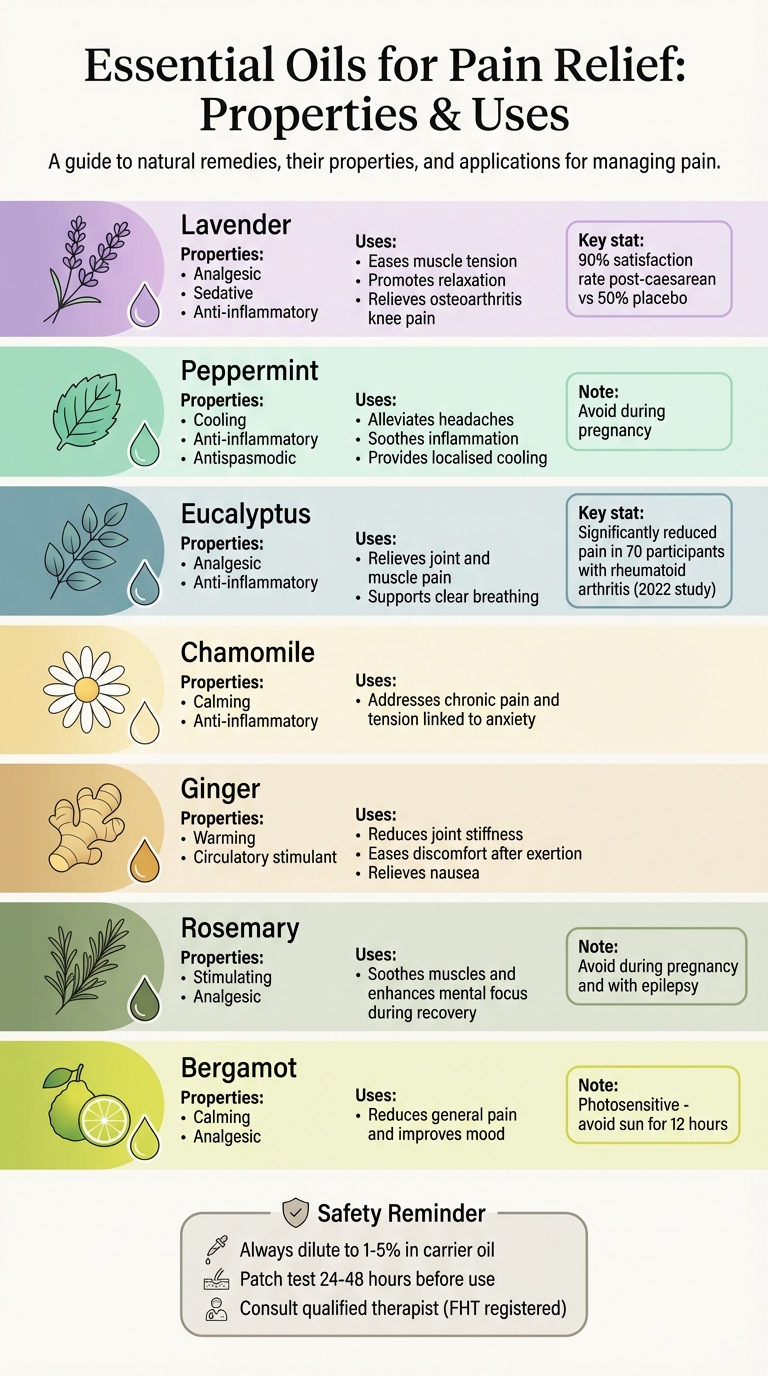
Essential Oils for Pain Relief: Properties, Uses and Benefits Comparison
Aromatherapy massage offers pain relief through two key mechanisms: inhalation and topical absorption. Inhalation stimulates the limbic system, which can influence mood, pulse, and blood pressure. Meanwhile, topical application allows essential oils to provide localised anti-inflammatory effects.
Research supports its effectiveness, especially for acute pain. A meta-analysis revealed that aromatherapy significantly reduced pain, with a standardised mean difference (SMD) of -1.18. It’s particularly beneficial for postoperative pain (SMD = -1.79) and obstetrical or gynaecological pain (SMD = -1.14). Studies also highlight its success in reducing pain in postoperative and paediatric care settings.
"The findings of this study indicate that aromatherapy can successfully treat pain when combined with conventional treatments." – Shaheen E Lakhan, Global Neuroscience Initiative Foundation
Safety Guidelines
While the benefits are clear, following safety precautions is essential. Always dilute essential oils to a concentration of 1–5% in a carrier oil before use. Perform a patch test 24–48 hours before a full massage to rule out allergic reactions. Be cautious with citrus oils like lemon, orange, and bergamot, as they can cause photosensitivity - avoid sun exposure for 12 hours after use. Never ingest essential oils, as swallowing oils such as eucalyptus or sage may lead to severe complications, including seizures.
Special considerations during pregnancy: Some essential oils can cross the placenta and potentially harm the foetus. Pregnant individuals should avoid oils like wormwood, rue, camphor, sage, hyssop, aniseed, basil, birch, pennyroyal, tarragon, and wintergreen. Additionally, anyone with asthma, epilepsy, or respiratory conditions should be mindful, as certain scents might trigger adverse reactions or irritation. To ensure longevity, store essential oils in amber glass bottles and use them within three years.
Essential Oil Comparison for Pain Relief
Here’s a quick guide to some popular essential oils and their uses:
| Essential Oil | Properties | Uses |
|---|---|---|
| Lavender | Analgesic, sedative, anti-inflammatory | Eases muscle tension, promotes relaxation, relieves osteoarthritis knee pain |
| Peppermint | Cooling, anti-inflammatory, antispasmodic | Alleviates headaches, soothes inflammation, provides localised cooling |
| Eucalyptus | Analgesic, anti-inflammatory | Relieves joint and muscle pain, supports clear breathing |
| Chamomile | Calming, anti-inflammatory | Addresses chronic pain and tension linked to anxiety |
| Ginger | Warming, circulatory stimulant | Reduces joint stiffness, eases discomfort after exertion, relieves nausea |
| Rosemary | Stimulating, analgesic | Soothes muscles and enhances mental focus during recovery |
| Bergamot | Calming, analgesic | Reduces general pain and improves mood |
With its ability to alleviate pain and its emphasis on safety, aromatherapy massage remains a powerful, natural option for managing discomfort. By adhering to these guidelines, users can maximise its benefits while minimising risks.
Finding a Qualified Massage Therapist
Selecting the right therapist is essential to ensure a safe and effective aromatherapy experience. When looking for a professional, start by checking their credentials. Practitioners registered with recognised organisations, such as the Federation of Holistic Therapists (FHT), meet strict standards that include formal training, qualifications, and insurance coverage.
"By choosing an aromatherapist who is an FHT member, you can be confident that they are professionally trained, qualified and insured." – Federation of Holistic Therapists
Another key step is verifying their educational background. A qualified aromatherapist should hold certifications aligned with National Occupational Standards, such as CNH1, CNH2, and CNH4, and should have completed hands-on training at QCF Level 3 or higher. This ensures they’ve undergone practical, observed training rather than solely relying on online courses. Additionally, always check that the therapist has professional indemnity insurance before scheduling a session.
A quality therapist will also conduct a detailed consultation. This should involve reviewing your medical history, lifestyle, allergies, and specific concerns before recommending essential oils. If they seem unsure about contraindications or hesitate to discuss oil choices, it could be a sign of limited aromatherapy knowledge.
To make your search easier, use trusted directories. Find a Massage Therapist is a reliable UK-based platform that helps you locate qualified practitioners in your area. Alternatively, the FHT Therapist Register is another excellent resource for finding vetted professionals with verified credentials. Choosing a qualified therapist ensures that your aromatherapy session is both safe and tailored to your needs, enhancing the overall experience.
Conclusion
Aromatherapy massage combines the soothing movements of massage with the therapeutic properties of essential oils, offering a twofold approach to easing pain. Whether it's muscle tension, joint pain, or chronic inflammation, essential oils help by addressing specific pain points and calming the nervous system. They also contribute to reducing stress-induced cortisol levels, which can further aid in pain relief and relaxation. Beyond physical relief, this treatment can promote better sleep and encourage the body’s natural healing processes.
To get the most out of these benefits, it’s important that aromatherapy massage is carried out by a trained professional. A qualified therapist ensures proper oil dilution, safe application, and a tailored approach based on a detailed health consultation. This is especially crucial for avoiding potential risks and contraindications. In the UK, where an estimated 10 million people live with osteoarthritis, consulting a registered therapist can provide a natural and effective way to manage pain.
"Aromatherapy should not be used in place of conventional medical care. Always consult a GP or other health professional for medical attention and advice." – Federation of Holistic Therapists
FAQs
Which essential oils are best for easing muscle tension and joint pain?
When it comes to easing muscle tension and joint pain, a few essential oils stand out for their soothing benefits. Arnica oil is a go-to option, valued for its anti-inflammatory and pain-relieving qualities. Lavender is another favourite, offering a calming effect that helps relax tight muscles. For a refreshing cooling sensation, peppermint oil is an excellent choice, while eucalyptus is known for its ability to reduce inflammation and provide relief. If you're after something warming to boost circulation and ease stiffness, ginger oil is a popular pick.
These oils are often incorporated into aromatherapy massages to maximise relaxation and help with pain management. Remember to always mix essential oils with a carrier oil before applying them to your skin. If you're unsure about the best way to use them, consulting a qualified massage therapist can be a great first step.
What is the correct way to dilute essential oils for aromatherapy massage?
To safely incorporate essential oils into aromatherapy massage, it's crucial to dilute them with a carrier oil. For most healthy adults, the recommended dilution ratio is 1% to 2%, which translates to approximately 6–12 drops of essential oil for every 30 ml of carrier oil. However, for individuals with sensitive skin, pregnant individuals, or older adults, a gentler dilution of 0.5% to 1% is advised.
While measuring by drops is common, it's worth noting that drop sizes can vary. For greater accuracy, particularly when working with larger quantities, using scales to weigh the oils is a more dependable approach. Before applying the mixture widely, always conduct a patch test with a 1% dilution to check for any potential skin reactions.
Are there any safety tips for using aromatherapy during pregnancy?
When incorporating aromatherapy during pregnancy, it's essential to prioritise safety for both the mother and baby. Essential oils should always be diluted to a very low concentration - ideally 1% or less. This means using about 1–2 drops of essential oil mixed with 10 ml of a carrier oil, which helps reduce the chance of any unwanted effects.
Some essential oils, particularly those known to potentially trigger contractions, should be completely avoided during this time. To ensure the oils and techniques chosen are safe, consulting a qualified aromatherapist or healthcare professional is highly recommended. Additionally, performing a patch test before full application is a good way to check for any sensitivities or allergic reactions.
It's also wise to avoid applying essential oils directly to the abdomen or near the face unless explicitly advised by an expert. Similarly, methods like steam inhalation or using vapourisers should only be undertaken with professional approval. By seeking guidance from a trusted professional, you can enjoy the calming and soothing effects of aromatherapy while keeping both you and your baby safe.