Prenatal massage is a simple yet effective way for partners to help relieve pregnancy discomforts like back pain, swollen ankles, and tension. It can also strengthen emotional bonds and promote relaxation. Here's what you need to know:
- Benefits: Reduces stress hormones, improves sleep, and eases pain.
- Safety: Best from the second trimester; avoid deep pressure and certain areas like ankles and wrists.
- Setup: Create a calm space with pillows and gentle lighting.
- Techniques: Use light strokes on the back, shoulders, hips, and feet, avoiding sensitive pressure points.
- Oils: Choose natural, unscented carrier oils; avoid certain essential oils unless properly diluted and approved for pregnancy.
For severe discomfort or specific issues, consider consulting a certified prenatal massage therapist. Always check with a healthcare provider before starting any massage routine.
Step-by-Step Guide to Safe Prenatal Massage at Home
Pregnancy massage for back pain
Preparing for a Prenatal Massage at Home
Getting the setup right can transform a massage from a hurried, uncomfortable task into a soothing and relaxing experience.
Creating a Calm Space
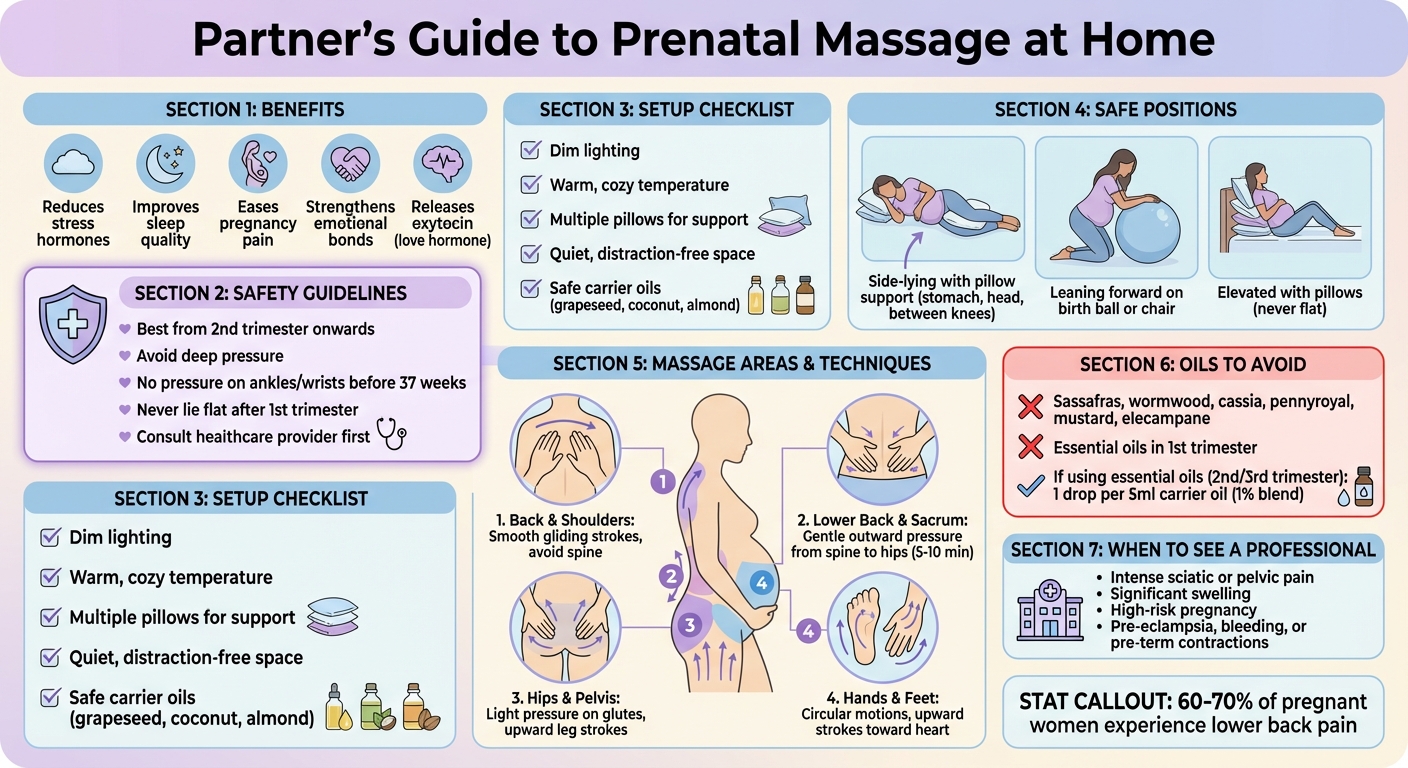
Start by turning your chosen room into a tranquil retreat. Dim the lights, set the temperature to a warm and cosy level, and gather plenty of pillows and cushions. These will be essential for proper support and positioning. The goal is to create a space that feels safe, welcoming, and free from distractions or interruptions.
Once the environment feels just right, you can focus on arranging comfortable and safe positions for the massage.
Safe Positions During Pregnancy
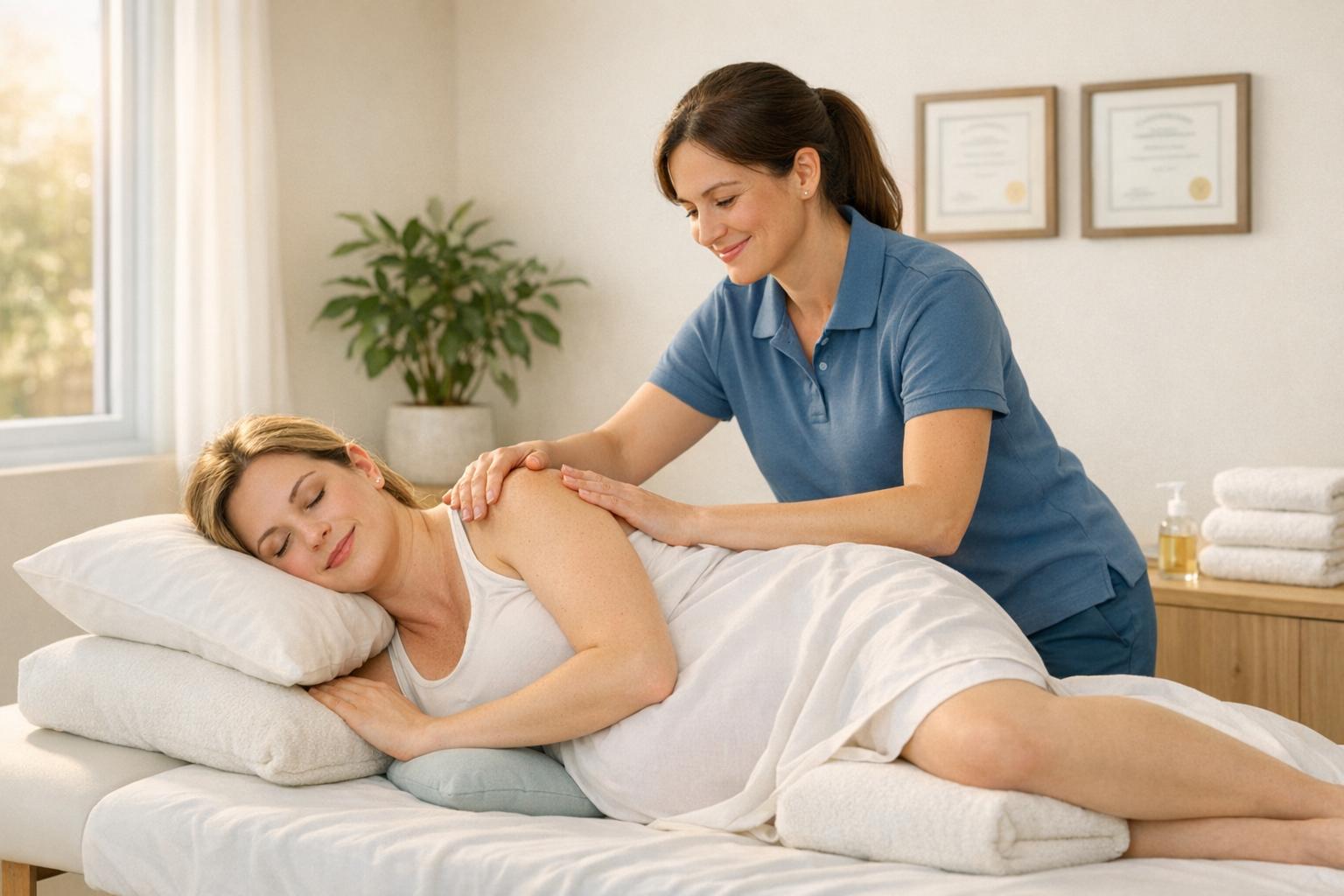
The side-lying position is a go-to option, with pillows strategically placed to support the stomach, head, and between the knees. If you’re working on the back or shoulders, consider having the person lean forward over a birth ball, the edge of a bed, or sit backwards on a chair for added comfort and support.
It's important to avoid lying flat after the first trimester, as this can lead to dizziness and put pressure on major blood vessels. For belly or foot massages, make sure they are propped up with pillows to keep them comfortable and supported, rather than lying flat.
Selecting Safe Oils and Lotions
The right oils can make a big difference in how effective and enjoyable the massage feels.
Stick to natural, unscented carrier oils like grapeseed, coconut, vitamin E, almond, or vegetable oil. Start with a small amount and add more as needed to prevent the skin from becoming too slippery. If you’re considering essential oils, it’s best to avoid them entirely during the first trimester. For the second and third trimesters, consult a qualified aromatherapist before use and always dilute essential oils properly - mix one drop of essential oil with 5 ml of carrier oil (a 1% blend). Always pour the carrier oil first, then add the essential oils, and limit your blend to a maximum of three oils.
"Essential oils can be strong and you might not know how you'll feel about them during labour, so try sniffing the oil on a flannel first to see how it sits with you" - Sophie Martin, Lead midwife
Some oils are unsafe during pregnancy and should be avoided altogether. These include sassafras, wormwood, cassia, pennyroyal, mustard, and elecampane.
Prenatal Massage Techniques for Partners
Once you've created a calming environment and selected suitable oils, it's time to start with gentle Swedish massage techniques. These methods focus on smooth, gliding strokes (effleurage) and light kneading (petrissage), which are ideal for easing pregnancy-related discomforts. Unlike deep tissue massage, Swedish techniques use moderate pressure to encourage relaxation and stimulate vagal activity without causing strain or discomfort. Take your time to work on each area with care and attention.
Back and Shoulder Massage
Position your partner comfortably on their side, supported by pillows for maximum ease. Begin with the upper back and shoulders, as these areas often carry tension during pregnancy. Use smooth, gliding strokes that follow the direction of the muscle fibres, steering clear of direct pressure on the spine. For shoulder tension, gently knead the muscles with light, slow movements, pausing frequently to check that the pressure feels right. This approach can help ease muscle tightness, relieve back pain, and even reduce tension headaches.
Lower Back and Sacral Massage
Lower back pain is a common issue during pregnancy, affecting up to 60–70% of expectant mothers. To address this, gently press outward from the spine towards the hips, using minimal pressure to prevent discomfort. For the sacrum and glutes, a simple tool like a tennis ball can be helpful. Your partner can lean against a wall with the ball positioned between their back and the wall, applying gentle pressure for 20–30 seconds per spot. Use slow, light strokes in this area, keeping sessions short - 5 to 10 minutes - to avoid overdoing it. Always stop immediately if any discomfort arises.
"Husbands are so helpful, but sometimes they do not know what or how to massage their pregnant wives." - Liliana Morris, Lilies Healing Hands Massage and Body Work
Hip and Pelvic Massage
After easing tension in the lower back, you can move to the hips and pelvic area. Apply light pressure to the glutes and hips, working gently to reduce discomfort and tension that tend to increase as pregnancy progresses. Follow this by using a flat palm to massage the legs with smooth, upward strokes. This not only helps with pain but can also reduce swelling. Keep your partner in a supported side-lying position, ensuring pillows are placed between the knees and under the bump for comfort.
Hand, Foot, and Leg Massage
Swelling in the feet and ankles is a frequent issue during pregnancy, caused by fluid retention and the pressure of the growing uterus. To alleviate this, ensure your partner's feet are elevated on a pillow in your lap. Start by gently massaging each finger from base to tip, then move to the palms using small circular motions. For the feet, work upwards from the toes with soft, upward strokes towards the heart to boost circulation and reduce swelling. Pay attention to the wrists and ankles, massaging these areas in gentle circles before finishing with light strokes along the arms and legs. Avoid applying deep pressure near the leg veins, as pregnancy increases blood volume and the risk of blood clots. Additionally, steer clear of pressure points on the ankles, wrists, and hands until after 37 weeks' gestation.
sbb-itb-abe02fa
When to See a Professional Prenatal Massage Therapist
If home massages aren’t cutting it anymore and discomfort lingers, it might be time to consider professional help. While partner massages can provide some relief, more serious issues - like intense sciatic or pelvic joint pain, or noticeable swelling - often require the expertise of a trained therapist. A professional can address these acute conditions with techniques that go beyond what’s possible at home.
What Professional Therapists Offer
Professional prenatal massage therapists are specially trained to address the unique challenges of pregnancy. They use a variety of techniques, including deep tissue, Swedish, sciatic relief, acupressure, and Shiatsu, all tailored to your specific needs. They also ensure proper and safe positioning during the massage, which is crucial during pregnancy. This kind of specialised care complements the home techniques you may already be using.
"It is important to seek care from a certified prenatal massage therapist. Certified therapists have received training beyond the national standards for massage therapists and know how to address specific pregnancy and massage needs." - American Pregnancy Association
Before booking a professional massage, always check with your GP, midwife, or obstetrician, particularly if you have a high-risk pregnancy or underlying medical issues. Avoid massage altogether if you’re experiencing nausea, vomiting, pregnancy-induced hypertension (PIH), pre-eclampsia, recent bleeding, pre-term contractions, or if you’ve had a history of placental abruption or miscarriage, unless you’ve received medical clearance.
Finding a Qualified Therapist in the UK
When looking for a prenatal massage therapist, it’s essential to choose someone with the right credentials. Look for practitioners who hold specialised prenatal certifications and are registered with recognised professional bodies. In the UK, they should have at least a Level 3 qualification in body massage - whether that’s in Holistic, Swedish, Sports, or Aromatherapy - or in beauty therapy with massage included. They should also be well-versed in pregnancy-specific contraindications, proper positioning techniques, and pre-natal health considerations.
To make your search easier, Find a Massage Therapist is a helpful directory that allows you to locate qualified therapists in your area. You can search by location and specialism to find practitioners with expertise in prenatal care. Before booking, take the time to confirm their training in prenatal massage and their understanding of safe positioning practices.
Conclusion
Prenatal massage at home offers more than just physical relief - it’s a way for partners to connect on a deeper level during pregnancy. The gentle touch involved can trigger the release of oxytocin, often called the "love hormone", while lowering stress hormones. This combination can help ease back pain, improve sleep, and support overall mental well-being during this transformative time.
Using techniques like shoulder and back massages or soothing foot rubs, as outlined in this guide, can make a meaningful difference when done safely. However, it’s always wise to check in with your GP, midwife, or obstetrician before starting, especially if there are any high-risk factors or medical concerns.
"A pregnancy massage by your partner releases oxytocin (the love hormone), which makes you healthier and happier!" - Mama's Choice Team
While at-home massages can be incredibly beneficial, there are times when professional care is the better choice. If you’re dealing with severe pain, significant swelling, or ongoing discomfort, a certified prenatal massage therapist can provide the specialised attention you need. These professionals are trained to ensure safe positioning and address more complex issues. For those in the UK, websites like Find a Massage Therapist can help you locate a qualified practitioner nearby.
FAQs
What safety tips should partners follow when giving a prenatal massage?
Prenatal massage can be a fantastic way to ease pregnancy discomforts and encourage relaxation, but safety should always come first to protect both mum and baby. Before getting started, it’s crucial to confirm the pregnancy is low-risk and consult a healthcare provider.
Here’s what to keep in mind:
- Positioning: After the first trimester, avoid lying flat on your back. Instead, opt for side-lying or semi-reclined positions, using pillows for support and comfort.
- Pressure: Stick to gentle or moderate pressure. Deep-tissue techniques and pressure points that could potentially trigger contractions - like areas around the ankles or certain wrist reflex points - should be avoided.
- Temperature: Ensure the room is comfortably warm without causing overheating. Skip hot stones or heating pads.
- Focus areas: Avoid applying strong pressure to the abdomen or lower back. Instead, focus on areas like the neck, shoulders, arms, legs, and feet.
- Health considerations: If dizziness, pain, or discomfort occurs, stop the massage immediately. Avoid massages altogether if there are complications, such as pre-eclampsia.
For extra reassurance, consider booking with a qualified prenatal massage therapist who specialises in this field. To find trusted professionals near you in the UK, check out Find a Massage Therapist.
How can partners create a relaxing environment for a prenatal massage at home?
Creating a soothing environment for a prenatal massage at home starts with selecting a quiet, warm room where the temperature is comfortably set between 20–22°C. Soft lighting, like a dim lamp or a few candles, can help create a relaxing atmosphere. For the massage surface, opt for something firm, such as a mattress or yoga mat, covered with a clean sheet. Use pillows or bolsters to support the expectant mother’s back, hips, and knees, ensuring she lies on her side for both comfort and safety.
Choose a mild, unscented oil or a pregnancy-safe essential oil to avoid overwhelming scents. To enhance the calming mood, play gentle instrumental music or soothing nature sounds at a low volume. Keep your hands clean and use light to moderate pressure during the massage, steering clear of the abdomen and any sensitive pressure points. Maintain open communication to ensure she feels comfortable throughout. Once the massage is complete, cover her with a warm blanket and let her rest for a few moments. These thoughtful touches can create a peaceful and nurturing experience tailored to her needs.
What oils are safe for prenatal massages, and how should they be used?
During prenatal massages, choosing the right oil is key to ensuring both safety and comfort. Gentle and pregnancy-safe options like sweet almond oil, coconut oil, or grapeseed oil are ideal. These neutral carrier oils not only help reduce friction but also nourish the skin. Be cautious with essential oils - only use them if they've been approved by a qualified professional, as some can be unsuitable during pregnancy.
When applying the oil, warm a small amount between your hands before gently massaging it onto the skin. Pay special attention to areas that often hold tension, such as the lower back, hips, and shoulders. Use light to medium pressure and always prioritise the comfort of the pregnant individual. Avoid applying any pressure to the abdomen or other sensitive areas to ensure a safe and relaxing experience.