Cryotherapy massage combines cold therapy with massage techniques to help reduce back pain, inflammation, and muscle tension. This treatment uses cold applications to numb pain and decrease swelling, while massage improves circulation and eases tightness. Research suggests it can significantly lower pain scores, improve mobility, and support long-term recovery, especially for chronic and acute back pain.
Key Points:
- How It Works: Cold reduces inflammation and numbs pain; massage alleviates tension and improves circulation.
- Benefits: Pain relief, reduced swelling, muscle recovery, and improved mobility.
- Research Evidence: Studies show pain scores drop noticeably after just a few sessions.
- Safety: Not suitable for everyone; consult a professional and follow precautions.
Cryotherapy massage is a practical option for managing back pain when used alongside other treatments like exercise or physical therapy. Sessions typically cost £40–£80 in the UK.
Using Cryotherapy On The Lower Back With The X°CRYO l CTN.FI
Benefits of Cryotherapy Massage for Back Pain
Cryotherapy massage offers a multi-faceted approach to managing back pain by combining the effects of cold therapy with massage techniques. This combination brings about physiological changes that can work alongside traditional treatments to provide relief.
Reducing Inflammation
One of the key benefits of cryotherapy is its ability to reduce inflammation. The cold application causes vasoconstriction, or the narrowing of blood vessels, which limits the flow of inflammatory cells to damaged tissues in the back. This also reduces the production of inflammatory cytokines. By doing so, it not only alleviates inflammation but also improves circulation and supports the removal of waste products. This sets the stage for deeper muscle relaxation and pain relief.
Pain Relief and Relaxation
Cold therapy has a numbing effect on pain by slowing down nerve conduction. This makes it easier for massage techniques to release tension in the muscles. Additionally, the cooling effect stimulates the release of endorphins, which act as the body’s natural painkillers. Ice massage can also help reduce muscle spasms during the recovery process, providing both immediate and lasting relief.
Better Recovery and Mobility
Cryotherapy massage doesn’t just ease pain - it also supports long-term recovery. Research highlights that regular sessions can lead to sustained improvements in pain and disability scores, even after the treatment period ends. Moreover, cryotherapy has been shown to reduce symptoms of Delayed Onset Muscle Soreness (DOMS) for up to 96 hours after application, with a standardised mean difference of –0.71 at the 96-hour mark. The combination of cold therapy and massage promotes a metabolic shift, enhances circulation, and aids muscle recovery, gradually restoring mobility. Applying these techniques correctly and adhering to safety protocols is essential for maximising these benefits.
| Benefit Category | Effect on Back Pain | Duration of Effect |
|---|---|---|
| Pain Relief | Significant reduction in pain scores | Up to 1 month post-treatment |
| Mobility | Improved functional scores (ODI/RMQ) | Sustained through repeated sessions |
| Muscle Recovery | Reduced DOMS symptoms | Up to 96 hours post-exercise |
| Inflammation | Increased IL-10; decreased IL-2 | Observed after 10–20 sessions |
Preparation and Safety Guidelines
Before scheduling a cryotherapy massage session, it’s crucial to familiarise yourself with the necessary precautions and preparations. While this treatment can provide relief for back pain, it’s not suitable for everyone. Proper preparation ensures both safety and effectiveness.
Consult a Qualified Professional
Before your first session, consult with a licensed cryotherapy massage therapist. Be open about your current health status and medical history. If you’re experiencing an acute infection, respiratory symptoms, or have been exposed to contagious illnesses like chickenpox, it’s best to postpone treatment. Additionally, inform your therapist about any cardiovascular, renal, pulmonary, endocrine, or metabolic conditions, as well as musculoskeletal issues like osteoporosis or slipped discs. Make sure to list all medications you’re taking, such as painkillers, anti-inflammatories, or blood thinners.
A responsible therapist will review this information thoroughly and ask you to sign a consent form outlining the procedure and its potential risks.
Safety Precautions
Certain medical conditions make cryotherapy massage unsuitable. Avoid this treatment if you have Raynaud's disease, cold urticaria (cold allergy), cryoglobulinemia, haemoglobinuria, or Complex Regional Pain Syndrome (CRPS). It’s also contraindicated for individuals with peripheral vascular disease, severely impaired circulation, or cold hypersensitivity.
Cryotherapy should never be applied to regenerating peripheral nerves, areas with skin numbness, open wounds, broken skin, or active skin infections. Extra caution is advised for individuals with hypertension, diabetes, or impaired cognitive function. Children, the elderly, and those with sensitive skin are more prone to adverse effects like ice burns, so additional care is necessary.
Ask your therapist about the temperatures used during treatment. If skin temperature drops below 10°C or exposure lasts longer than 15 minutes, the body may trigger the Lewis hunting reaction, where blood vessels dilate suddenly to protect tissue. Be cautious with commercial cold gel packs stored in freezers, as they can reach temperatures below 0°C, increasing the risk of frostbite if applied directly to the skin without a protective layer.
Finding a Local Specialist
Once you’ve confirmed your suitability and understood the safety measures, the next step is finding a qualified practitioner. It’s essential to choose someone experienced in both massage therapy and cryotherapy techniques. A reliable resource for locating UK-based specialists is Find a Massage Therapist. This directory lets you search by location and specialism, making it easier to connect with practitioners trained in cryotherapy massage.
When reaching out to potential therapists, ask about their qualifications, experience, and client screening methods. A skilled professional will conduct a comprehensive health assessment before your session and explain what to expect. Sensations typically progress from intense cold to stinging, followed by aching and eventual numbness. Choosing the right therapist ensures a safe and effective treatment experience.
sbb-itb-abe02fa
Step-by-Step Guide to a Cryotherapy Massage Session
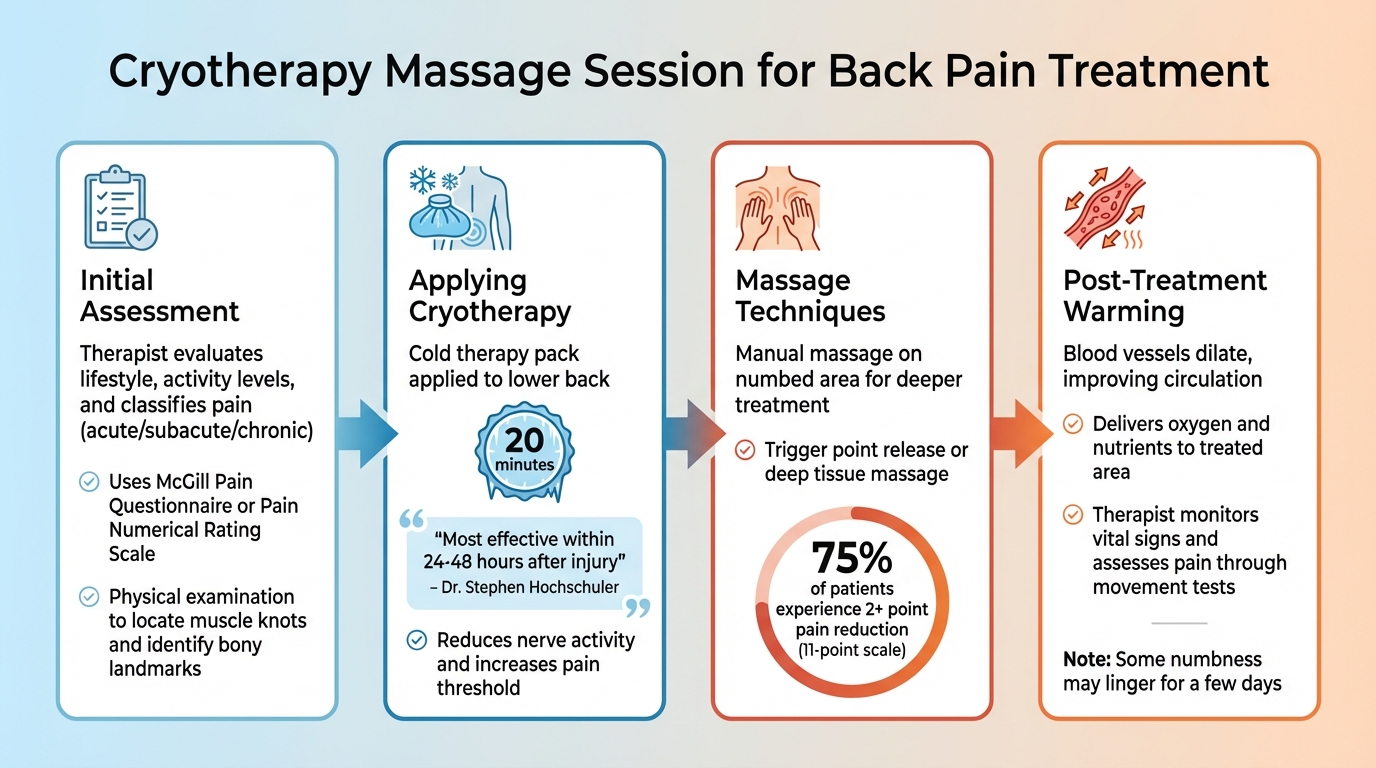
4-Step Cryotherapy Massage Session Process for Back Pain Relief
Initial Assessment
Before starting, your therapist will take a moment to understand your lifestyle, activity levels, and what you hope to achieve from the session. They'll classify your back pain as acute, subacute, or chronic. To measure your discomfort, tools like the McGill Pain Questionnaire or the Pain Numerical Rating Scale might be used. A physical examination follows, where the therapist pinpoints the exact area of pain through manual palpation. They'll locate muscle knots and stiffness while carefully identifying bony landmarks along your spine to ensure no intense cold is applied directly to those areas . With this groundwork in place, it's time to move on to the cryotherapy treatment.
Applying Cryotherapy
The cold therapy session begins with the application of a cryotherapy pack to your lower back, typically for around 20 minutes. This duration is widely accepted in clinical settings, as it allows the cold to effectively reduce nerve activity and increase your pain threshold.
"Ice massage therapy is most effective if it is applied as soon as possible after the injury occurs, usually within 24 to 48 hours." – Stephen Hochschuler, MD, Orthopaedic Surgeon
In some scenarios, the therapist may use ice massage, where ice is applied directly to the skin with controlled movements. Once the cold application is complete, the session transitions to massage techniques.
Massage Techniques and Alternation
With the area numbed from the cold, the therapist moves on to manual massage. This numbness allows for deeper and more effective treatment of muscle tension. Depending on your needs, they might use techniques like trigger point release or deep tissue massage. Studies show that cryotherapy packs can lead to significant pain relief for about 75% of patients, often exceeding a two-point reduction on an 11-point pain scale. These techniques work together to target the root of your discomfort.
Post-Treatment Warming Phase
As the cold exposure ends, blood vessels that were constricted during the session begin to dilate, improving circulation and delivering fresh oxygen and nutrients to the area. This warming phase helps restore normal sensation and supports recovery. During this time, your therapist will monitor your vital signs and ensure you're stable as you sit up and stand. They may also assess your pain levels by asking you to perform simple movements like walking or bending. It's worth noting that some numbness might linger for a few days after an intensive cryotherapy session. This final stage ensures your body transitions smoothly back to its natural state.
When to Use Cryotherapy Massage and What to Expect
Let’s dive into when cryotherapy massage works best and what you can anticipate from this treatment.
Best Scenarios for Cryotherapy Massage
Cryotherapy massage is particularly helpful for managing chronic low back pain caused by mechanical issues. Research shows it can greatly reduce both pain and disability levels in these cases. For acute back pain, cryotherapy often delivers quick relief. It’s also a go-to option for speeding up muscle recovery, especially when applied within the first few hours after intense physical activity.
These examples provide a clear picture of when this therapy shines and how it fits into a broader treatment plan.
Expected Results
The first session typically offers immediate relief, as patients often experience a numbing effect right away. For acute pain, noticeable improvements usually occur after about three sessions. Those dealing with chronic pain might see meaningful progress by the fourth session. In the UK, individual sessions typically cost between £40 and £80, with package deals available for those seeking longer-term benefits. To achieve lasting anti-inflammatory effects, a course of 10–20 sessions is recommended.
Cryotherapy Massage vs. Standalone Methods
When comparing cryotherapy massage to cryotherapy or massage on their own, the combined approach offers some unique advantages.
| Feature | Cryotherapy (Cold) | Massage (Manual) | Cryotherapy Massage (Combined) |
|---|---|---|---|
| Primary Benefit | Quick pain relief and reduced inflammation | Increased mobility and muscle relaxation | Combines pain relief with muscle tension reduction |
| Range of Motion | Limited improvement | Significant gains in lumbar and hip flexibility | Delivers both pain relief and better mobility |
| Speed of Result | Instant numbing; noticeable by sessions 3–4 | May take more sessions for pain relief | Immediate relief with steady functional improvements |
| Mechanism | Lowers nerve activity and inflammation markers | Promotes waste removal and eases muscle tightness | Combines metabolic recovery with nerve desensitisation |
Conclusion and Next Steps
Cryotherapy massage provides quick pain relief by numbing the affected area and reducing inflammation. Research indicates that around 75% of patients experience noticeable improvement after treatment. By combining the cooling effects of cryotherapy with the benefits of massage, this approach not only alleviates symptoms but also helps restore mobility.
Key Takeaways
Cryotherapy massage works by reducing pro-inflammatory markers like IL-2 and increasing anti-inflammatory markers such as IL-10. Many patients report significant pain relief after just four sessions . This method calms nerve activity, minimises swelling, and speeds up muscle recovery.
For the best results, cryotherapy massage should be paired with stretching, exercise, or physical therapy. If you have any underlying health conditions, always consult a qualified professional before starting treatment.
How to Find a Cryotherapy Massage Therapist
When looking for a therapist, focus on finding someone trained in both cryotherapy and massage. This ensures they can safely manage temperatures and avoid risks like cold injury . An initial consultation can help customise the treatment to suit your specific needs.
Websites like Find a Massage Therapist make it easier to connect with qualified professionals in your area. They simplify the process, helping you move from discomfort to booking a session with confidence.
FAQs
What are the benefits of cryotherapy massage compared to traditional massage for back pain?
Cryotherapy massage blends the soothing effects of traditional massage with the targeted power of cold therapy. By applying cold to specific areas, it can help calm inflammation, relax muscle spasms, and ease pain more swiftly - making it a great option for tackling back pain. This method may also help restore your range of motion more quickly than standard massage techniques.
While a traditional massage is excellent for easing tension and encouraging relaxation, cryotherapy massage takes it a step further by actively addressing pain and swelling. If this sounds like the right choice for you, check out Find a Massage Therapist to locate experienced professionals in the UK who specialise in cryotherapy massage.
Are there any risks or conditions where cryotherapy massage should be avoided?
Cryotherapy massage can work wonders for easing back pain, but it’s not the right choice for everyone. The extreme cold involved carries potential risks, including skin burns, frostbite, and an increase in blood pressure due to cold-induced vasoconstriction. This treatment is unsuitable for individuals with conditions such as Raynaud’s phenomenon, cold urticaria, uncontrolled hypertension, serious heart issues, or severe asthma, as well as for those who are pregnant. It’s also not advisable for areas affected by open wounds, recent surgery, acute infections, or active inflammation, as the intense cold might interfere with the healing process.
Before starting cryotherapy massage, therapists must carefully review a client’s medical history and keep a close eye on how their skin reacts during the session. When done properly - using controlled temperatures (usually around -160°C) for short periods (2–3 minutes) - this therapy is generally safe. However, if you notice excessive numbness, tingling, or discolouration of the skin, the session should be stopped immediately.
How many cryotherapy massage sessions are needed to ease back pain?
Most individuals experience noticeable relief from back pain after approximately four sessions of cryotherapy-integrated massage. That said, the number of sessions needed can differ based on factors like the severity of the pain, its root cause, and how your body reacts to the therapy.
To achieve the best outcome, it’s a good idea to consult with a qualified massage therapist. They can create a personalised treatment plan that aligns with your specific needs.