Foot massage can be a simple way to ease pregnancy-related discomfort. Swelling in the feet and ankles affects up to 80% of pregnant women, especially in the later stages. Massage helps by improving blood flow, reducing swelling, and relieving tension. It can also lower stress levels, improve sleep, and even reduce labour duration.
However, safety is key. Avoid certain pressure points like SP6 and UB60, which may trigger contractions. Always consult your doctor if you have conditions like preeclampsia or a history of blood clots. For the best results, work with a certified prenatal massage therapist who understands these precautions.
Key Takeaways:
- Benefits: Reduces swelling, improves mood, eases pain, and enhances sleep.
- Safety Tips: Avoid deep pressure on sensitive areas; consult a doctor if you have health concerns.
- Techniques: Use light pressure, massage towards the heart, and avoid lying flat after 20 weeks.
Foot massage can provide much-needed relief, but always prioritise safety for both you and your baby.
Common Foot Problems During Pregnancy
What Causes Swelling and Foot Pain
Pregnancy introduces a host of changes that can take a toll on your feet. Over half of pregnant women report experiencing foot issues, largely due to a mix of fluid retention, hormonal shifts, and added physical pressure.
Oedema, or fluid retention, leads to swollen and heavy feet and ankles, exacerbated by up to a 100% increase in blood volume during pregnancy.
"As your baby develops, your uterus expands. As it does, it exerts pressure on your veins, particularly the inferior vena cava... When compressed it can restrict blood flow which then leads to fluid build-up in your feet, ankles, and even your hands." - Lavina Cullen, Weald Chiropractic
Hormones also play a key role. The release of relaxin, a hormone that helps loosen pelvic ligaments for childbirth, can also affect the ligaments in your feet. Combined with rapid weight gain, this can lead to fallen arches and over-pronation. Many women notice their shoe size increasing by half to a full size, a change that can sometimes be permanent.
How Foot Problems Affect Daily Life
Swollen, aching feet are more than just an inconvenience - they can make everyday tasks feel overwhelming. Walking becomes challenging, and standing for long periods only worsens the discomfort.
Conditions like plantar fasciitis, which causes sharp pain in the heels and arches, can make even short walks or getting out of bed a struggle. Sleep often becomes disrupted, especially in the third trimester, when weight gain, fluid retention, and uterine pressure are at their peak.
With these challenges in mind, exploring relief options like foot massage can provide much-needed comfort.
How Foot Massage Helps During Pregnancy
Better Blood Flow and Less Swelling
Foot massage can help reduce swelling by encouraging the movement of excess fluid back into circulation through a pumping action. This technique focuses on the fluid outside of blood vessels that often causes puffiness and discomfort during pregnancy.
A study conducted between August 2016 and November 2017 involving 90 pregnant women revealed that daily 20-minute foot massages significantly reduced foot and ankle swelling. Participants between 30 and 40 weeks of gestation experienced measurable decreases in circumferences at the ankle, instep, and metatarsal-phalanges joints after receiving massages for five consecutive days (P = 0.001), compared to those who did not receive massages. The massage techniques used in the study included striking, kneading, tendon-striking, side-to-side manipulation, and toe-bending.
Additionally, massage stimulates the vagus nerve, enhancing blood flow to brain areas that regulate heart rate and blood pressure. This improved circulation not only reduces swelling but also alleviates muscle tension and joint stress, both of which are common in pregnancy.
Relief from Pain and Stress
Foot massage doesn’t just improve circulation - it also helps ease muscle tension and joint discomfort, which are frequent complaints during pregnancy. Regular massage therapy has been shown to lower cortisol levels while boosting dopamine and serotonin, creating a sense of wellbeing.
A meta-analysis of 13 randomised controlled trials involving 1,189 participants found that foot reflexology significantly reduced anxiety and pain levels. Interestingly, women who received regular massage therapy during pregnancy also experienced shorter labour, with an average reduction of three hours.
Improved Sleep and Mood
Massage offers benefits beyond physical relief, including better sleep and improved mood by reducing stress. A 2024 randomised controlled trial demonstrated that classical foot massage significantly improved sleep quality in preeclamptic pregnant women. Insomnia scores dropped to 12.45±5.74 in the massage group, compared to 18.8±6.44 in the control group. Anxiety levels also decreased, with scores of 33.4±6.41 in the massage group versus 39.19±8.31 in the non-massage group.
Foot massage’s impact on the vagus nerve plays a key role in promoting relaxation and managing stress. Research published in Midwifery in 2011 showed that 30-minute foot reflexology sessions over five consecutive days significantly improved sleep quality. With approximately 7,200 nerve endings in the foot, massage can provide a deeply calming effect.
Better sleep and reduced stress during pregnancy don’t just benefit the mother - they can positively affect the baby too. Studies have linked lower maternal stress to higher birth weights and reduced cortisol levels in newborns.
Foot Massage During Pregnancy: What You Need To Know
Safety Precautions and Risks
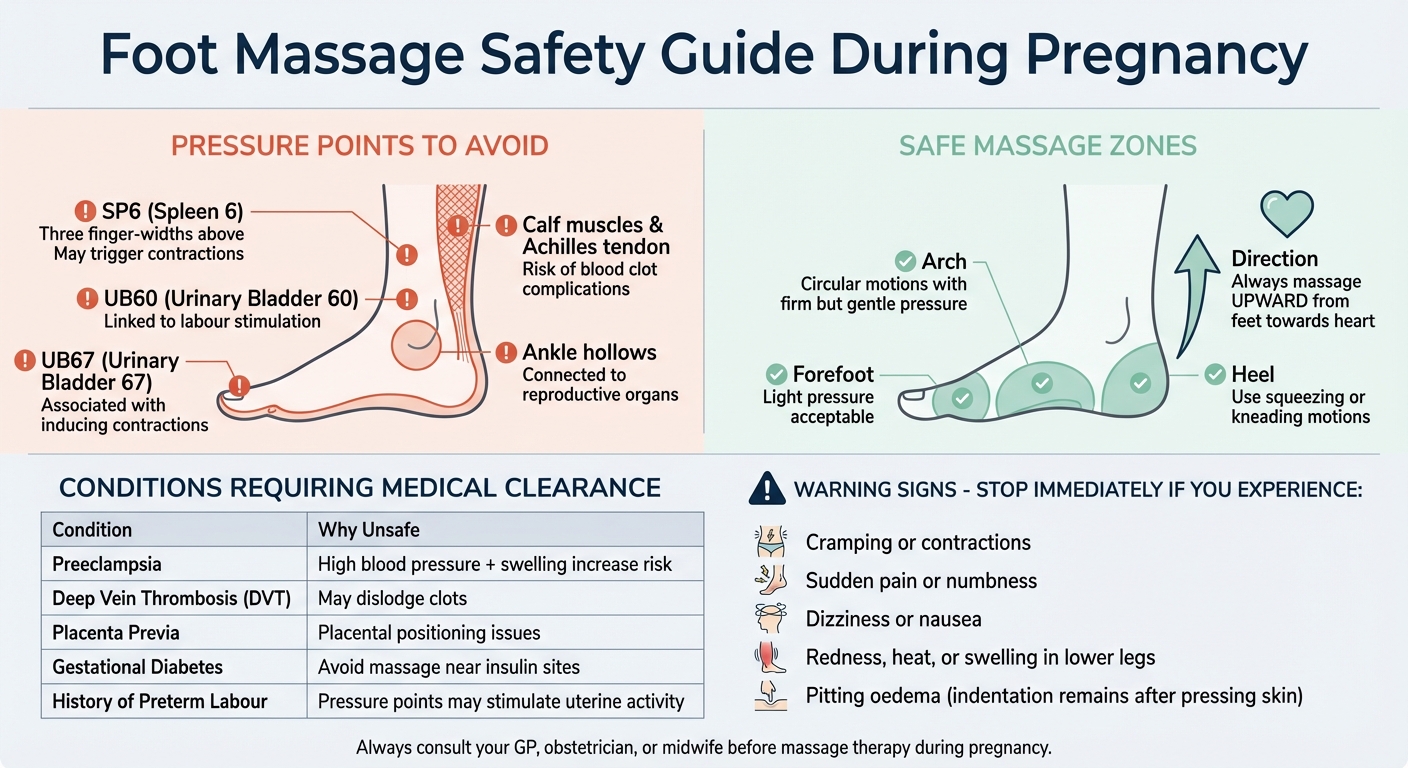
Foot Massage Safety Guide for Pregnancy: Pressure Points to Avoid and Safe Techniques
Foot massage can help alleviate some of the discomforts of pregnancy, but it’s essential to follow strict precautions to ensure the safety of both mother and baby. Understanding which areas to avoid, when to seek medical advice, and knowing the conditions where massage is not advised can help minimise potential risks.
Pressure Points to Avoid
Certain pressure points on the feet and ankles are believed to stimulate uterine activity, which can potentially trigger contractions. For instance, Spleen 6 (SP6), located on the inner ankle about three finger-widths above the ankle bone, is thought to affect the lower abdomen and may encourage contractions. Similarly, Urinary Bladder 60 (UB60), found between the Achilles tendon and the outer ankle bone, is avoided for its potential link to labour stimulation. Another area to steer clear of is Urinary Bladder 67 (UB67), located at the corner of the pinky toe near the toenail, which is also associated with inducing contractions.
"A strong stimulus of certain points in the foot can encourage uterine contractions and cervical ripening. So, in the simplest terms, practitioners avoid these points through pregnancy so as to avoid causing preterm labour."
– Eldyka Simpson, Registered Massage Therapist and Birth Doula
Additionally, deep pressure on the ankle hollows, which are connected to reproductive organs, and the calf muscles, including the Achilles tendon, should be avoided. These areas are particularly sensitive, and improper massage can increase the risk of blood clot complications.
"Deep massage should be avoided at all costs during pregnancy, especially around parts of the body prone to developing blood clots due to blood change volume often accompanying pregnancy, including the Achilles tendon, big toe and calf muscles."
– Rock Positano, Voluntary Podiatrist, Lenox Hill Hospital
When to Speak to Your Doctor or Midwife
Before beginning any massage therapy during pregnancy, it’s crucial to consult your GP, obstetrician, or midwife - particularly if you have a high-risk pregnancy or any underlying health conditions. This is especially important if you’ve experienced issues like recent bleeding, pre-term contractions, or other complications.
Be vigilant for warning signs such as redness, swelling, or warmth in the lower legs, or swelling that leaves a temporary indentation (pitting oedema). If any of these symptoms appear, contact your doctor immediately.
It’s also worth noting that many nail salon technicians lack the specific training required to handle prenatal pressure points safely. For added peace of mind, consider seeking a registered massage therapist certified in prenatal care rather than opting for a massage during a pedicure.
Conditions That Make Massage Unsafe
Certain medical conditions make foot massage unsafe during pregnancy. For example, preeclampsia, which is marked by high blood pressure and sudden swelling, makes massage risky. Similarly, conditions like deep vein thrombosis (DVT) pose significant dangers, as massage could dislodge clots, potentially leading to life-threatening complications.
A 2020 case study highlighted the dangers of DVT during pregnancy. A 25-year-old woman in Thailand, 25 weeks pregnant, suffered a massive pulmonary embolism and cardiac arrest just minutes after receiving a leg and foot massage. The massage dislodged an undetected blood clot, leading to the loss of the baby and leaving the mother in a coma.
| Condition | Why Massage May Be Unsafe |
|---|---|
| Preeclampsia | High blood pressure and swelling increase the risk |
| Deep Vein Thrombosis (DVT) | Possibility of dislodging clots that could travel to organs |
| Placenta Previa | Placental positioning issues may make massage unsuitable |
| Gestational Diabetes | Specialist advice is needed; avoid massage near insulin sites |
| History of Preterm Labour | Certain pressure points can stimulate uterine activity |
Women with pregnancy-induced hypertension, placenta previa, or a history of blood clots should always consult their healthcare provider before undergoing any massage therapy. If you experience sudden pain, numbness, dizziness, or uterine cramping during a massage, stop immediately and seek medical attention.
sbb-itb-abe02fa
Safe Massage Techniques for Pregnant Women
Gentle Massage Methods
Pregnancy brings unique physical changes, and massage can offer relief when done carefully. Swedish massage is considered the safest option, as it uses light pressure to address changes in circulation and the skeletal system caused by hormonal shifts. A key principle is to always massage upward from the feet towards the heart. This helps improve circulation and supports fluid drainage through the bloodstream.
Pay special attention to the arches and heels, which endure extra strain during pregnancy. Use circular motions with firm but gentle pressure on the arches, and try squeezing or kneading the heels to ease tension. A simple yet effective method is the "bookmark" technique: place one hand flat on top of the foot and the other underneath, then slide both hands gently from the heel to the toes and back.
"The three safest spots to administer a pregnancy foot massage are the heel, the arch and the forefoot."
– Rock Positano, Podiatrist
To further relax the feet, rotate the ankles in three slow circles, then lightly tug and twist each toe to release built-up tension. Applying a pregnancy-safe lotion or carrier oil, such as grape seed or sweet almond oil, can help reduce friction during the massage. For added relaxation, soak the feet in warm water for 10–15 minutes before starting.
The effectiveness of these techniques also depends on maintaining the right body position during the massage.
Correct Body Positioning
Proper positioning is crucial for safety and comfort. After the 20th week of pregnancy, lying flat on your back should be avoided, as the weight of the uterus can press against the inferior vena cava, a major vein, reducing blood flow to both you and your baby. Instead, opt for a semi-recumbent or side-lying position, preferably on your left side.
Use pillows to support your lower back, abdomen, and bump for added comfort and to minimise strain on your joints. Elevating your legs slightly during the massage can also help reduce fluid retention by improving circulation. If lying down is uncomfortable, sitting upright on a stable chair is a safe alternative.
When to Stop or Avoid Massage
Be alert to any discomfort during a massage. Stop immediately if you experience cramping, contractions, sudden pain, dizziness, nausea, or numbness.
Before starting, check your legs for redness, heat, or tenderness, as these could be signs of deep vein thrombosis. Additionally, if you notice pitting oedema, where pressing the skin leaves a temporary indentation, consult your doctor before proceeding. Women with conditions such as a history of blood clots, preeclampsia, pregnancy-induced hypertension, or recent vaginal bleeding should seek medical clearance before receiving a foot massage.
Finding a Qualified Prenatal Massage Therapist
Why Specialist Training Matters
When it comes to pregnancy, the importance of professional expertise in massage therapy can't be overstated. Pregnancy brings unique physical changes - like increased blood volume, hormonal shifts, and a higher risk of blood clots - that require specialised care. Many therapists lack the necessary training to handle these specific needs, making specialist knowledge vital. A properly trained prenatal therapist understands these changes and knows which pressure points to avoid to ensure safety.
"Prenatal therapists undergo extra training to adapt techniques for pregnancy-related changes."
– The Medical
Additionally, trained professionals are equipped to identify serious health concerns such as deep vein thrombosis or pre-eclampsia, which could make massage unsafe. In the UK, seeking therapists registered with reputable organisations like the Federation of Holistic Therapists (FHT) is a smart move. FHT membership ensures that a practitioner is professionally trained, qualified, and insured. Many of these therapists are also listed on the Complementary Healthcare Therapist Register, offering an added layer of reliability.
Using Find a Massage Therapist
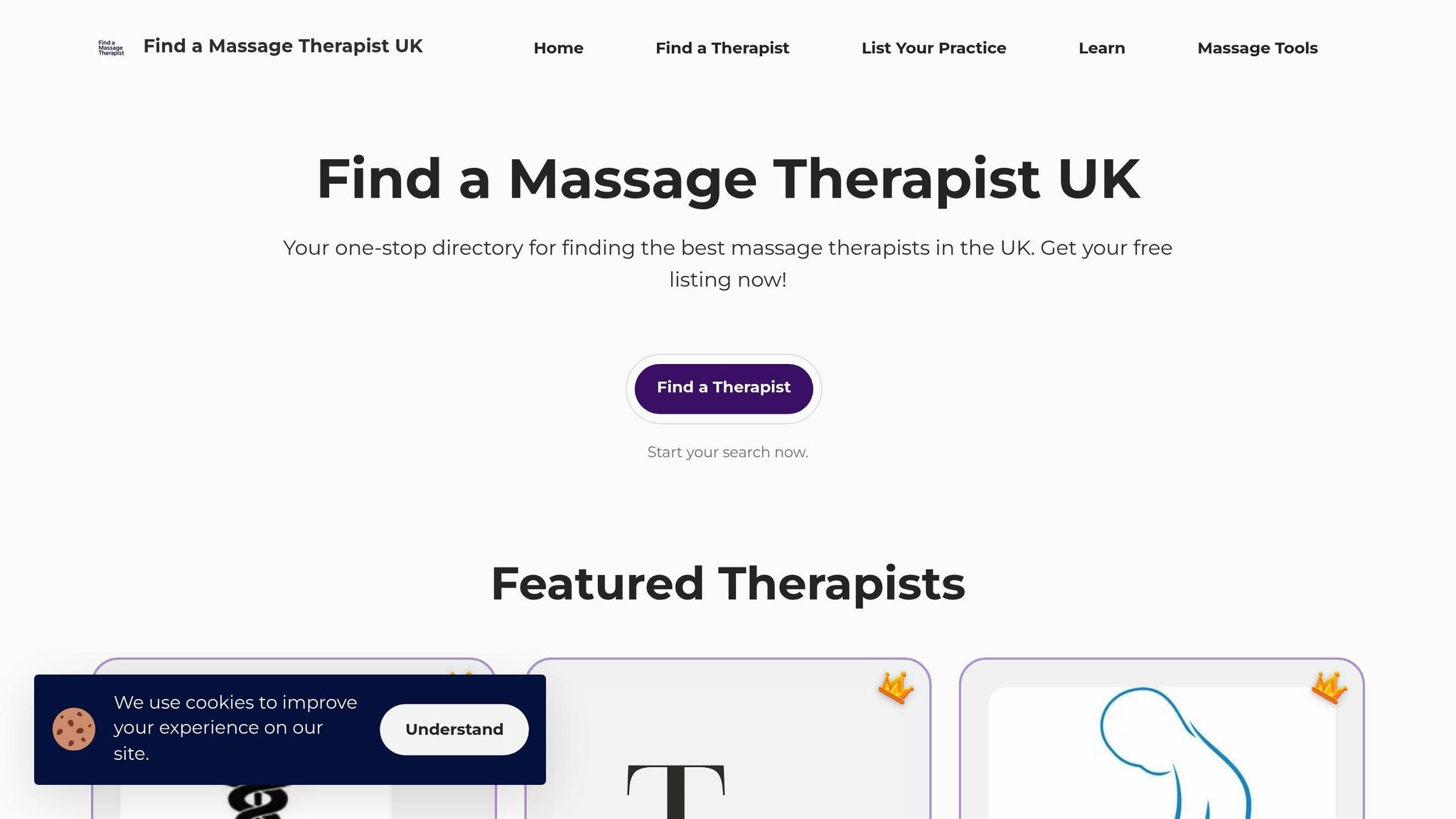
The Find a Massage Therapist directory (https://findamassagetherapist.co.uk) is a helpful resource for locating qualified prenatal massage specialists throughout the UK. Simply enter your postcode to find local professionals.
When browsing, prioritise therapists with FHT registration to confirm they are properly trained and insured. Look for practitioners who list "Pregnancy Massage" or "Reflexology and Pregnancy" as areas of expertise, as this indicates they understand the specific precautions required during pregnancy. Be sure to inform your therapist about your pregnancy, including how far along you are and any medical concerns like high blood pressure or a history of blood clots, before your first appointment.
Conclusion
Foot massage can help ease the swelling and discomfort many pregnant women experience in their feet and legs. In fact, up to 80% of pregnant women report swelling in these areas during pregnancy. Studies suggest that regular massage may also have added benefits, such as improving mood and even shortening labour.
When it comes to safety, there are a few key points to keep in mind. Avoid deep pressure on sensitive areas or pressure points, and always speak to your doctor if you notice anything unusual. If you have a high-risk pregnancy or conditions like pre-eclampsia, it's especially important to consult your GP or midwife before starting any massage therapy.
Choosing a qualified prenatal massage therapist is essential. Experts recommend avoiding deep massage in areas where blood clots are more likely to form. Trained professionals understand these risks and know how to position you safely, often using a side-lying position with proper support to ensure your comfort.
Ultimately, your comfort and well-being are what matter most. Whether you’re dealing with swollen ankles, sore feet, or simply want to relax, the right massage can make a noticeable difference. For those in the UK, Find a Massage Therapist is a helpful resource for locating accredited prenatal massage specialists.
FAQs
How often can I have a foot massage while pregnant?
Foot massages are typically safe during pregnancy after the 37-week mark. Starting from the second trimester, they can be enjoyed once a month, provided your healthcare provider has no objections. To ensure both comfort and safety, massages should be done gently and in one consistent direction.
What are the warning signs to stop a foot massage and call my midwife?
If you notice redness, swelling, warmth, pain, tenderness, or a heavy ache in one leg during or after a foot massage, stop immediately and contact your midwife. These symptoms might be signs of deep vein thrombosis (DVT), a serious condition that needs urgent medical attention.
Can I safely get a foot massage at a nail salon during pregnancy?
It’s usually best to avoid getting a foot massage at a nail salon while pregnant. Nail technicians often lack training in pregnancy-specific massage techniques and might unknowingly press on areas linked to uterine stimulation, which could potentially be risky. For a safer option, look for a qualified massage therapist who specialises in prenatal care.