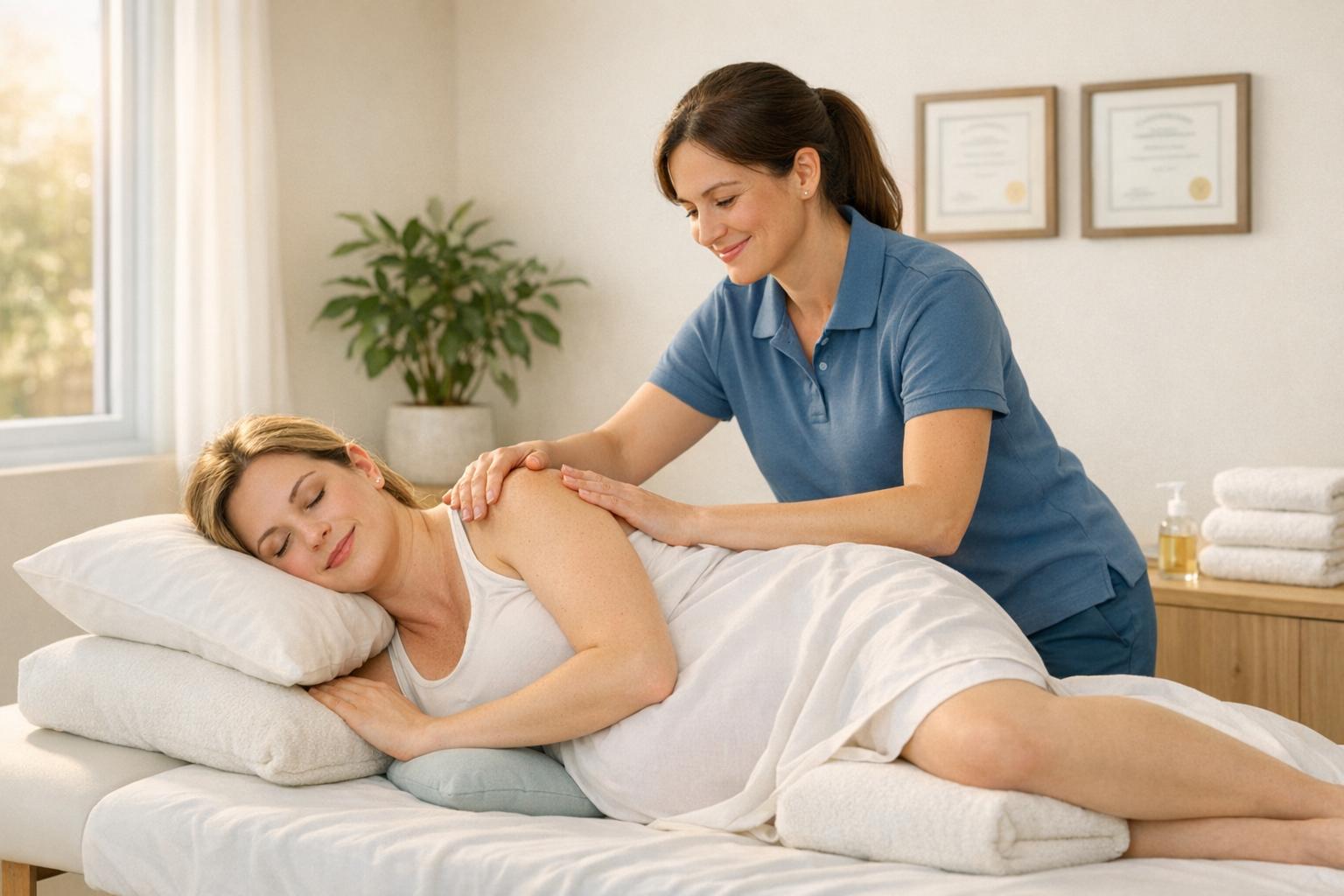
Feeling stressed or overwhelmed? Massage therapy can help calm your nervous system, reduce stress hormones, and improve your overall well-being. Here are five massage types designed to promote relaxation and ease tension:
- Swedish Massage: Uses smooth strokes and kneading to reduce stress and improve circulation. Ideal for full-body relaxation.
- Aromatherapy Massage: Combines gentle touch with essential oils like lavender to soothe the mind and body.
- Reflexology: Focuses on pressure points in the feet, hands, or ears to relieve tension and balance the body.
- Hot Stone Massage: Heated stones are placed on the body to loosen muscles and provide deep relaxation.
- Shiatsu Massage: A Japanese technique that applies rhythmic pressure along energy pathways to restore balance.
Each massage type offers unique benefits, from lowering cortisol levels to encouraging better sleep and mood. Sessions typically last 30–90 minutes, with prices in the UK ranging from £45 to £120. Whether you prefer gentle strokes, targeted pressure, or soothing heat, there’s a massage option to fit your needs.
Quick Comparison
| Massage Type | Key Technique | Benefits | Duration | Cost (UK) |
|---|---|---|---|---|
| Swedish | Long, gliding strokes | Reduces cortisol, improves circulation | 60–90 mins | £45–£120 |
| Aromatherapy | Essential oils + light touch | Calms mind, lowers stress hormones | 60–90 mins | £50–£100 |
| Reflexology | Pressure on foot/hand points | Balances body, improves sleep | 30–60 mins | £45–£120 |
| Hot Stone | Heated stones + massage techniques | Eases deep tension, promotes relaxation | 60–90 mins | £50–£120 |
| Shiatsu | Rhythmic pressure along meridians | Restores energy flow, reduces stress | 60–90 mins | £45–£120 |
Choose the one that suits your preferences and enjoy the calming effects on your nervous system.
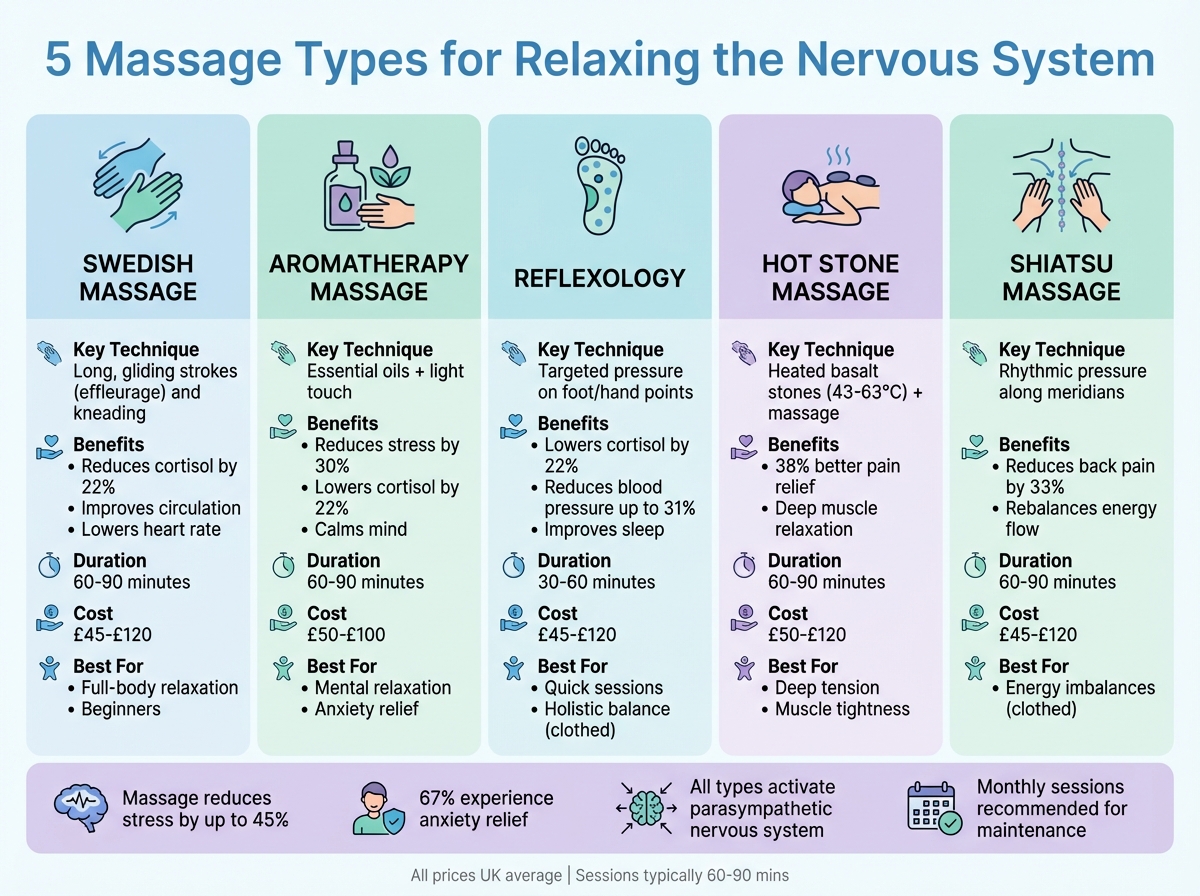
Comparison of 5 Massage Types for Nervous System Relaxation
Unlock The Power Of The Vagus Nerve: Massage techniques that heal and calm the body.
sbb-itb-abe02fa
1. Swedish Massage
Swedish massage is one of the most well-known therapies in the UK, offering a blend of five techniques - effleurage, petrissage, friction, tapotement, and vibration - that help ease the body from tension to relaxation.
Techniques Used
A session typically begins with effleurage, which involves smooth, flowing strokes to warm up the muscles and promote relaxation. Next comes petrissage, a kneading and rolling motion that targets deeper layers of muscle, helping to release tension and improve circulation. Friction follows, applying firm, circular pressure to work out stubborn knots. Tapotement, characterised by light tapping or cupping movements, stimulates the nerves and energises the body. Finally, vibration is used to gently shake and relax larger muscle groups. Throughout the session, strokes are directed towards the heart to support healthy blood flow.
Together, these techniques create a series of physical responses that help the body relax and unwind.
Nervous System Benefits
Swedish massage has a direct impact on the parasympathetic nervous system, which helps reduce heart rate and slow breathing. This process encourages the release of key neurotransmitters like serotonin, dopamine, and endorphins, which improve mood, promote better sleep, and alleviate pain. Research shows that this type of massage can reduce stress levels by up to 45%, with 67% of individuals experiencing noticeable relief from anxiety. As Victoria Bodner, a Licensed Massage Therapist at Cleveland Clinic, explains:
"It can help calm your nervous system. Swedish massage is also a good avenue for encouraging a relaxed emotional state of mind which can directly impact your muscles."
Ideal Session Duration
For a full-body treatment, sessions typically last between 60 and 90 minutes. Shorter, 30-minute sessions may feel too brief to achieve the full benefits. To maintain improvements in sleep and mood, monthly appointments are often recommended. After your session, it’s best to hydrate and allow yourself an hour to rest. In the UK, prices for Swedish massage generally range from £45 to £120 per session.
2. Aromatherapy Massage
Aromatherapy massage blends gentle touch with the use of essential oils, offering a soothing experience that helps calm an overactive nervous system. It works through two main mechanisms: dermal absorption, where oils penetrate the skin and enter the bloodstream, and inhalation, where scent molecules interact with the brain's limbic system.
Techniques Used
This type of massage often uses effleurage, which involves long, flowing strokes to warm the muscles, distribute the oils, and soothe sensory nerves. Another common technique is petrissage, a kneading motion that targets deeper muscle tension. These rhythmic movements are specifically designed to activate the parasympathetic nervous system, promoting relaxation.
Therapists typically dilute essential oils - such as lavender or bergamot - with carrier oils like sweet almond or jojoba. The dilution is kept at 2–5% to ensure safety and prevent skin irritation.
Nervous System Benefits
The combination of touch and aromatherapy can lead to noticeable physiological changes. Research shows that massage therapy can lower cortisol levels by an average of 22%, and regular treatments may reduce overall stress by up to 30%. Dr Nathalie Richardson, a psychologist, highlights these benefits:
"Regular massage therapy has significantly reduced stress by up to 30% whilst increasing the production of feel-good neurotransmitters in the brain".
Essential oils are absorbed within 20–40 minutes and reach their peak effect after 1–2 hours. For this reason, therapists often recommend waiting 2–4 hours before showering to maximise the benefits.
Ideal Session Duration
To fully experience the benefits, sessions lasting 60–90 minutes are ideal. In the UK, a 60-minute session typically costs between £50–£80, while a 90-minute session ranges from £70–£100 or more. For ongoing stress relief, many people find that scheduling sessions every 2–4 weeks helps maintain the positive effects of the therapy.
3. Reflexology
Reflexology offers a unique way to promote relaxation by focusing on specific points located on the feet, hands, or ears. This practice is rooted in the belief that these areas correspond to particular organs and systems in the body. By applying pressure to these reflex points, therapists aim to encourage balance and activate the body’s natural relaxation mechanisms.
Techniques Used
Reflexology uses touch, much like Swedish and aromatherapy massage, to stimulate the body’s relaxation response. A key method is thumb walking, where a therapist uses a specialised thumb movement to target reflex points on the feet. Other techniques include acupressure, applying firm pressure with thumbs, fingers, or knuckles to these mapped areas. Sessions often involve stretching the feet and ankles, rotating the toes, and kneading the soles or palms.
Two reflex points stand out for their calming effects on the nervous system. The solar plexus reflex, located at the centre of the foot and often nicknamed the "calming button", and the diaphragm reflex, found just below the ball of the foot, help promote deeper breathing. Unlike many other massage types, reflexology doesn’t require you to undress - only your shoes and socks need to be removed.
Nervous System Benefits
Targeted pressure during reflexology sessions activates the parasympathetic nervous system, shifting the body out of "fight or flight" mode into a state of rest and recovery. This process triggers the release of endorphins, serotonin, dopamine, and oxytocin, which help reduce stress and improve mood. Studies show that reflexology can lower cortisol levels by around 22%, aiding stress management. In certain cases, it has also been linked to a blood pressure reduction of up to 31%.
Ideal Session Duration
A typical reflexology session lasts 45–60 minutes, giving the therapist time to work across all reflex points on both feet. In the UK, prices for a session generally range from £45 to £120. Shorter sessions of 15–30 minutes are also an option. For ongoing support, monthly sessions are often recommended after alleviating initial tension.
If you’re in the UK and looking for a qualified reflexologist to help with relaxation and stress relief, the Find a Massage Therapist directory is a reliable place to start.
4. Hot Stone Massage
Hot stone massage blends the comforting warmth of heated stones with traditional massage techniques, offering a deeply relaxing experience. Smooth basalt stones - volcanic rocks known for their excellent heat retention - are the key tools in this therapy. These stones are typically warmed to temperatures ranging from 43°C to 63°C and placed on specific areas of the body, such as the spine, palms, chest, or even between the toes, creating a soothing sensation.
Techniques Used
The heated stones serve a dual purpose. First, they are positioned on the body to gently warm the muscles and ease the nervous system. Then, therapists use the stones as extensions of their hands, performing strokes similar to those in Swedish massage, like effleurage (long, flowing movements), kneading, and circular motions. The heat works to loosen tight muscles without requiring intense pressure. Some sessions may also incorporate cold marble stones to complement the heat, aiming to encourage detoxification. To ensure safety and comfort, a towel or sheet is always placed between the stones and the skin.
Nervous System Benefits
This massage technique focuses on activating the parasympathetic nervous system, helping the body shift from a state of stress to relaxation. The warmth, combined with gentle touch and pressure, promotes the release of feel-good chemicals like endorphins, serotonin, dopamine, and oxytocin. At the same time, it reduces stress hormones such as cortisol and norepinephrine. Studies also suggest that massage therapy can lower levels of substance P, a chemical linked to pain, enhancing both mental and physical relaxation.
Ideal Session Duration
Hot stone massages typically last between 60 and 90 minutes, with the longer duration often preferred for a more thorough and relaxing experience. This allows the therapist to address all major muscle groups effectively. Be sure to stay hydrated after your session. Up next, delve into how Shiatsu massage can further support nervous system harmony.
5. Shiatsu Massage
Shiatsu is a Japanese therapy rooted in the belief that energy pathways, or meridians, influence both physical and emotional health. Unlike many Western massage techniques, Shiatsu is performed with the client fully clothed, usually on a floor mat or futon. This makes it a comfortable option for those who prefer not to undress during treatment.
Techniques Used
Shiatsu practitioners use their palms, thumbs, and fingers to apply rhythmic, pulsing pressure to specific points along the body's meridians. The aim is to release blockages and encourage the smooth flow of energy, addressing both physical tension and energetic imbalances. Sessions often include assisted stretches and gentle twists to improve flexibility and circulation, providing a contrast to the sweeping motions seen in Swedish massage. This focused technique helps the body quickly settle into a deeply relaxed state.
Nervous System Benefits
Shiatsu is known to activate the parasympathetic nervous system, helping the body shift from stress to a more restful, restorative mode. This can lead to slower breathing, a reduced heart rate, and an overall sense of calm . By applying pressure along energy pathways, Shiatsu also stimulates the release of neurotransmitters that play a role in mood regulation and emotional stability . Its emphasis on clearing meridians supports nervous system balance, promoting both physical and emotional wellbeing. A 2019 study found that Shiatsu reduced symptoms of lower back pain by 33% .
Ideal Session Duration
A typical Shiatsu session lasts between 60 and 90 minutes, providing enough time to work on energy lines and achieve deep relaxation. For those looking to manage stress or maintain nervous system balance, monthly sessions are often recommended. In the UK, the cost of a session generally falls between £45 and £120 .
Comparison Table
Each type of massage offers distinct benefits for calming the nervous system - choose the one that best fits your needs. The table below provides a clear comparison of techniques, their effects on the nervous system, and typical session lengths.
| Massage Type | Primary Technique | Nervous System Effect | Typical Session Length |
|---|---|---|---|
| Swedish | Long, gliding strokes (effleurage) and kneading | Activates parasympathetic response; lowers heart rate and cortisol | 60–90 minutes |
| Aromatherapy | Light touch combined with essential oils | Olfactory stimulation triggers emotional calm; reduces anxiety | 60–90 minutes |
| Reflexology | Targeted pressure on specific foot points | Rebalances systems via zone therapy; reduces fatigue and improves sleep | 30–60 minutes |
| Hot Stone | Heated basalt stones (55°C) placed on the body | Penetrating heat provides deep restfulness and 38% better pain relief | 60–90 minutes |
| Shiatsu | Rhythmic palm and thumb pressure along meridians | Rebalances energy flow and the autonomic nervous system | 60–90 minutes |
If you're new to massage or simply looking for gentle relaxation, Swedish and Aromatherapy are excellent options, with both reducing cortisol levels by an average of 22%. For a quicker session, Reflexology is ideal, offering a restorative experience in just 30 minutes while allowing you to remain clothed. Hot Stone therapy is perfect for easing deep-seated tension through soothing heat, while Shiatsu uses meridian-based techniques to address both physical discomfort and energy imbalances.
Conclusion
Whether it’s workplace stress, restless nights, or persistent anxiety, these five massage techniques offer a soothing escape for your nervous system. Swedish and Aromatherapy massages provide gentle relaxation, easing stress and tension effortlessly. Reflexology takes a holistic approach, aiming to rejuvenate the entire body. For deeper, more targeted relief, Hot Stone therapy uses warmth to melt away muscle tightness, while Shiatsu focuses on energy flow, helping to ease both physical discomfort and emotional strain.
Beyond relaxation, massage therapy sparks positive changes within your body. Studies show it can lower stress levels by as much as 30% and boost the production of serotonin and dopamine - key neurotransmitters linked to happiness and well-being. Dr. Nathalie Richardson, a psychologist, emphasises this point:
"Today, massage therapy is not just a luxury; it's an investment in your health and well-being."
Choosing the right therapist is essential. Look for practitioners registered with trusted organisations like the CNHC or FHT, ensuring they hold recognised qualifications.
Ready to take the first step? Find a Massage Therapist helps you connect with qualified professionals near you. Search by location and specialism to book a session tailored to your needs, and start your journey from tension to tranquillity with confidence.
FAQs
Which massage is best for anxiety?
Thai massage is widely regarded as one of the best options for easing anxiety. By blending acupressure, gentle stretching, and yoga-inspired movements, it encourages deep relaxation for both the body and mind. This approach not only helps release endorphins but also reduces muscle tension and boosts circulation.
Other soothing choices include Swedish and aromatherapy massages. These techniques work by stimulating the parasympathetic nervous system, which helps lower stress hormone levels and promotes a sense of calm. To determine the most suitable method for your needs, it’s always a good idea to consult a qualified massage therapist.
How often should I book a massage for stress?
The frequency of massages for stress relief really depends on your individual needs and daily routine. Many people find that having a massage weekly or every other week helps them stay relaxed and manage stress effectively. If you're dealing with ongoing or intense stress, scheduling sessions more often might be beneficial. That said, even an occasional massage can offer noticeable relief. To find the right balance for you, it’s best to consult with a qualified massage therapist who can help create a plan tailored to your stress levels and personal goals.
What should I do after a massage session?
To get the most out of your massage, make sure to stay properly hydrated. Drinking plenty of water helps your body flush out any toxins that might have been released during the session. For the next 24 hours, try to avoid heavy lifting or intense physical activity - this gives your muscles time to recover and relax. Instead, opt for gentle stretches, light movement, or even a soothing soak in a warm bath. These small actions can help keep your circulation flowing and extend the calming effects of your massage, promoting a sense of overall relaxation and wellness.