Feeling sore after a massage? It’s normal. This discomfort, often linked to deep pressure or muscle stimulation, typically lasts 24–72 hours. Here’s why it happens and how to manage it:
- Why it occurs: Firm pressure can cause tiny muscle tears (like after a workout), trigger inflammation, or release metabolic waste.
- Relief tips: Stay hydrated, apply heat or cold, take Epsom salt baths, stretch gently, and use essential oils like lavender or peppermint.
- When to worry: If pain lasts over 3 days, worsens, or feels sharp, consult a doctor.
For a smoother experience, communicate with your therapist, hydrate, and choose the right massage style. These steps can help minimise future soreness.
Why Does Post-Massage Pain Occur?
Knowing what's happening beneath the surface can make any post-massage discomfort feel less alarming. Here’s a breakdown of the main reasons why you might experience soreness after a session.
Deep Tissue Pressure on Muscles
Applying firm pressure during a massage helps to release knots and adhesions, but it can also cause tiny tears in your muscle fibres - similar to what happens during an intense workout. Once this occurs, your body initiates a repair process, which can temporarily lead to inflammation in the treated areas.
"It forces blood into your muscles and helps bring in nutrients. This process can temporarily increase inflammation in areas that the body feels need attention." - Victoria Bodner, LMT, CS, RM, Cleveland Clinic
If too much pressure is applied, it can also cause muscle guarding, which may reduce the overall benefits of the massage.
Dehydration and Metabolic Waste
Massages stimulate the release of built-up waste products like lactic acid and lymphatic fluids. However, if you're not adequately hydrated, your body might struggle to flush these substances out. This can leave you feeling sore or even unusually tired as your system works overtime to clear them.
To help your body recover, make sure to drink plenty of water. Aim for around 500 ml within the first hour after your massage to support the flushing process.
Natural Inflammatory Response
The minor tears caused during a massage are treated by your body as small-scale injuries. This triggers an inflammatory response, sending blood, nutrients, and repair proteins to the affected areas. While this process is beneficial, it can cause temporary discomfort that typically subsides within 24 to 48 hours.
Understanding these responses can help you better manage post-massage soreness and appreciate the healing work your body is doing.
How Long Does Post-Massage Pain Last?
For most people, any soreness after a massage fades within 24 to 48 hours, with the discomfort usually peaking during this window. However, if you've had a deep tissue or sports massage, the soreness might stick around for up to 72 hours.
The duration of this discomfort can vary depending on several factors. If you're new to massage therapy or only get massages occasionally, your body might take longer to adjust, leading to more prolonged soreness. The type of massage also matters - a Swedish massage, known for its gentle approach, rarely causes pain. On the other hand, techniques like deep tissue, sports, or remedial massages use firmer pressure, which can result in more noticeable discomfort.
Another key factor is the individual receiving the massage. Pain tolerance and muscle condition differ from person to person. If your muscles are especially tight, the treatment may need to be more intensive, potentially triggering a stronger inflammatory response.
"This discomfort usually lasts a few hours to about a day and a half." – Victoria Bodner, Licensed Massage Therapist, Cleveland Clinic
If the soreness lingers for more than a week or shifts from a mild ache to a sharp pain, it’s wise to consult a medical professional, as this could indicate an injury rather than typical post-massage tenderness. To help your body recover within the usual timeframe, proper aftercare is essential. Staying hydrated, applying heat or cold therapy, and incorporating light movement can all support faster recovery.
Ways to Relieve Post-Massage Pain
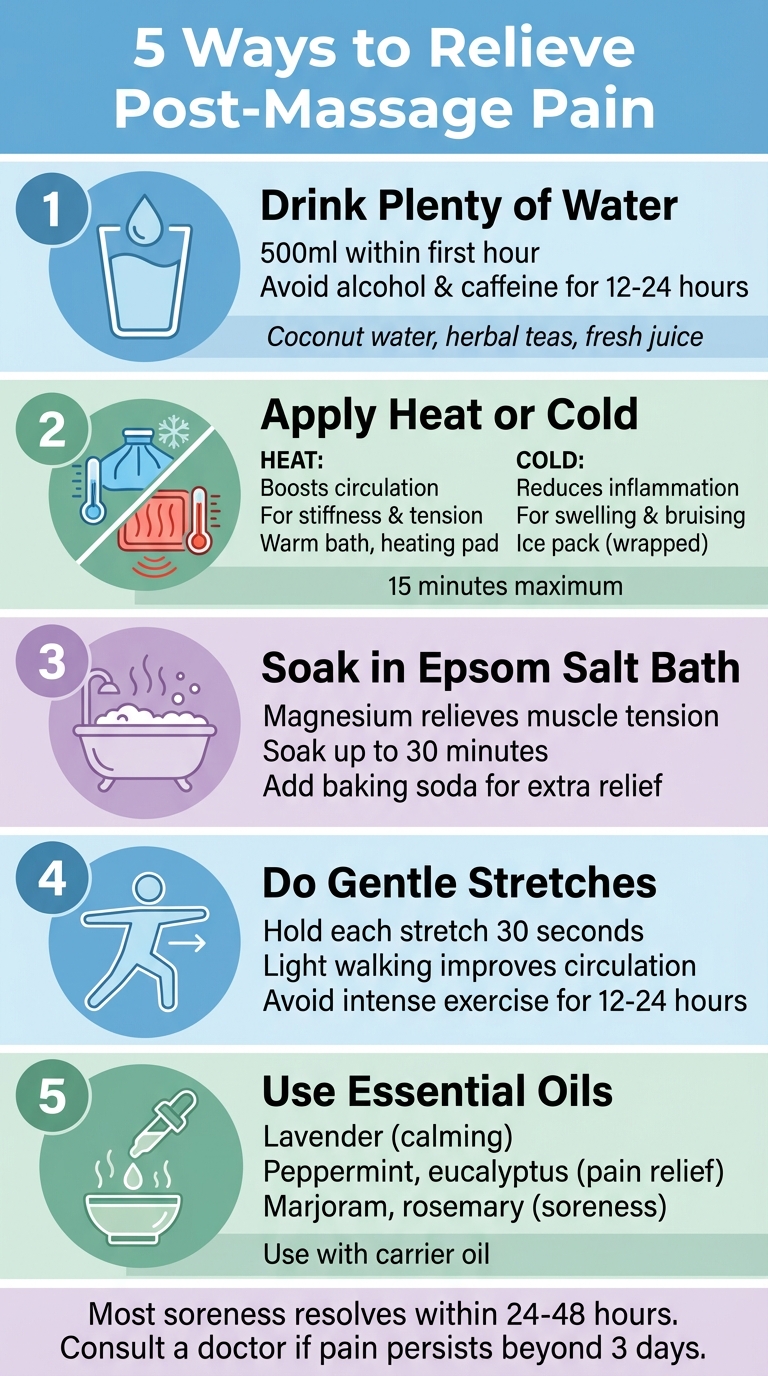
Post-Massage Pain Relief: 5 Effective Recovery Methods
Here are some effective methods to ease any discomfort you might feel after a massage:
Drink Plenty of Water
Staying hydrated is one of the most important things you can do after a massage. Massage therapy encourages the release of toxins, which your kidneys need to filter out. Without enough water, these toxins can linger in your system, potentially making soreness last longer or even causing headaches.
"Your kidneys do the brilliant job of eliminating toxins from your system and they need water to work and push these free radicals out." – Secret Spa
To stay on top of this, drink a glass of water an hour before your massage and another right after. If you feel a headache coming on, aim for about 500 ml of water within the first hour. Steer clear of alcohol, caffeine, and sugary drinks for at least 12 to 24 hours, as they can dehydrate you and slow muscle recovery. If plain water doesn’t appeal, try alternatives like coconut water, fresh fruit juice, or herbal teas.
In addition to staying hydrated, using temperature-based therapies can provide extra relief for sore muscles.
Apply Heat or Cold
Temperature therapy can target specific areas of discomfort effectively. Heat works to improve blood flow and relax tight muscles, while cold therapy helps reduce inflammation and numb painful spots.
| Therapy Type | Purpose | Best For | Examples |
|---|---|---|---|
| Heat | Boosts circulation and relaxes muscles | Stiffness, deep knots, general tension | Warm bath, sauna, heating pad, or hot rice bag |
| Cold | Reduces swelling and numbs pain | Acute soreness, swelling, bruising | Ice pack (wrapped in a towel), ice bath, cold compress |
Keep applications to 15 minutes to avoid skin irritation. Always wrap ice packs in a towel to protect your skin. If you’re dealing with widespread soreness, a warm bath might be more effective, while ice baths are better suited for intense inflammation.
Soak in an Epsom Salt Bath
An Epsom salt bath is another excellent way to reduce muscle tension. The magnesium in the salts can help alleviate pain and relax your muscles. Soak for up to 30 minutes to get the most benefit. This method is particularly useful after a deep tissue or sports massage. For added benefits, you can mix in a bit of baking soda to further ease muscle discomfort.
Do Gentle Stretches and Light Movement
Gentle movement and stretching can help you recover more effectively. Instead of staying completely still after your massage, try light activity to keep your muscles from tightening up and to maintain the flexibility gained during your session. Hold each stretch for about 30 seconds to release tension properly. A short walk can also improve circulation. However, avoid strenuous exercise or high-impact activities for 12 to 24 hours to give your muscles time to recover.
Use Essential Oils for Relaxation
Essential oils can provide additional relief when applied with a carrier oil or added to a bath. Lavender is known for its calming properties, while oils like peppermint, eucalyptus, helichrysum, and marjoram can help ease pain and reduce swelling. Rosemary is another option for relieving general soreness.
sbb-itb-abe02fa
When to Seek Professional Advice
Feeling a bit sore after a massage is completely normal, but sharp, stabbing pain or excessive bruising could point to something more serious. If you notice severe bruising or swelling that gets worse, it’s a good idea to seek medical help. These symptoms might need further investigation.
If the discomfort sticks around for more than three days, it’s time to check in with your GP. Victoria Bodner, LMT, CS, RM at Cleveland Clinic, offers this important advice:
"If a technique does not feel therapeutic to you, but simply feels like pain, please speak up. We can make adjustments and we may be able to detect a problem area, but we cannot feel the intensity of your pain response".
While mild soreness is to be expected, ongoing or severe pain shouldn’t be ignored. If the discomfort is limiting your movement or interfering with daily activities, it’s worth getting a professional opinion. Additionally, systemic symptoms like fever, chills, or feeling hot and shivery could signal an infection that needs immediate attention.
If you have conditions like deep vein thrombosis (DVT), osteoporosis, bleeding disorders, or cancer, make sure to inform your massage therapist before your session. Should you experience unusual pain afterwards, consult your GP. People on blood-thinning medications or statins should also be cautious, as these can influence how the body reacts to massage.
When in doubt, listen to your body. If the pain is intense or home remedies haven’t worked within 72 hours, it’s best to speak with your GP.
How to Prevent Soreness After Future Massages
Prepare Your Muscles Before the Session
Keeping your muscles ready for a massage starts with proper hydration. Drinking plenty of water beforehand helps maintain muscle elasticity and reduces tension. Taking a warm bath or shower before your session can also work wonders, as the heat relaxes your muscles and eases spasms. Adding a few minutes of gentle stretching to your routine can further loosen up your body, making it more receptive to treatment.
Talk to Your Massage Therapist
Good communication with your therapist can make a huge difference in avoiding soreness later. Be upfront about your medical history, any medications you're taking, recent injuries, and specific areas of concern during your first consultation. This information helps your therapist customise the session to suit your needs.
Don't shy away from discussing your pressure preferences at the start of the session. If anything feels uncomfortable during the massage, speak up - it’s your time, and adjustments can be made. If you’ve experienced soreness after past treatments, mentioning it allows your therapist to refine their technique to minimise discomfort. Proper preparation and open dialogue can help reduce the muscle inflammation that sometimes follows a massage.
Select the Right Type of Massage
Choosing the right massage style is just as important as preparing for the session. If you're looking for relaxation without much risk of soreness, Swedish massage is a great option. Its light-to-medium pressure and flowing strokes are gentle on the muscles. Aromatherapy and hot stone massages also focus on relaxation and are less likely to cause discomfort.
On the other hand, deep tissue, sports, and trigger point massages use more intense pressure to target deeper muscle layers, which can lead to temporary soreness. If you’re new to massages, starting with a gentler style is a smart move. Over time, regular sessions can help your muscles adapt, making soreness less likely - some refer to this as building "muscle memory".
Need help finding a qualified therapist? Visit Find a Massage Therapist to connect with professionals who can recommend the best treatment for your needs.
Conclusion
Experiencing soreness after a massage is a natural part of the body's recovery process. This mild discomfort usually subsides within 24 to 48 hours, though in some cases, it may linger for up to 72 hours.
To help ease this post-massage soreness, there are several simple remedies you can try: staying hydrated, applying heat or cold therapies, soaking in Epsom salt baths, gentle stretching, and using essential oils. These methods, discussed earlier, can make a noticeable difference in your recovery. Additionally, maintaining open communication with your massage therapist during the session allows them to adjust their techniques to suit your comfort.
For the best care and to minimise discomfort, it’s always a good idea to consult a qualified massage therapist. They can assess your body’s specific needs, adapt their approach during the session, and provide personalised aftercare advice.
Looking for a reliable therapist nearby? Visit Find a Massage Therapist to connect with experienced professionals who can help you enjoy the benefits of massage therapy while keeping soreness to a minimum.
FAQs
What should I do if my pain from a massage lasts more than three days?
If the soreness from a massage lingers beyond three days, it might be time to reach out to a healthcare professional. While mild discomfort after a massage is pretty common and usually fades within 24 to 72 hours, ongoing pain could point to something like inflammation or a strain that might require further evaluation.
In the meantime, there are a few things you can do to manage the discomfort. Staying hydrated, taking it easy, or doing gentle stretches can help. But if the pain gets worse, comes with swelling, or you notice symptoms like numbness or weakness, don’t ignore it. Seeking medical advice promptly can help rule out any serious issues and ensure you get the right care.
How can I talk to my massage therapist to prevent soreness after a session?
To minimise post-massage soreness, start with open communication with your massage therapist. Before the session, share details about your comfort levels, any areas of tension or sensitivity, and your preferred pressure. If you have specific health concerns or muscle issues, mentioning these can help the therapist customise the treatment to suit you.
During the massage, don’t shy away from speaking up if the pressure feels too much. It’s perfectly fine to ask for adjustments to make the experience more comfortable. After the session, drinking plenty of water can aid muscle recovery and ease soreness. If you do feel mild discomfort, applying a warm or cold compress can provide relief. The key to a relaxing, effective massage is clear communication and a bit of self-care afterwards.
Which types of massages are less likely to cause soreness?
If you're worried about feeling sore after a massage, choosing gentler options like lymphatic drainage or relaxation massages may be a good idea. These methods use lighter pressure and are designed to either help you unwind or support the lymphatic system, making post-massage discomfort less likely.
On the other hand, more intense techniques like deep tissue or sports massages use firmer pressure to work deeper into the muscles. While effective, they can sometimes cause temporary soreness, especially if you're not used to them. If you're new to massage therapy or tend to feel tender afterwards, starting with a lighter approach might be more comfortable.
To ease any tension or soreness after your session, try staying hydrated, doing some gentle stretches, or applying heat to the area. If you're unsure which massage style suits you best, a skilled therapist can help you decide based on your preferences and needs.